
Final Results
Summary by AI BETAClose X

2 September 2026
Empyrean Energy PLC / Index: AIM / Epic: EME / Sector: Oil & Gas
Empyrean Energy PLC ('Empyrean' or 'the Company')
Final Results
Empyrean Energy is pleased to announce its final results for the year ended 31 March 2026 ("Report and Accounts"). The full Report and Accounts will be made available on the Company's website in the coming days.
Key Activities
Duyung PSC Project, Indonesia (EME 8.5%)
Reporting period
· In July 2025, Conrad Asia Energy Ltd ("Conrad") signed a binding GSA for the sale and purchase of natural gas from the Mako Gas Field with PT PLN Energi Primer Indonesia ("PLN EPI"), a wholly owned subsidiary of the Indonesian state-owned electric utility company PT Perusahaan Listrik Negara (Persero) ("PLN Persero").
· This followed a directive from the Indonesian Ministry of Energy and Mineral Resources ("MEMR") that all Mako gas be made available for the Indonesian domestic market in Batam with the gas to be purchased by PLN EPI.
· In addition, MEMR revoked its earlier allocation and pricing Directive to sell Mako gas to PT Perusahaan Gas Negara Tbk ("PGN") and Sembcorp Gas Pte Ltd. ("Sembcorp") and the GSAs with PGN and Sembcorp were terminated.
· In November 2025, Conrad and its wholly owned subsidiary WNEL announced that they had signed an agreement with PT Nations Natuna Barat ("Nations"), a subsidiary of the Arsari Group, to farm into the development of the Mako Gas Field ("Mako Project") in the Duyung ("Duyung") Production Sharing Contract ("PSC") and provide financing for 100% of project development costs and associated working capital (the "Transaction").
· In February 2026, Empyrean entered into binding documentation for settlement of historical cash call arrears with Conrad. Empyrean, Conrad, and its subsidiary, West Natuna Exploration Limited ("WNEL") then executed a detailed Shareholders Agreement ("SHA") which governs the ongoing relationship between Conrad and Empyrean and defines Empyrean's participation in the Mako Project within a Special Purpose Vehicle ("SPV"). Under these agreements, Empyrean is entitled to 8.5% of all cash payments to WNEL including revenue from gas sales from the Mako Project. The agreements are subject to customary conditions precedent, including approval from Indonesia's Ministry of Energy and Mineral Resources.
· In March 2026, Conrad advised that WNEL, as operator of the Duyung PSC, have approved the Final Investment Decision ("FID") for the Mako Project. Approval of FID de-risks the Mako Project following successful appraisal drilling and transitions Mako into full development which materially advances Empyrean's pathway toward future cash flow generation. First gas is currently targeted for 4Q 2027.
· The Mako Project is now fully funded at JV level, including contingency allowances, significantly reducing funding risk as development activities accelerate.
· Total capital expenditure at the Mako Project to first gas is estimated at approximately US$320 million (100% basis).
· The Mako Project benefits from long-term, government-backed contracted revenues through January 2037 under a binding Gas Sales Agreement covering up to 111 Bbtud and the full 2C Contingent Resources attributable to the field, providing clear revenue visibility once production commences.
Post-Reporting period
· In April 2026, WNEL had issued letters of award covering more than US$280 million of the Mako Gas Project capital contracts, constituting over 80% of the total capital costs. Letters of award have been issued for the drilling rig, SURF (subsea, umbilicals, risers, flowlines) EPCI, CSF (conductor support frame) EPCT, and all long lead items.
· In May 2026, WNEL executed a binding contract with PT. Timas Suplindo ("Timas") for the provision of Subsea Umbilical, Flowline, and Riser ("SURF") EPCI contract to support the development of the Mako Gas Field.
· In June 2026, WNEL executed a binding contract with PT Pertamina Drilling Services Indonesia ("Pertamina Drilling") through the PDSI - ADES Consortium for the provision of a jack-up drilling rig to support the development of the Mako Gas Field.
· In June 2026, WNEL signed a binding contract with PT PAL Indonesia ("PT PAL") for the provision of an Engineering, Procurement, Construction and Transport of the Conductor Support Frame ("CSF") to support the development of the Mako Gas Field.
Wilson River Project, Queensland Australia (EME 8.5%)
Reporting period
· In May 2025, the JV partners in the Wilson River-1 decided to conduct a Drill Stem Test ("DST") over the potential oil zone identified in the Murta Formation from analysis of logs and hydrocarbon shows from the well. However, the final well testing report confirmed the recovery of formation water in the potential oil zone and, as a result, the well was plugged and abandoned.
Sacramento Basin, California USA (EME 25-30%)
· No work was conducted on the project during the year.
Corporate
Reporting period
· Placing and Retail Offer to raise US$0.825 million (£0.661 million) completed in April 2025.
· Placing to raise US$1.354 million (£1 million) completed in July 2025.
· In February 2026. then Interim CEO and Technical Director Gajendra (Gaz) Bisht was appointed as CEO. Mr Bisht continues in his role as Technical Director.
Post-Reporting period
· In April 2026. Empyrean reached agreement with its Lender on the amended key terms to the Convertible Note, as follows:
o The interest on the Convertible Note (which has a face value £6.7m including interest accrued to the end of March 2026) has been decreased from 20% per annum to 5% per annum for the period 1 April 2026 to 30 September 2026, with interest then reverting to 20% per annum from 1 October 2026.
o Empyrean is to maintain a minimum cash balance of £1.25 million until such time as the Convertible Note is repaid.
o All other terms of the Convertible Note and previous amendments remain in place.
· In July 2026, Dr Patrick Cross resigned from his position as Non-Executive Director of the Company, due to ill health.
Chairman's Statement
I am pleased to provide a review of the reporting period for the financial year ended 31 March 2026.
After a difficult second half of 2025, recent developments at the Mako Project have been more positive and has given the Company cause for some optimism moving forward.
Empyrean and Conrad have pleasingly settled the ongoing cash call dispute early this year and in doing so restored its long standing relationship. Following the signing of the Shareholders Agreement and restructure, as announced in February 2026, Empyrean's ongoing participation in the Mako Project is held through a SPV under which Empyrean is entitled to 8.5% of all cash payments to WNEL, including revenue from gas sales from the Mako Project. Conrad are currently awaiting MEMR approval on the farm-down of 75% PI to Nations, which is expected in the very near term and will trigger a cash payment of US$5.0 million to WNEL.
In a very significant development for all parties involved with the Mako project, Conrad secured funding of the Mako developments costs through the farm in announced in November 2025 and are making very good progress with development activities at Mako, as seen in the announcements made post financial year end.
On the corporate side, the Company successfully raised funds during 2025 through a series of Placings and Retail Offers. While dilutive, these funds have provided working capital as the Company awaits the MEMR approvals in Indonesia that will see it receive its share of the farm in cash consideration from WNEL.
Following the unsuccessful Wilson River drilling, Empyrean continues to be active in assessing future exploration opportunities.
It would be remiss to review the year and not again reflect on the loss of our Managing Director/CEO Tom Kelly last year. He is dearly missed.
Post year end also saw the retirement of Patrick Cross, who has Chaired our Company since its inception, making a significant contribution to its governance throughout his whole tenure
I would like to thank the Board, management and staff for their efforts and perseverance, particularly Gaz Bisht who has now taken on the CEO role and is working diligently to restore stability at the Company as well as assess the technical merits of future opportunities with the aim of increasing the share price and providing value for our shareholders.
I'd also like to thank both our Shareholders and our Lender for their continued support during the reporting period. We anticipate that the 2027 financial year will see more positive news for all stakeholders.
John Laycock
Non-Executive Chairman, 2 September 2026
For further information please visit www.empyreanenergy.com or contact the following:
|
Empyrean Energy plc |
Tel: +61 (8) 6146 5325 |
|
Gaz Bisht |
|
|
|
|
|
Cavendish Capital Markets Limited (Nominated Advisor and Broker) |
Tel: +44 (0) 207 220 0500 |
|
Neil McDonald Pearl Kellie |
|
|
|
|
|
Novum Securities Limited (Joint Broker) |
Tel: +44 (0) 207 399 9400 |
|
Colin Rowbury |
|
Operational Review
The Company's corporate objective remains to build a significant asset portfolio across the Australasian region.
After a protracted period, Empyrean was extremely pleased to see the successful farm-in agreement reached in November 2025, between Conrad and its wholly owned subsidiary WNEL and Nations to farm into the development of the Mako Project in the Duyung PSC, which provides financing for 100% of the Mako Project development costs and associated working capital. Empyrean is entitled to 8.5% of all cash payments to WNEL including revenue from gas sales from the Mako Project. The agreements are subject to customary conditions precedent, including approval from Indonesia's Ministry of Energy and Mineral Resources.
In February 2026, the Company announced that existing Technical Director Gaz Bisht would assume the CEO role on a permanent basis. This appointment follows the successful settlement with Conrad and securing of Empyrean's participation in the Mako Gas Discovery. It also reflects a focus on cost reduction while the Company assesses new value accretive opportunities in the oil and gas sector. As advised, Empyrean is currently undertaking a disciplined evaluation of its broader portfolio and is assessing new growth opportunities.
WNEL continues to progress development activities at the Mako Project including the award of capital contracts at the Mako Project covering more than US$280 million, constituting over 80% of the total capital costs. Binding contracts have now been entered into for the SURF contract and jack-up drilling rig to support the development of the Mako project.
Empyrean also has a 25-30% working interest in a package of gas projects in the Sacramento Basin, onshore California. While no activity occurred during the past years Empyrean will assess the technical and commercial merits of other prospects or proposals as they are presented.
Empyrean has retained an interest in the Riverbend Project (10% WI) located in the Tyler and Jasper counties, onshore Texas and a 58.084% WI in the Eagle Oil Pool Development Project, located in the prolific San Joaquin Basin onshore, Southern California. No technical work has been undertaken on these projects during the year.
Duyung PSC, Indonesia
Background
In April 2017, Empyrean acquired a 10% shareholding in WNEL from Conrad Petroleum (now Conrad Asia Energy Ltd), which held a 100% Participating Interest in the Duyung Production Sharing Contract ("Duyung PSC") in offshore Indonesia and is the operator of the Duyung PSC. The Duyung PSC covers an offshore permit of approximately 1,100km2 in the prolific West Natuna Basin. The main asset in the permit is the Mako shallow gas field that was discovered in 2017 and comprehensively appraised in 2019.
In early 2019, both the operator, Conrad, and Empyrean divested part of their interest in the Duyung PSC to AIM-listed Coro Energy Plc. Following the transaction, Empyrean's interest reduced from 10% to 8.5% interest in May 2020, having received cash and shares from Coro.
During October and November 2019, a highly successful appraisal drilling campaign was conducted in the Duyung PSC. The appraisal wells confirmed the field-wide presence of excellent quality gas in the intra-Muda reservoir sands of the Mako Gas Field.
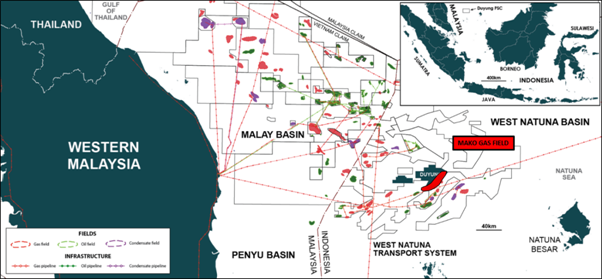
Figure 1: Mako Gas field, Duyung PSC, Indonesia
Current Activities
MEMR Directive
In March 2025, Conrad received a Directive from the MEMR, including, that due to the very strong growth in domestic demand for gas in Indonesia, all Mako gas (plateau sales gas rate of 111 billion British Thermal Units per day ("Bbtud")) be made available for the Indonesian domestic market in Batam with the gas to be purchased by PLN, a wholly owned subsidiary of the Indonesian state-owned electric utility company PLN Persero.
PLN Persero is wholly-owned by the Government of Indonesia through the Ministry of State-Owned Enterprise. The organisation has over 7,000 power plants supplying over 89 million customers and sells over 288,000 GWh of electricity annually.
The Mako gas price will be linked to the Indonesian Crude Price ("ICP"), which is akin to Brent oil-linked Liquified Natural Gas ("LNG") pricing. This structure will be economically equivalent to the pricing previously approved for Mako gas to be sold both domestically and for export, thereby underpinning the value of gas from Mako.
As a result of the MEMR Directive, in July 2025, Conrad signed a binding GSA for the sale and purchase of natural gas from the Mako Gas Field with PLN EPI.
In addition, and a result of the above, MEMR has revoked its earlier allocation and pricing Directive to sell Mako gas to PGN and Sembcorp and those GSAs with PGN and Sembcorp has been terminated.
Farm-Down and Funding for Mako Development
In November 2025, Conrad and its wholly owned subsidiary WNEL, signed various agreements for Nations to farm into the development of Mako in the Duyung PSC and provide financing for 100% of the first phase of the project (i.e. the Transaction).
The Transaction is subject to certain conditions precedent and subsequent, customary for a transaction of this nature, including government and regulatory approvals, including approval from Indonesia's MEMR to the transfer of the participating interests.
Nations is a wholly owned subsidiary of the Arsari Group, an Indonesia-based, diversified private investment corporation with interests, amongst others, in upstream gas and oil and mining.
Upon completion of the Transaction, Nations will hold a 75% PI in the Duyung PSC.
Under the Transaction, in addition to funding its proportionate costs of the Mako project, Nations has agreed under the CLA to fund WNEL's anticipated project portion of costs through to commercial production under the CLA. WNEL will repay amounts funded under the CLA out of its share of production. Fund disbursement has already commenced and the Transaction timeline is structured to meet the stated first production target in late calendar year 2027.
In addition to funding WNEL, Nations will also pay WNEL US$16 million, payable in three tranches of US$5 million, US$4 million, and US$7 million, to be paid out on milestones which are expected ahead of first commercial production. Net cash flows from WNEL's carried 25% interest in the Mako development and other proceeds from the Transaction will be used for general corporate purposes of Conrad, including maturation of its Aceh blocks, including seismic acquisition. Empyrean is entitled for 8.5% share of all cash consideration received by Conrad.
As the Operator of the Duyung PSC, WNEL, working closely with Nations, will continue to be responsible for the development of the Mako gas field and its operations once production starts. The Mako field contains 2C Contingent Resources (100%) of 376 Bcf5.
With funding fully secured for development, Conrad will seek the reclassification of Mako Resources into Reserves in the next independent expert report.
The Mako development comprises a two-phase, development plan based on six initial development wells tied back to a leased MOPU at the field with sales gas transported via a ~59 km 18" pipeline to the KF platform in the adjoining Kakap PSC, connection to the West Natuna Transport System ("WNTS") pipeline and then onwards to the Indonesian domestic market via a yet-to-be constructed spur from the WNTS to Pemping Island, Riau province, Indonesia. This spur will be built by PT PLN Energi Primer Indonesia ("PLN EPI"), a wholly owned subsidiary of PT Perusahaan Listrik Negara (Persero) ("PLN Persero"), on Pemping Island. An EPCI contract has been awarded by PLN EPI for this spur to connect to the existing Java-Sumatra pipeline network. Under the Plan of Development ("POD") 1 Revision, two further development wells may be drilled two years after first gas, if required. The MOPU will have a design capacity of 172 MMscfd. The latest POD was approved by the Indonesian regulatory authority SKK Migas and was announced by Empyrean on 8 November 2022.
Mako gas will be sold to PLN EPI. The contract term is until the end of the Duyung PSC in January 2037 and provides for the sale of plateau gas rates of 111 Bbtud which is equivalent to around 111.9 mmscfd. The contract is for the entirety of Mako's 2C Contingent Resources. The gas price will be linked to the Indonesian Crude Price ("ICP") which is akin to Brent oil linked LNG pricing, and will be economically equivalent to the pricing approved earlier for Mako gas to be sold both domestically and for export, thereby underpinning the value of gas from Mako. This reflects ever-growing Indonesian domestic gas demand. The terms of the gas sales agreement are confidential. First gas from Mako remains on track for delivery in the 4th quarter of calendar year 2027.
Notice of Election of Remedy and Forced Withdrawal and Settlement of Cash Call Dispute
As advised on 18 November 2025, Empyrean received a Notice of Election of Remedy and Forced Withdrawal ("Notice") from WNEL. The intended effect of the Notice is that Empyrean is deemed to have proposed to withdraw under the JOA and Empyrean's participating interest is deemed to have been transferred to WNEL.
In February 2026, Empyrean entered into binding documentation for settlement of historical cash call arrears with Conrad. Empyrean, Conrad, and WNEL then executed a detailed Shareholders Agreement ("SHA") which governs the ongoing relationship between Conrad and Empyrean and defined Empyrean's participation in the Mako Project within a SPV. Under these agreements, Empyrean is entitled to 8.5% of all cash payments to WNEL including revenue from gas sales from the Mako Project. The agreements are subject to customary conditions precedent, including approval from Indonesia's Ministry of Energy and Mineral Resources.
With these agreements now executed, Empyrean secured a stable and clearly defined framework for participation in a high-quality gas development project.
FID Approved
In March 2026, Conrad advised that WNEL had approved the FID for the Mako Project. Approval of FID de-risks the Mako Project following successful appraisal drilling and transitions Mako into full development and materially advances Empyrean's pathway toward future cash flow generation.
Development Activities
Conrad and WNEL have progressed development activities throughout 2026 with the following key milestones achieved to date:
In April 2026, WNEL had issued letters of award covering more than US$280 million of the Mako Gas Project capital contracts, constituting over 80% of the total capital costs. Letters of award have been issued for the drilling rig, SURF (subsea, umbilicals, risers, flowlines) EPCI, CSF (conductor support frame) EPCT, and all long lead items.
In May 2026, WNEL executed a binding contract with Timas for the provision of SURF EPCI contract to support the development of the Mako Gas Field.
In June 2026, WNEL executed a binding contract with Pertamina Drilling Services Indonesia through the PDSI - ADES Consortium for the provision of a jack-up drilling rig to support the development of the Mako Gas Field.
In June 2026, WNEL signed a binding contract with PT PAL for the provision of an Engineering, Procurement, Construction and Transport of the CSF to support the development of the Mako Gas Field.
Wilson River, Queensland Australia (EME 8.5%)
In January 2025, the Company announced the acquisition of an option to participate in Wilson River conventional oil prospect. The Wilson Prospect is situated close to existing infrastructure in the prolific Cooper Basin in South-West Queensland, Australia, and adjacent to several producing oil fields.
Following the securing of land access and completion of cultural heritage surveys and drill preparation activities the Wilson River-1 well spudded on 14 March 2025. The well was funded by Empyrean and Condor Energy, an experienced Australian based well services and drilling company with recent drilling contracts completed nearby in the Cooper Basin.
Following drilling the JV partners in the Wilson River-1 decided to conduct a DST over the potential oil zone identified in the Murta Formation from analysis of logs and hydrocarbon shows from the well. The final well testing report however confirmed the recovery of formation water in the potential oil zone and as a result the well was plugged and abandoned.
Multi Project Farm-in in Sacramento Basin, California (25%-30% WI)
Background
In May 2017, Empyrean agreed to farm-in to a package of opportunities including the Dempsey and Alvares prospects in the Northern Sacramento Basin, onshore California. The rationale for participating in this potentially significant gas opportunity was a chance to discover large quantities of gas in a relatively 'gas hungry' market. Another attractive component of the deal was the ability to commercialise a potential gas discovery using existing gas facilities that are owned by the operator.
There were no significant activities conducted during the past years however the Company will continue to work with its joint venture partners in reviewing and assessing any further technical and commercial opportunities as they relate to the project.
Riverbend Project (10%)
No work has been completed on the project in the year and no budget has been prepared for 2026/27 whilst the Company focuses on other projects. The Company previously fully impaired the carrying value of the asset and any subsequent expenditure, mainly for license fees, has been expensed through the profit and loss statement.
Eagle Oil Pool Development Project (58.084% WI)
No work has been completed on the project in the year and no budget has been prepared for 2026/27 whilst the Company focuses on other projects. The Company previously fully impaired the carrying value of the asset and any subsequent expenditure, mainly for license fees, has been expensed through the profit and loss statement.
The information contained in this report was completed and reviewed by the Company's Executive Director (Technical), Mr Gajendra (Gaz) Bisht, who has over 36 years' experience as a petroleum geoscientist.
Definitions
2C: Contingent resources are quantities of petroleum estimated, as of a given date, to be potentially recoverable from known accumulations by application of development projects, but which are not currently considered to be commercially recoverable. The range of uncertainty is expressed as 1C (low), 2C (best) and 3C (high).
Bcf: Billions of cubic feet
*Cautionary Statement: The estimated quantities of oil that may potentially be recovered by the application of a future development project relates to undiscovered accumulations. These estimates have both an associated risk of discovery and a risk of development. Further exploration, appraisal and evaluation is required to determine the existence of a significant quantity of potentially movable hydrocarbons.
Gajendra (Gaz) Bisht M.Sc. (Tech) in Applied Geology
CEO/Executive Director (Technical)
2 September 2026
Statement of Comprehensive Income
For the Year Ended 31 March 2026
|
|
|
2026 |
2025 |
|
|||
|
Continued Operations |
Notes |
US$'000 |
US$'000 |
|
|||
|
|
|
|
|
|
|||
|
Revenue |
|
- |
- |
|
|||
|
|
|
|
|
|
|||
|
Expenses |
|
|
|
|
|||
|
Administrative expenses |
|
(356) |
(168) |
|
|||
|
Compliance fees |
|
(263) |
(245) |
|
|||
|
Directors' remuneration |
4 |
(421) |
(406) |
|
|||
|
Foreign exchange loss |
3 |
(184) |
(115) |
|
|||
|
Total expenses |
|
(1,224) |
(934) |
|
|||
|
|
|
|
|
|
|||
|
Operating loss |
3 |
(1,224) |
(934) |
|
|||
|
|
|
|
|
|
|||
|
Finance expense |
5 |
(1,307) |
(1,210) |
|
|||
|
Impairment - exploration and evaluation assets |
8 |
(198) |
(1,205) |
|
|||
|
|
|
|
|
|
|||
|
Loss from continuing operations before taxation |
|
(2,729) |
(3,349) |
|
|||
|
Tax expense |
6 |
(1) |
(1) |
|
|||
|
|
|
|
|
|
|||
|
Loss from continuing operations after taxation |
|
(2,730) |
(3,350) |
|
|||
|
|
|
|
|
|
|||
|
Total comprehensive loss for the year attributable to owners of the Company |
|
(2,730) |
(3,350) |
|
|||
|
|
|
|
|
|
|||
|
Earnings (loss) per share from continuing operations attributable to owners of the Company (expressed in cents) |
|
|
|
||||
|
- Basic |
7 |
(0.05)c |
(0.18)c |
||||
|
- Diluted |
|
(0.05)c |
(0.18)c |
||||
|
|
|
|
|
||||
|
|
|
|
|
||||
The accompanying accounting policies and notes form an integral part of these financial statements.
Statement of Financial Position
As at 31 March 2026
|
Company Number: 05387837 |
|
2026 |
2025 |
|
|
Notes |
US$'000 |
US$'000 |
|
Assets |
|
|
|
|
Non-Current Assets |
|
|
|
|
Exploration and evaluation assets |
8 |
5,941 |
5,763 |
|
Total non-current assets |
|
5,941 |
5,763 |
|
|
|
|
|
|
Current Assets |
|
|
|
|
Trade and other receivables |
10 |
26 |
56 |
|
Cash and cash equivalents |
|
2,338 |
1,675 |
|
Total current assets |
|
2,364 |
1,731 |
|
|
|
|
|
|
Liabilities |
|
|
|
|
Current Liabilities |
|
|
|
|
Trade and other payables |
11 |
3,197 |
3,125 |
|
Convertible loan notes |
12 |
10,318 |
8,938 |
|
Total current liabilities |
|
13,515 |
12,063 |
|
|
|
|
|
|
Net Current Liabilities |
|
(11,151) |
(10,332) |
|
Net Liabilities |
|
(5,210) |
(4,569) |
|
|
|
|
|
|
Shareholders' Equity |
|
|
|
|
Share capital |
14 |
736 |
472 |
|
Share premium reserve |
15 |
54,734 |
52,948 |
|
Warrant and share-based payment reserve |
|
124 |
129 |
|
Retained losses |
|
(60,804) |
(58,118) |
|
Total Equity |
|
(5,210) |
(4,569) |
|
|
|
|
|
The Financial Statements were approved by the Board of Directors on 2 September 2026
The accompanying accounting policies and notes form an integral part of these financial statements.
Statement of Cash Flows
For the Year Ended 31 March 2026
|
|
|
2026 |
2025 |
|
|
Notes |
US$'000 |
US$'000 |
|
Operating Activities |
|
|
|
|
Payments for operating activities |
|
(1,140) |
(937) |
|
Net cash outflow for operating activities |
13 |
(1,140) |
(937) |
|
|
|
|
|
|
Investing Activities |
|
|
|
|
Payments for exploration and evaluation |
8 |
(365) |
(1,418) |
|
Net cash outflow for investing activities |
|
(365) |
(1,418) |
|
|
|
|
|
|
Financing Activities |
|
|
|
|
Issue of ordinary share capital |
|
2,254 |
3,180 |
|
Payment of equity issue costs |
|
(124) |
(156) |
|
Net cash inflow from financing activities |
|
2,130 |
3,024 |
|
|
|
|
|
|
Net increase in cash and cash equivalents |
|
625 |
669 |
|
Cash and cash equivalents at the start of the year |
|
1,675 |
981 |
|
Forex gain on cash held |
|
38 |
25 |
|
|
|
|
|
|
Cash and Cash Equivalents at the End of the Year |
|
2,338 |
1,675 |
|
|
|
|
|
The accompanying accounting policies and notes form an integral part of these financial statements.
Statement of Changes in Equity
For the Year Ended 31 March 2026
|
|
|
Share Capital |
Share Premium Reserve |
Warrant and Share-Based Payment Reserve |
Retained Losses |
Total Equity |
|
|
Notes |
US$'000 |
US$'000 |
US$'000 |
US$'000 |
US$'000 |
|
|
|
|
|
|
|
|
|
Balance at 1 April 2024 |
|
3,405 |
46,891 |
123 |
(54,778) |
(4,359) |
|
|
|
|
|
|
|
|
|
Loss after tax for the year |
|
- |
- |
- |
(3,350) |
(3,350) |
|
Total comprehensive loss for the year |
|
- |
- |
- |
(3,350) |
(3,350) |
|
Contributions by and distributions to owners |
|
|
|
|
|
|
|
Shares issued in the period |
14 |
306 |
2,914 |
- |
- |
3,220 |
|
Exercise/expiry of warrants |
|
- |
- |
(10) |
10 |
- |
|
Equity issue costs |
|
1 |
(158) |
- |
- |
(157) |
|
Share-based payment expense |
|
2 |
59 |
16 |
- |
77 |
|
Capital reorganisation |
|
(3,242) |
3,242 |
- |
- |
- |
|
Total contributions by and distributions to owners |
|
(2,933) |
6,057 |
6 |
10 |
3,140 |
|
|
|
|
|
|
|
|
|
Balance at 1 April 2025 |
|
472 |
52,948 |
129 |
(58,118) |
(4,569) |
|
|
|
|
|
|
|
|
|
Loss after tax for the year |
|
- |
- |
- |
(2,730) |
(2,730) |
|
Total comprehensive loss for the year |
|
- |
- |
- |
(2,730) |
(2,730) |
|
Contributions by and distributions to owners |
|
|
|
|
|
|
|
Shares issued in the period |
14 |
264 |
1,949 |
- |
- |
2,213 |
|
Expiry of warrants |
|
- |
- |
(44) |
44 |
- |
|
Equity issue costs |
|
- |
(163) |
39 |
- |
(124) |
|
Total contributions by and distributions to owners |
|
264 |
1,786 |
(5) |
44 |
2,089 |
|
|
|
|
|
|
|
|
|
Balance at 31 March 2026 |
|
736 |
54,734 |
124 |
(60,804) |
(5,210) |
The accompanying accounting policies and notes form an integral part of these financial statements.
Notes to the Financial Statements
For the Year Ended 31 March 2026
Note 1. Statement of Significant Accounting Policies
Basis of preparation
The Company's financial statements have been prepared in accordance with United Kingdom adopted International Accounting Standards ("UK adopted IAS") and Companies Act 2006. The principal accounting policies are summarised below. The financial report is presented in the functional currency, US dollars and all values are shown in thousands of US dollars (US$'000), unless otherwise stated.
The preparation of financial statements in compliance with UK adopted IAS requires the use of certain critical accounting estimates. It also requires Company management to exercise judgement in applying the Company's accounting policies. The areas where significant judgements and estimates have been made in preparing the financial statements and their effect are disclosed below.
Basis of measurement
The financial statements have been prepared on a historical cost basis, except for derivative financial instruments, which are measured at fair value through profit or loss.
Nature of business
The Company is a public limited company incorporated and domiciled in England and Wales and listed on the AIM market of the London Stock Exchange. The address of the registered office is 4th Floor, 6 New Street Square, London EC4A 3DJ. The Company is in the business of financing the exploration, development and production of energy resource projects in regions with energy hungry markets close to existing infrastructure. The Company has typically focused on non-operating working interest positions in projects that have drill ready targets that substantially short cut the life-cycle of hydrocarbon projects by entering the project after exploration concept, initial exploration and drill target identification work has largely been completed.
Going concern
At the year end the Company had a cash balance of US$2.34 million (2025: US$1.68 million) and made a loss after income tax of US$2.73 million (2025: loss of US$3.35 million).
The Directors have prepared cash flow forecasts for the Company covering the period to 30 September 2027 and these demonstrate that the Company will require further funding within the next 12 months from the date of approval of the financial statements. As disclosed previously, in June 2022, the Company entered into an agreement with CNOOC to drill an exploration well on the Topaz prospect in China, by 12 June 2024, which includes a payment of US$250,000 to CNOOC. It is estimated that the cost of drilling this well would be approximately US$12 million. The Company did not commence the drilling of the Topaz well by 12 June 2024 and therefore the permit expired on 12 June 2024.
On 24 August 2024, the Company received a letter of demand from CNOOC's lawyers, King Wood & Mallesons, in relation to Block 29/11. The letter of demand alleged, inter alia, that Empyrean has outstanding obligations under the relevant Petroleum Contract entered into with CNOOC and that Empyrean has failed to pay certain amounts that CNOOC consider due and payable under the Petroleum Contract relating to the prospecting fee and exploration work. The Company rejected the outstanding amounts claimed, which total US$12 million, and responded to the letter of demand requesting clarification of the basis for the demands made in the letter. The Company received an email from CNOOC on 21 August 2025 which referred to the previous letter of demand and reiterated CNOOCs position on this matter. During the reporting period, the Company has raised equity funds across multiple tranches, with a Placing and Retail Offer to raise US$0.825 million (£0.661 million) completed in April 2025 and a further Placing to raise US$1.354 million (£1 million) completed in July 2025.
In November 2025, Conrad and its wholly owned subsidiary WNEL, signed various agreements for Nations to farm into the development of Mako in the Duyung PSC and provide financing for 100% of the first phase of the project.
In addition to funding WNEL, Nations will also pay WNEL US$16 million, payable in three tranches of US$5 million, US$4 million, and US$7 million, to be paid out on milestones which are expected ahead of first commercial production. Empyrean is entitled to 8.5% share of all cash consideration received by Conrad including its share of these payments. At the time of this report these payments have not been made as the parties are awaiting approval from Indonesia's Ministry of Energy and Mineral Resources. Empyrean expects to receive its share of the first two tranches of these payments during FY 2027.
Despite the positive developments above and full funding of the Mako Project being secured, in order to meet the repayment terms of the Convertible Note (which was renegotiated in 2023 and further amended in April 2026), payment of the now settled cash call amounts from Conrad, any potential further costs or payments to CNOOC in relation to Block 29/11, and working capital requirements the Company is required to raise further funding either through equity or the sale of assets and as at the date of this report the necessary funds are not in place.
The Directors remain optimistic that its funding commitments will be met and it will be able to monetise its interest in Mako, with first gas from Mako remaining on track for delivery in the 4th quarter of calendar year 2027.
While the Company will receive payments as part of the upfront consideration from WNEL, it does however require additional funding to fund the ongoing cash needs of the business for the foreseeable future and may require further funding should it be required to settle amounts on any existing claims. The Directors acknowledge that this funding is not guaranteed however has demonstrated its ability to raise funds as required over the reporting period and historically. These conditions however indicate that there is a material uncertainty which may cast significant doubt over the Company's ability to continue as a going concern and, therefore, the Company may be unable to realise its assets and discharge its liabilities in the normal course of business.
Given the above and the Company's proven track record of raising equity funds and the successful farm in process at the Mako project, which the Directors believe would be sufficient to meet short term funding needs as set out above, the Directors have therefore concluded that it is appropriate to prepare the Company's financial statements on a going concern basis and they have therefore prepared the financial statements on a going concern basis.
The financial statements do not include the adjustments that would result if the Company was unable to continue as a going concern.
Adoption of new and revised standards
(a) New and amended standards adopted by the Company:
There were no new standards effective for the first time for periods beginning on or after 1 April 2025 that have had a significant effect on the Company's financial statements.
(b) Standards, amendments and interpretations that are not yet effective and have not been early adopted:
Any standards and interpretations that have been issued but are not yet effective, and that are available for early application, have not been applied by the Company in these financial statements. International Financial Reporting Standards that have recently been issued or amended but are not yet effective have been assessed by the Company and are not considered to have a significant effect on the Company's financial statements.
Tax
The major components of tax on profit or loss include current and deferred tax.
(a) Current tax
Tax is recognised in the income statement. The current tax charge is calculated on the basis of the tax laws enacted at the statement of financial position date in the countries where the Company operates.
(b) Deferred tax
Deferred tax assets and liabilities are recognised where the carrying amount of an asset or liability in the statement of financial position differs to its tax base. Recognition of deferred tax assets is restricted to those instances where it is probable that taxable profit will be available, against which the difference can be utilised. The amount of the asset or liability is determined using tax rates that have been enacted or substantively enacted by the reporting date and are expected to apply when the deferred tax liabilities/(assets) are settled/(recovered). The Company has considered whether to recognise a deferred tax asset in relation to carried-forward losses and has determined that this is not appropriate in line with IAS 12 as the conditions for recognition are not satisfied.
Foreign currency translation
Transactions denominated in foreign currencies are translated into US dollars at contracted rates or, where no contract exists, at average monthly rates. Monetary assets and liabilities denominated in foreign currencies which are held at the year-end are translated into US dollars at year-end exchange rates. Exchange differences on monetary items are taken to the Statement of Comprehensive Income. Items included in the financial statements are measured using the currency of the primary economic environment in which the Company operates (the functional currency which is US dollars).
Oil and gas assets: exploration and evaluation
The Company applies the full cost method of accounting for Exploration and Evaluation ("E&E") costs, having regard to the requirements of IFRS 6 Exploration for and Evaluation of Mineral Resources. Under the full cost method of accounting, costs of exploring for and evaluating oil and gas properties are accumulated and capitalised by reference to appropriate cash generating units ("CGUs"). Such CGUs are based on geographic areas such as a concession and are not larger than a segment. E&E costs are initially capitalised within oil and gas properties: exploration and evaluation. Such E&E costs may include costs of license acquisition, third party technical services and studies, seismic acquisition, exploration drilling and testing, but do not include costs incurred prior to having obtained the legal rights to explore an area, which are expensed directly to the income statement as they are incurred, or costs incurred after the technical feasibility and commercial viability of extracting a mineral resource are demonstrable, which are reclassified as development and production assets.
Property, Plant and Equipment ("PPE") acquired for use in E&E activities are classified as property, plant and equipment. However, to the extent that such PPE is consumed in developing an intangible E&E asset, the amount reflecting that consumption is recorded as part of the cost of the intangible E&E asset. Intangible E&E assets related to exploration licenses are not depreciated and are carried forward until the existence (or otherwise) of commercial reserves has been determined. The Company's definition of commercial reserves for such purpose is proven and probable reserves on an entitlement basis.
The ultimate recoupment of the value of exploration and evaluation assets is dependent on the successful development and commercial exploitation, or alternatively, sale, of the exploration and evaluation asset. The carrying amounts of the Company's non-financial assets are reviewed at each reporting date to determine whether there is any indication of impairment. E&E assets are assessed for impairment if (i) sufficient data exists to determine technical feasibility and commercial viability, or (ii) facts and circumstances suggest that the carrying amount exceeds the recoverable amount. If any such indication exists, then the asset's recoverable amount is estimated.
For the purpose of impairment testing, assets are grouped together into CGU's. The recoverable amount of an asset or a CGU is the greater of its value in use and its fair value less costs of disposal.
In assessing value in use, the estimated future cash flows are discounted to their present value using a pre-tax discount rate that reflects current market assessments of the time value of money and the risks specific to the asset. Value in use is generally computed by reference to the present value of the future cash flows expected to be derived from production of proven and probable reserves.
Fair value less costs of disposal is the amount obtained from the sale of an asset or CGU in an arm's length transaction between knowledgeable, willing parties, less the costs of disposal.
An impairment loss is recognised if the carrying amount of an asset or its CGU exceeds its estimated recoverable amount. Impairment losses are recognised in the consolidated statement of comprehensive loss.
Impairment losses recognised in respect of CGU's are allocated first to reduce the carrying amount of any goodwill allocated to the units and then to reduce the carrying amounts of the other assets in the unit (or group of units) on a pro rata basis. Impairment losses recognised in prior years are assessed at each reporting date for any indications that the loss has decreased or no longer exists. An impairment loss is reversed if there has been a change in the estimates used to determine the recoverable amount. An impairment loss is reversed only to the extent that the asset's carrying amount does not exceed the carrying amount that would have been determined, net of depletion and depreciation or amortization, if no impairment loss had been recognised. Reversal of impairment losses are recognised in the consolidated statement of comprehensive loss.
The key areas of judgement and estimation include:
· Recent exploration and evaluation results and resource estimates;
· Environmental issues that may impact on the underlying tenements; and
· Fundamental economic factors that have an impact on the planned operations and carrying values of assets and liabilities.
Other investments
In a situation where the Company has direct contractual rights to the assets, and obligations for the liabilities, of an entity but does not share joint control, the Company accounts for its interest in those assets, liabilities, revenues and expenses in accordance with the accounting standards applicable to the underlying line item. This is analogous to the "joint operator" method of accounting outlined in IFRS 11 Joint arrangements.
Financial instruments
Financial assets and liabilities are recognised in the statement of financial position when the Company becomes party to the contractual provision of the instrument.
(a) Financial assets
The Company's financial assets consist of financial assets at amortised cost (trade and other receivables, excluding prepayments, and cash and cash equivalents). Financial assets at amortised cost are initially measured at fair value and subsequently at amortised cost and attributable transaction costs are included in the initial carrying value.
(b) Financial liabilities
All financial liabilities are classified as fair value through the profit and loss or financial liabilities at amortised cost. The Company's financial liabilities at amortised cost include trade and other payables and its financial liabilities at fair value through the profit or loss include the derivative financial liabilities. Financial liabilities at amortised cost, are initially stated at their fair value and subsequently at amortised cost. Interest and other borrowing costs are recognised on a time-proportion basis using the effective interest method and expensed as part of financing costs in the statement of comprehensive income. Derivative financial liabilities are initially recognised at fair value of the date a derivative contract is entered into and subsequently re-measured at each reporting date. The method of recognising the resulting gain or loss depends on whether the derivative is designated as a hedging instrument, and if so, the nature of the item being hedged. The Company has not designated any derivatives as hedges as at 31 March 2025 or 31 March 2026.
(c) Impairment for financial instruments measured at amortised cost
Impairment provisions for financial instruments are recognised based on a forward-looking expected credit loss model in accordance with IFRS 9. The methodology used to determine the amount of the provision is based on whether there has been a significant increase in credit risk since initial recognition of the financial asset. For those where the credit risk has not increased significantly since initial recognition of the financial asset, twelve month expected credit losses along with gross interest income are recognised. For those for which credit risk has increased significantly, lifetime expected credit losses along with the gross interest income are recognised. For those that are determined to be credit impaired, lifetime expected credit losses along with interest income on a net basis are recognised.
Convertible loan notes ("CLNs")
The proceeds received on issue of convertible loan notes are allocated into their liability and equity components. The amount initially attributed to the debt component equals the discounted cash flows using a market rate of interest that would be payable on a similar debt instrument that does not include an option to convert. Subsequently, the debt component is accounted for as a financial liability measured at amortised cost until extinguished on conversion or maturity of the CLN.
The conversion option is determined by deducting the amount of the liability component from the fair value of the compound instrument as a whole. Where material, this is recognised and included as a financial derivative where the convertible loan notes are issued in a currency other than the functional currency of the Company because they fail the fixed for fixed criteria in IAS 32. The conversion option is recorded as a financial liability at fair value through profit or loss and revalued at each reporting date.
In the case of a substantial modification, the existing liability is derecognised, the modified liability is recognised at its fair value and the difference between the carrying value of the old instrument and the modified instrument is recognised as a gain or loss in the statement of comprehensive income.
Share capital
Ordinary shares are classified as equity. Incremental costs directly attributable to the issue of new shares or options are shown in equity as a deduction, net of tax, from the proceeds.
Share-based payments
The Company issues equity-settled share-based payments to certain employees. Equity-settled share-based payments are measured at fair value at the date of grant. The fair value determined at the grant date of the equity-settled share-based payments is expensed over the vesting period, based on the Company's estimate of shares that will eventually vest. The fair value of options is ascertained using a Black-Scholes pricing model which incorporates all market vesting conditions. Where equity instruments are granted to persons other than employees, the income statement is charged with the fair value of goods and services received.
The Company has also issued warrants on placements which form part of a unit. These warrants do not fall into the scope of IFRS 2 Share Based Payments because there is no service being provided and are assessed as either a financial liability or equity. If they fail the fixed for fixed criteria in IAS 32 Financial Instruments: Presentation, they are classified as financial liability and measured in accordance with IFRS 9 Financial Instruments.
Critical accounting estimates and judgements
The Company makes judgements and assumptions concerning the future that impact the application of policies and reported amounts. The resulting accounting estimates calculated using these judgements and assumptions will, by definition, seldom equal the related actual results but are based on historical experience and expectations of future events. The judgements and key sources of estimation uncertainty that have a significant effect on the amounts recognised in the financial statements are discussed below.
Critical estimates and judgements
The following are the critical estimates and judgements that management has made in the process of applying the entity's accounting policies and that have the most significant effect on the amounts recognised in the financial statements.
(a) Carrying value of exploration and evaluation assets (judgement)
The Company monitors internal and external indicators of impairment relating to its exploration and evaluation assets. Management has considered whether any indicators of impairment have arisen over certain assets relating to the Company's exploration licenses. Management consider the exploration results to date and assess whether, with the information available, there is any suggestion that a commercial operation is unlikely to proceed. In addition, management have considered the likely success of renewing the licences, the impact of any instances of non-compliance with license terms and are continuing with the exploration and evaluation of the sites. After considering all relevant factors, management were of the opinion that no impairment was required in relation to the costs capitalised to exploration and evaluation assets except for the below (refer to Note 8 for further detail):
i) In January 2025, Empyrean acquired an option to participate in Wilson River conventional oil prospect, situated close to existing infrastructure in the prolific Cooper Basin in South-West Queensland, Australia, and adjacent to several producing oil fields. Following the securing of land access and completion of cultural heritage surveys and drill preparation activities the Wilson River-1 well spudded on 14 March 2025. The JV partners subsequently elected to conduct a DST on potential oil zone identified from the drilling but unfortunately this confirmed the recovery of formation water in the potential oil zone and as a result the well was plugged and abandoned. Accordingly, the Company has continued to fully impair the carrying value of the asset at 31 March 2026.
ii) While the Company will continue to work with its joint venture partners in reviewing and assessing any further technical and commercial opportunities as they relate to the Sacramento Basin project, particularly in light of strong gas prices for gas sales in the region, it has not budgeted for further substantive exploration expenditure. Whilst the Company maintains legal title it has continued to fully impair the carrying value of the asset as at 31 March 2026.
iii) In light of current market conditions, little or no work has been completed on the Riverbend or Eagle Oil projects in the year and no substantial project work is forecast for either project in 2026/27 whilst the Company focuses on other projects. Whilst the Company maintains legal title it has continued to fully impair the carrying value of the asset as at 31 March 2026.
iv) In February 2026 Empyrean executed a detailed Shareholders Agreement which governs the ongoing relationship between Conrad and Empyrean and defined Empyrean's participation in the Mako Project within a SPV. The agreements are subject to customary conditions precedent, including approval from Indonesia's Ministry of Energy and Mineral Resources. As at 31 March 2026 approval for the transfer to SPV is still pending and the Mako Project remains under IFRS 6 as an exploration and evaluation asset.
(b) Share based payments (estimate)
The Company has made awards of options and warrants over its unissued share capital to certain employees as part of their remuneration package. Certain warrants were issued to shareholders as part of their subscription for shares and suppliers for services received.
The valuation of these options and warrants involves making a number of critical estimates relating to price volatility, future dividend yields, expected life of the options and forfeiture rates. These assumptions have been described in more detail in Note 14.
(c) Valuation of embedded derivative - Convertible loan notes (estimate)
The Company has made estimates in determining the fair value of the embedded conversion feature portion of the CLN. Fair value inputs are subject to market factors as well as internal estimates. The Company considers historical trends together with any new information to determine the best estimate of fair value at the date of initial recognition and at each period end. The Company has determined that the fair value of the embedded conversion feature is not material and therefore has not been separately recognised, in line with the Company's accounting policy. Refer to Note 12 for further detail on the CLN.
Note 2. Segmental Analysis
The Directors consider the Company to have three geographical segments, being Australia (Wilson River project), Indonesia (Duyung PSC project) and North America (Sacramento Basin project), which are all currently in the exploration and evaluation phase. Unallocated results, assets and liabilities represent corporate amounts that are not core to the reportable segments. The Company's registered office is located in the United Kingdom.
Basis of accounting for purposes of reporting by operating segments
(a) Accounting policies adopted
Unless otherwise stated, all amounts reported to the Board of Directors, being the chief decision makers with respect to operating segments, are determined in accordance with accounting policies that are consistent to those adopted in the annual financial statements of the Company.
(b) Segment assets
Where an asset is used across multiple segments, the asset is allocated to that segment that receives the majority asset economic value from that asset. In the majority of instances, segment assets are clearly identifiable on the basis of their nature and physical location.
(c) Segment liabilities
Liabilities are allocated to segments where there is a direct nexus between the incurrence of the liability and the operations of that segment. Borrowings and tax liabilities are generally considered to relate to the Company as a whole and are not allocated. Segment liabilities include trade and other payables.
(d) Unallocated items
Unallocated results, assets and liabilities represent head office, administration and corporate amounts that are not core to the reportable segments.
|
|
|||||
|
Details |
Australia |
Indonesia |
USA |
Unallocated |
Total |
|
|
US$'000 |
US$'000 |
US$'000 |
US$'000 |
US$'000 |
|
31 March 2026 |
|
|
|
|
|
|
Unallocated corporate expenses |
- |
- |
- |
(1,224) |
(1,224) |
|
Operating loss |
- |
- |
- |
(1,224) |
(1,224) |
|
Finance expense |
- |
- |
- |
(1,307) |
(1,307) |
|
Impairment of oil and gas properties |
(196) |
- |
(2) |
- |
(198) |
|
Loss before taxation |
(196) |
- |
(2) |
(2,531) |
(2,729) |
|
Tax expense in current year |
- |
- |
- |
(1) |
(1) |
|
Loss after taxation |
(196) |
- |
(2) |
(2,532) |
(2,730) |
|
Total comprehensive loss for the financial year |
(196) |
- |
(2) |
(2,532) |
(2,730) |
|
|
|
|
|
|
|
|
Segment assets |
- |
5,941 |
- |
- |
5,941 |
|
Unallocated corporate assets |
- |
- |
- |
2,364 |
2,364 |
|
Total assets |
- |
5,941 |
- |
2,364 |
8,305 |
|
|
|
|
|
|
|
|
Segment liabilities |
- |
706 |
- |
- |
706 |
|
Unallocated corporate liabilities |
- |
- |
- |
12,809 |
12,809 |
|
Total liabilities |
- |
706 |
- |
12,809 |
13,515 |
|
|
|||||
|
Details |
Australia |
Indonesia |
USA |
Unallocated |
Total |
|
|
US$'000 |
US$'000 |
US$'000 |
US$'000 |
US$'000 |
|
31 March 2025 |
|
|
|
|
|
|
Unallocated corporate expenses |
- |
- |
- |
(934) |
(934) |
|
Operating loss |
- |
- |
- |
(934) |
(934) |
|
Finance expense |
- |
- |
- |
(1,210) |
(1,210) |
|
Impairment of oil and gas properties |
(1,315) |
- |
(1) |
111 |
(1,205) |
|
Loss before taxation |
(1,315) |
- |
(1) |
(2,032) |
(3,349) |
|
Tax expense in current year |
- |
- |
- |
(1) |
(1) |
|
Loss after taxation |
(1,315) |
- |
(1) |
(2,033) |
(3,350) |
|
Total comprehensive loss for the financial year |
(1,315) |
- |
(1) |
(2,033) |
(3,350) |
|
|
|
|
|
|
|
|
Segment assets |
- |
5,763 |
- |
- |
5,763 |
|
Unallocated corporate assets |
- |
- |
- |
1,731 |
1,731 |
|
Total assets |
- |
5,763 |
- |
1,731 |
7,494 |
|
|
|
|
|
|
|
|
Segment liabilities |
- |
686 |
- |
- |
686 |
|
Unallocated corporate liabilities |
- |
- |
- |
11,377 |
11,377 |
|
Total liabilities |
- |
686 |
- |
11,377 |
12,063 |
Note 3. Operating Loss
|
|
2026 |
2025 |
|
|
US$'000 |
US$'000 |
|
The operating loss is stated after charging: |
|
|
|
Foreign exchange loss |
(184) |
(115) |
|
Impairment - exploration and evaluation assets |
(198) |
(1,205) |
|
|
|
|
|
Auditor's Remuneration |
|
|
|
|
||
|
- Audit fees payable for the audit of the Company's annual accounts |
(77) |
(75) |
|
- Other services relating to taxation compliance |
(31) |
(30) |
|
|
|
|
|
BDO LLP (Company's previous auditor): |
|
|
|
- Other services relating to taxation compliance |
(27) |
(24) |
|
Total auditor's remuneration |
(135) |
(129) |
|
|
|
|
Note 4. Directors' Emoluments
|
|
Fees and Salary |
Share Based Payments in lieu of Fees |
Social Security Contributions |
Short-Term Employment Benefits (Total) |
||||
|
|
2026 |
2025 |
2026 |
2025 |
2026 |
2025 |
2026 |
2025 |
|
|
US$'000 |
US$'000 |
US$'000 |
US$'000 |
US$'000 |
US$'000 |
US$'000 |
US$'000 |
|
|
|
|
|
|
|
|
|
|
|
Non-Executive Directors: |
|
|
|
|
|
|
|
|
|
Patrick Cross |
24 |
23 |
- |
- |
2 |
2 |
26 |
25 |
|
John Laycock |
14 |
14 |
- |
- |
1 |
1 |
15 |
15 |
|
Executive Directors: |
|
|
|
|
|
|
|
|
|
Thomas Kelly(a) |
125 |
255 |
- |
29 |
- |
- |
125 |
284 |
|
Gajendra Bisht(b) |
255 |
196 |
- |
24 |
- |
- |
255 |
220 |
|
Total |
418 |
488 |
- |
53 |
3 |
3 |
421 |
544 |
|
Capitalised to E&E |
- |
(138) |
- |
- |
- |
- |
- |
(138) |
|
Total expensed |
418 |
350 |
- |
53 |
3 |
3 |
421 |
406 |
(a) Services provided by Apnea Holdings Pty Ltd, of which Mr Kelly was a Director. In August 2025 the Company regrettably advised the market that Managing Director/CEO Tom Kelly had passed away.
(b) Services provided by Topaz Energy Pty Ltd, of which Mr Bisht is a Director. In February 2026 then Interim CEO and Technical Director Mr Bisht was appointed as CEO, with a corresponding increase in salary to US$290,000 effective 1 October 2025. Mr Bisht also continues in his role as Technical Director.
The average number of Directors was 3 during 2026 and 4 during 2025. The highest paid director received US$255,000 (2025: US$284,000).
Note 5. Finance Expense
|
|
2026 |
2025 |
|
|
US$'000 |
US$'000 |
|
|
|
|
|
Convertible loan notes - accrued interest (Note 12) |
(1,200) |
(1,210) |
|
Convertible loan notes - legal fees |
(107) |
- |
|
Total finance expense |
(1,307) |
(1,210) |
Note 6. Taxation
|
|
2026 |
2025 |
|
|
US$'000 |
US$'000 |
|
|
|
|
|
Opening balance |
- |
- |
|
Total corporation tax receivable |
- |
- |
|
|
|
|
|
Factors Affecting the Tax Charge for the Year |
|
|
|
Loss from continuing operations |
(2,729) |
(3,349) |
|
Loss on ordinary activities before tax |
(2,729) |
(3,349) |
|
Loss on ordinary activities at US rate of 21% (2025: 21%) |
(573) |
(703) |
|
Non-deductible expenses |
293 |
523 |
|
Movement in provisions |
- |
(40) |
|
Carried forward losses on which no DTA is recognised |
279 |
219 |
|
|
(1) |
(1) |
|
Analysed as: |
|
|
|
Tax expense on continuing operations |
(1) |
(1) |
|
Tax expense in current year |
(1) |
(1) |
|
|
|
|
|
Deferred Tax Liabilities |
|
|
|
|
|
|
|
Temporary differences - exploration |
1,704 |
1,700 |
|
Temporary differences - other |
4 |
4 |
|
|
1,708 |
1,704 |
|
Offset of deferred tax assets |
(1,708) |
(1,704) |
|
Net deferred tax liabilities recognised |
- |
- |
|
Unrecognised Deferred Tax Assets |
2026 |
2025 |
|
|
US$'000 |
US$'000 |
|
|
|
|
|
Tax losses(a) |
2,808 |
2,662 |
|
Temporary differences - exploration |
4,120 |
4,120 |
|
Temporary differences - other |
1,451 |
1,284 |
|
|
8,379 |
8,066 |
|
Offset of deferred tax liabilities |
(1,708) |
(1,704) |
|
Net deferred tax assets not brought to account |
6,671 |
6,362 |
(a) If not utilised, carried forward tax losses of approximately US$11.33 million (2025: US$10.69 million) begin to expire in the year 2034. Deferred income tax assets are only recognised to the extent that it is probable that future tax profits will be available against which deductible temporary differences can be utilised.
Deferred tax assets and deferred tax liabilities are offset only if applicable criteria to set off is met.
The Company utilises US tax rates as the United States is its primary tax jurisdiction and $USD is the primary currency denomination of its exploration projects.
Note 7. Loss Per Share
|
The basic loss per share is derived by dividing the loss after taxation for the year attributable to ordinary shareholders by the weighted average number of shares on issue being 5,284,638,468 (2025: 1,867,696,610) |
|||||
|
|
|
|
|
||
|
|
2026 |
2025 |
|
||
|
Loss per share from continuing operations |
|
|
|
||
|
Loss after taxation from continuing operations |
US$(2,730,000) |
US$(3,350,000) |
|
||
|
Loss per share - basic |
(0.05)c |
(0.18)c |
|
||
|
|
|
|
|
||
|
Loss after taxation from continuing operations adjusted for dilutive effects |
US$(2,730,000) |
US$(3,350,000) |
|
||
|
Loss per share - diluted |
(0.05)c |
(0.18)c |
|
||
|
|
|
|
|||
|
For the current and prior financial years, the exercise of the options is anti-dilutive and as such the diluted loss per share is the same as the basic loss per share. Details of the potentially issuable shares that could dilute earnings per share in future periods are set out in Note 14. |
|||||
Note 8. Exploration and Evaluation Assets
|
|
2026 |
2025 |
|
|
US$'000 |
US$'000 |
|
|
|
|
|
Balance brought forward |
5,763 |
5,355 |
|
Exploration expenditure |
376 |
1,613 |
|
Impairment |
(198) |
(1,205) |
|
Net book value |
5,941 |
5,763 |
|
Project |
Operator |
Working Interest |
2026 Carrying Value US$'000 |
2025 Carrying Value US$'000 |
|
Exploration and evaluation |
|
|
|
|
|
Duyung PSC |
Conrad Asia Energy |
8.5% |
5,941 |
5,763 |
|
Wilson River(a) |
Condor Energy |
8.5% |
- |
- |
|
Sacramento Basin(b) |
Sacgasco |
25-30% |
- |
- |
|
Riverbend(c) |
Huff Energy |
10% |
- |
- |
|
Eagle Oil Pool Development(c) |
Strata-X |
58.084% |
- |
- |
|
|
|
|
5,941 |
5,763 |
|
|
|
|
|
|
|
Exploration and evaluation assets relate to the Company's interest in the Duyung PSC. No indicators of impairment of these assets were noted.
(a) In January 2025, Empyrean acquired an option to participate in Wilson River conventional oil prospect, situated close to existing infrastructure in the prolific Cooper Basin in South-West Queensland, Australia, and adjacent to several producing oil fields. Following the securing of land access and completion of cultural heritage surveys and drill preparation activities the Wilson River-1 well spudded on 14 March 2025. The JV partners subsequently elected to conduct a DST on potential oil zone identified from the drilling but unfortunately this confirmed the recovery of formation water in the potential oil zone and as a result the well was plugged and abandoned. Accordingly, the Company has continued to fully impair the carrying value of the asset at 31 March 2026.
(b) While the Company will continue to work with its joint venture partners in reviewing and assessing any further technical and commercial opportunities as they relate to the Sacramento Basin project, particularly in light of strong gas prices for gas sales in the region, it has not budgeted for further substantive exploration expenditure. Whilst the Company maintains legal title it has continued to fully impair the carrying value of the asset at 31 March 2026.
(c) In light of current market conditions, little or no work has been completed on the Riverbend or Eagle Oil projects in the year and no substantial project work is forecast for either project in 2026/27 whilst the Company focuses on other projects. Whilst the Company maintains legal title it has continued to fully impair the carrying value of the asset at 31 March 2026. |
||||
Note 9. Interests in Other Entities
Duyung PSC
The Company is the owner of an 8.5% interest in the Duyung PSC. The Duyung PSC partners have entered into a Joint Operating Agreement ("JOA"), which governs the arrangement. Through the JOA, the Company has a direct right to the assets of the venture, and direct obligation for its liabilities. Accordingly, the Company accounts for its share of assets, liabilities and expenses of the venture in accordance with the IFRSs applicable to the particular assets, liabilities and expenses. The operator of the venture is West Natuna Exploration Ltd ("WNEL"). WNEL is a company incorporated in the British Virgin Islands and its principal place of business is Indonesia.
In February 2026 Empyrean entered into binding documentation for settlement of historical cash call arrears with Conrad. Empyrean, Conrad, and WNEL then executed a detailed Shareholders Agreement which governs the ongoing relationship between Conrad and Empyrean moving forward and also defined Empyrean's participation in the Mako Project within a Special Purpose Vehicle. Under these agreements, Empyrean is entitled to 8.5% of all cash payments to WNEL including revenue from gas sales from the Mako Project. The agreements are subject to customary conditions precedent, including approval from Indonesia's Ministry of Energy and Mineral Resources.
Note 10. Trade and Other Receivables
|
|
2026 |
2025 |
|
|
US$'000 |
US$'000 |
|
|
|
|
|
Other receivables |
1 |
40 |
|
VAT receivable |
25 |
16 |
|
Total trade and other receivables |
26 |
56 |
Note 11. Trade and Other Payables
|
|
2026 |
2025 |
|
|
US$'000 |
US$'000 |
|
|
|
|
|
Trade payables |
3,122 |
3,020 |
|
Accrued expenses |
75 |
105 |
|
Total trade and other payables |
3,197 |
3,125 |
Note 12. Convertible Loan Notes
|
|
2026 |
2025 |
|
|
US$'000 |
US$'000 |
|
|
|
|
|
(a) Convertible Loan Note |
|
|
|
Opening balance |
8,938 |
7,594 |
|
Costs of finance |
1,200 |
1,210 |
|
Foreign exchange loss |
180 |
134 |
|
Total Convertible Loan Note |
10,318 |
8,938 |
(a) In December 2021, the Company announced that it had entered into a Convertible Loan Note Agreement with a Melbourne-based investment fund (the "Lender"), pursuant to which the Company issued a convertible loan note to the Lender and received gross proceeds of £4.0 million (the "Convertible Note"). As announced in May 2022, the Company and the Lender then amended the key repayment terms of the Convertible Note, which at that time included the right by the Lender to redeem the Convertible Note within 5 business days of the announcement of the results of the Jade well at Block 29/11. The face value of the loan notes was reset to £3.3m with interest to commence and accrue at £330,000 per calendar month from 1 December 2022. The Convertible Note is secured by a senior first ranking charge over the Company, including its 8.5% interest in the Duyung PSC and Mako Gas Field.
In May 2023, it was announced that the Company and the Lender had reached agreement on amended key terms to the Convertible Note to allow the sales process for Mako to complete. The key terms of the amendment are as follows:
1. The parties agreed a moratorium of accrual interest on the Convertible Note until 31 December 2023 - interest then accrued thereafter at a rate of 20% p.a.;
2. The conversion price on the Convertible Note was reduced from 8p to 2.5p per share;
3. The face value of the Convertible Note was reduced from £5.28m (accrued to the end of May 2023) to £4.6 million (to be repaid from Empyrean's share of the proceeds from Mako sell down process); and
4. Empyrean will pay the Lender the greater of US$1.5 million or 15% of the proceeds from its share in the Mako sell down process.
Subsequent to year end, in April 2026, Empyrean reached agreement with its Lender on the amended key terms to the Convertible Note, as follows:
· The interest on the Convertible Note (which has a face value £6.7m including interest accrued to the end of March 2026) has been decreased from 20% per annum to 5% per annum for the period 1 April 2026 to 30 September 2026, with interest then reverting to 20% per annum from 1 October 2026.
· Empyrean is to maintain a minimum cash balance of £1.25 million until such time as the Convertible Note is repaid.
· All other terms of the Convertible Note and previous amendments remain in place.
Note 13. Reconciliation of Net Loss
|
|
2026 |
2025 |
|
|
US$'000 |
US$'000 |
|
|
|
|
|
Loss before taxation |
(2,729) |
(3,349) |
|
|
|
|
|
Share-based payments |
- |
77 |
|
Finance expense (non-cash) |
1,200 |
1,210 |
|
Impairment - exploration and evaluation assets |
198 |
1,205 |
|
Foreign exchange loss (non-cash) |
147 |
90 |
|
|
|
|
|
(Increase) in other receivables relating to operating activities |
(10) |
- |
|
Increase in trade payables relating to operating activities |
55 |
20 |
|
(Decrease) in provisions |
- |
(189) |
|
Net cash outflow from operating activities before taxation |
(1,139) |
(936) |
|
Payment of corporation tax |
(1) |
(1) |
|
Net cash outflow from operating activities |
(1,140) |
(937) |
Note 14. Share Capital
|
|
2026 |
2025 |
|
|
US$'000 |
US$'000 |
|
|
|
|
|
5,719,672,441 (2025: 3,735,092,441) ordinary shares of 0.01p each |
736 |
472 |
|
|
|
|
|
|
2026 |
2025 |
|
|
No. |
No. |
|
a) Number of Shares: Fully Paid Ordinary Shares of 0.01p each |
|
|
|
At the beginning of the reporting year |
3,735,092,441 |
1,280,801,707 |
|
Shares issued during the year: |
|
|
|
· Placements |
1,984,580,000 |
2,430,167,332 |
|
· Salary sacrifice shares |
- |
14,123,402 |
|
· Advisor shares (equity issue cost) |
- |
10,000,000 |
|
Total at the end of the reporting year |
5,719,672,441 |
3,735,092,441 |
|
|
2026 |
2025 |
|
|
US$'000 |
US$'000 |
|
b) Value of Shares: Fully Paid Ordinary Shares of 0.01p each |
|
|
|
At the beginning of the reporting year |
472 |
3,405 |
|
Shares issued during the year: |
|
|
|
· Placements |
264 |
306 |
|
· Salary sacrifice shares |
- |
2 |
|
· Advisor shares (equity issue cost) |
- |
1 |
|
· Capital reorganisation - 0.2p to 0.01p per share |
- |
(3,242) |
|
Total at the end of the reporting year |
736 |
472 |
The Companies Act 2006 (as amended) abolishes the requirement for a company to have an authorised share capital. Therefore, the Company has taken advantage of these provisions and has an unlimited authorised share capital.
Each of the ordinary shares carries equal rights and entitles the holder to voting and dividend rights and rights to participate in the profits of the Company and in the event of a return of capital equal rights to participate in any sum being returned to the holders of the ordinary shares. There is no restriction, imposed by the Company, on the ability of the holder of any ordinary share to transfer the ownership, or any of the benefits of ownership, to any other party.
|
Share options and warrants |
|
|
|
The number and weighted average exercise prices of share options and warrants are as follows: |
||
|
|
Weighted Average Exercise Price |
Number of Options and Warrants |
Weighted Average Exercise Price |
Number of Options and Warrants |
|
||||||||||||||||||||||||||||||||||||||||||||||||||||||||||||||||||||||||||||||||||||||||||||||||||||||||||||||||||||||||||||||||||||||||||||||||||||||||||||
|
|
2026 |
2026 |
2025 |
2025 |
|
||||||||||||||||||||||||||||||||||||||||||||||||||||||||||||||||||||||||||||||||||||||||||||||||||||||||||||||||||||||||||||||||||||||||||||||||||||||||||||
|
|
|
|
|
|
|
||||||||||||||||||||||||||||||||||||||||||||||||||||||||||||||||||||||||||||||||||||||||||||||||||||||||||||||||||||||||||||||||||||||||||||||||||||||||||||
|
Outstanding at the beginning of the year |
£0.005 |
177,000,000 |
£0.044 |
164,833,333 |
|
||||||||||||||||||||||||||||||||||||||||||||||||||||||||||||||||||||||||||||||||||||||||||||||||||||||||||||||||||||||||||||||||||||||||||||||||||||||||||||
|
Issued during the year |
£0.0008 |
60,000,000 |
£0.001 |
15,000,000 |
|
||||||||||||||||||||||||||||||||||||||||||||||||||||||||||||||||||||||||||||||||||||||||||||||||||||||||||||||||||||||||||||||||||||||||||||||||||||||||||||
|
Expired during the year |
£0.0025 |
(12,000,000) |
£0.015 |
(2,833,333) |
|
||||||||||||||||||||||||||||||||||||||||||||||||||||||||||||||||||||||||||||||||||||||||||||||||||||||||||||||||||||||||||||||||||||||||||||||||||||||||||||
|
Exercised during the year |
- |
- |
- |
- |
|
||||||||||||||||||||||||||||||||||||||||||||||||||||||||||||||||||||||||||||||||||||||||||||||||||||||||||||||||||||||||||||||||||||||||||||||||||||||||||||
|
Outstanding at the end of the year |
£0.0042 |
225,000,000 |
£0.005 |
177,000,000 |
|
||||||||||||||||||||||||||||||||||||||||||||||||||||||||||||||||||||||||||||||||||||||||||||||||||||||||||||||||||||||||||||||||||||||||||||||||||||||||||||
The options outstanding at 31 March 2026 have an exercise price in the range of £0.0008 to £0.02 (2025: £0.0012 to £0.02) and a weighted average remaining contractual life of 0.66 years (2025: 1.39 years). None of the outstanding options and warrants at 31 March 2026 are exercisable at period end. |
|||||||||||||||||||||||||||||||||||||||||||||||||||||||||||||||||||||||||||||||||||||||||||||||||||||||||||||||||||||||||||||||||||||||||||||||||||||||||||||||||
Note 15. Reserves
|
Reserve |
Description and purpose |
|
Share premium |
Amount subscribed for share capital in excess of nominal value. |
|
Warrant and share-based payment reserve |
Records items recognised as expenses on valuation of employee share options and subscriber warrants. |
|
Retained losses |
All other net gains and losses and transactions with owners not recognised elsewhere. |
Note 16. Related Party Transactions
Directors are considered Key Management Personnel for the purposes of related party disclosure.
There were no other related party transactions during the year ended 31 March 2026 other than those disclosed in Note 4.
Note 17. Financial Risk Management
The Company manages its exposure to credit risk, liquidity risk, foreign exchange risk and a variety of financial risks in accordance with Company policies. These policies are developed in accordance with the Company's operational requirements. The Company uses different methods to measure and manage different types of risks to which it is exposed. These include monitoring levels of exposure to interest rate and foreign exchange risk and assessment of prevailing and forecast interest rates and foreign exchange rates. Liquidity risk is managed through the budgeting and forecasting process.
Credit risk
Exposure to credit risk relating to financial assets arises from the potential non-performance by counterparties of contract obligations that could lead to a financial loss to the Company.
Risk is also minimised by investing surplus funds in financial institutions that maintain a high credit rating.
Credit risk related to balances with banks and other financial institutions are managed in accordance with approved Board policy. The Company's current investment policy is aimed at maximising the return on surplus cash, with the aim of outperforming the benchmark within acceptable levels of risk return exposure and to mitigate the credit and liquidity risks that the Company is exposed to through investment activities.
The following table provides information regarding the credit risk relating to cash and money market securities based on Standard and Poor's counterparty credit ratings.
|
|
2026 |
2025 |
|
|
|
US$'000 |
US$'000 |
|
|
Cash and cash equivalents |
|
|
|
|
AA-rated |
2,338 |
1,675 |
|
|
Total cash and cash equivalents |
2,338 |
1,675 |
|
|
|
|||
Price risk
Commodity price risk
The Company is not directly exposed to commodity price risk. However, there is a risk that the changes in prevailing market conditions and commodity prices could affect the viability of the projects and the ability to secure additional funding from equity capital markets.
|
Liquidity risk Liquidity risk arises from the possibility that the Company might encounter difficulty in settling its debts or otherwise meeting its obligations related to financial liabilities. The Company manages liquidity risk by maintaining sufficient cash or credit facilities to meet the operating requirements of the business and investing excess funds in highly liquid short-term investments. The Company's liquidity needs can be met through a variety of sources, including the issue of equity instruments and short or long-term borrowings.
Alternative sources of funding in the future could include project debt financing and equity raisings, and future operating cash flow. These alternatives will be evaluated to determine the optimal mix of capital resources.
The following table details the Company's non-derivative financial instruments according to their contractual maturities. The amounts disclosed are based on contractual undiscounted cash flows. Cash flows realised from financial assets reflect management's expectation as to the timing of realisation. Actual timing may therefore differ from that disclosed. The timing of cash flows presented in the table to settle financial liabilities reflects the earliest contractual settlement dates. |
|
|
Less than 6 months |
6 months to 1 year |
1 to 6 years |
Total |
|
|
US$'000 |
US$'000 |
US$'000 |
US$'000 |
|
|
|
|
|
|
|
Convertible loan note (2026) |
10,318 |
- |
- |
10,318 |
|
Convertible loan note (2025) |
8,938 |
- |
- |
8,938 |
|
Trade and other payables (2026) |
3,197 |
- |
- |
3,197 |
|
Trade and other payables (2025) |
3,125 |
- |
- |
3,125 |
|
Capital In managing its capital, the Company's primary objective is to maintain a sufficient funding base to enable the Company to meet its working capital and strategic investment needs. In making decisions to adjust its capital structure to achieve these aims, through new share issues, the Company considers not only its short-term position but also its long-term operational and strategic objectives. The Company has a track record of successfully securing additional funding as and when required from equity capital markets.
|
|
|
||||
|
Foreign exchange risk The Company operates internationally and is exposed to foreign exchange risk arising from various currency exposures. Foreign exchange risk arises from future commitments, assets and liabilities that are denominated in a currency that is not the functional currency of the Company. Currently there are no foreign exchange hedge programmes in place. However, the Company treasury function manages the purchase of foreign currency to meet operational requirements.
|
|
|
||||
|
As at 31 March 2026, the Company's gross exposure to foreign exchange risk was as follows:
|
|
|||||
|
|
2026 |
2025 |
|
|||
|
|
US$'000 |
US$'000 |
|
|||
|
Gross foreign currency financial assets |
|
|
|
|||
|
Cash and cash equivalents - GBP |
2,335 |
1,673 |
|
|||
|
Total gross exposure |
2,335 |
1,673 |
|
|||
|
|
|
|||||
|
The effect of a 10% strengthening of the USD against the GBP at the reporting date on the GBP-denominated assets carried within the USD functional currency entity would, all other variables held constant, have resulted in an increase in post-tax loss for the year and decrease in net assets of US$233,500 (2025: US$167,300).
|
|
|||||
Fair value
Fair values are those amounts at which an asset could be exchanged, or a liability settled, between knowledgeable, willing parties in an arm's length transaction. Fair values may be based on information that is estimated or subject to judgement, where changes in assumptions may have a material impact on the amounts estimated. Areas of judgement and the assumptions have been detailed below.
The following methods and assumptions are used to determine the net fair values of financial assets and liabilities:
§ Cash and short-term investments - the carrying amount approximates fair value because of their short term to maturity
§ Trade receivables and trade creditors - the carrying amount approximates fair value
No financial assets and financial liabilities are readily traded on organised markets in standardised form.
Financial instruments by category are summarised below:
|
Financial Instruments by Category
|
Fair Value Through Profit or Loss |
Amortised Cost |
||
|
31 March 2026 US$'000 |
31 March 2025 US$'000 |
31 March 2026 US$'000 |
31 March 2025 US$'000 |
|
|
Financial assets |
|
|
|
|
|
Cash and cash equivalents |
- |
- |
2,338 |
1,675 |
|
Trade and other receivables |
- |
- |
26 |
56 |
|
Total financial assets |
- |
- |
2,364 |
1,731 |
|
Financial liabilities |
|
|
|
|
|
Trade and other payables |
- |
- |
3,197 |
3,125 |
|
Convertible loan notes |
- |
- |
10,318 |
8,938 |
|
Total financial liabilities |
- |
- |
13,515 |
12,063 |
Cash and cash equivalents
Cash and short-term deposits in the Statement of Financial Position comprise cash at bank and in hand and short-term deposits with an original maturity of three months or less. For the purposes of the Cash Flow Statement, cash and cash equivalents consist of cash and cash equivalents as defined above and which are readily convertible to a known amount of cash and are subject to an insignificant risk of change in value.
Note 18. Events After the Reporting Date
Significant events post reporting date were as follows:
In April 2026, Empyrean reached agreement with its Lender on the amended key terms to the Convertible Note, as follows:
· The interest on the Convertible Note (which has a face value £6.7m including interest accrued to the end of March 2026) has been decreased from 20% per annum to 5% per annum for the period 1 April 2026 to 30 September 2026, with interest then reverting to 20% per annum from 1 October 2026.
· Empyrean is to maintain a minimum cash balance of £1.25 million until such time as the Convertible Note is repaid.
· All other terms of the Convertible Note and previous amendments remain in place.
In April 2026, WNEL had issued letters of award covering more than US$280 million of the Mako Gas Project capital contracts, constituting over 80% of the total capital costs. Letters of award have been issued for the drilling rig, SURF (subsea, umbilicals, risers, flowlines) EPCI, CSF (conductor support frame) EPCT, and all long lead items.
In May 2026, WNEL executed a binding contract with Timas for the provision of SURF EPCI contract to support the development of the Mako Gas Field.
In June 2026, WNEL executed a binding contract with Pertamina Drilling Services Indonesia through the PDSI - ADES Consortium for the provision of a jack-up drilling rig to support the development of the Mako Gas Field.
In June 2026, WNEL signed a binding contract with PT PAL for the provision of an Engineering, Procurement, Construction and Transport of the Conductor Support Frame to support the development of the Mako Gas Field.
In July 2026, Dr Patrick Cross resigned from his position as Non-Executive Director of the Company, due to ill health.
No other matters or circumstances have arisen since the end of the financial year which significantly affected or could significantly affect the operations of the Company, the results of those operations, or the state of affairs of the Company in future financial years.
Note 19. Committed Expenditure
The Company does not have any further material financial commitments in relation to its current exploration projects (2025: Nil).
Note 20. Contingent Liabilities
On 24 August 2024, the Company received a letter of demand from CNOOC's lawyers, King Wood & Mallesons, in relation to Block 29/11. The letter of demand alleges, inter alia, that Empyrean has outstanding obligations, totalling US$12 million, under the relevant Petroleum Contract entered into with CNOOC and that Empyrean has failed to pay certain amounts that CNOOC consider due and payable under the Petroleum Contract relating to the prospecting fee and exploration work. The Company rejects the outstanding amounts claimed and has responded to the letter of demand requesting clarification of the basis for the demands made in the letter. At this time, it is too early for the Company to form any opinion on the merits of any demands made therein and the Company intends to continue dialogue with CNOOC and, in line with the provisions of the Petroleum Contract, to settle amicably through consultation any dispute arising in connection with the performance or interpretation of any provision of the Petroleum Contract. The Company received emails from CNOOC on 21 August 2025 and 21 August 2026 which referred to the previous letter of demand and reiterated CNOOC's position on this matter.
Note 21. Ultimate Controlling Party
The Directors consider that there is no ultimate controlling party of the Company.
RNS may use your IP address to confirm compliance with the terms and conditions, to analyse how you engage with the information contained in this communication, and to share such analysis on an anonymised basis with others as part of our commercial services. For further information about how RNS and the London Stock Exchange use the personal data you provide us, please see our Privacy Policy.

Latest directors dealings
- 2 days ago City of London Investment Group
- 2 days ago Kooth
- 2 days ago THG
- 2 days ago Origin Enterprises (CDI)
- 2 days ago Kingfisher