
Final Results
Summary by AI BETAClose X

31 March 2026
TEAM PLC
("TEAM " the "Company " or the "Group")
Final Results
WH Ireland and EPIC Acquisitions Have Transformed the Shape and Size of the Business Adding over £1bn of AUM -- Establishing TEAM as an International Platform of Scale
TEAM plc (AIM: TEAM), the wealth, asset management and complementary financial services group, is pleased to announce its final audited results for the year to 30 September 2025.
Commenting on the recent acquisitions and FY25 results Mark Clubb, Executive Chairman of TEAM, said:
"With the completion of the acquisition of WH Ireland and announcement of the two EPIC transactions in the last week, we will add over £1bn of AUM, fundamentally reshaping the Group. We have moved from a developing platform to a business with meaningful scale across investment management, advisory and distribution. This enhances the composition of the Group through a higher proportion of recurring, managed revenues; greater control over product manufacturing and infrastructure; a broader and more diversified client base; and a strengthened presence across the UK, Channel Islands and international markets.
The transformation would not have been possible without the strong foundations we have been building. In FY25 we grew the business organically, improved efficiency, keeping costs well below revenue growth and moved the International division into profitability. Post year end, the acquisitions are expected to increase our AUM to more than £2.3bn. This is an exciting time for the Group as we look to drive significant value from our substantially enhanced platform."
FY25 - Highlights
· All three divisions grew organically generating an 16% rise in sales to £12.0m (FY24: £10.3m)
· Client assets increased 11% to £1.29bn (FY 24: £1.16m) primarily being driven by growth in the International division
· Adjusted EBITDA improved to a loss of £1.4m (FY24: loss £1.6m) demonstrating increasing operational leverage as the business scales.
· £1.4m cash in bank as at 30 September 2025
· AUM across the three divisions:
o Investment Management - AUM £387m (FY24: £325m)
o Advisory - AUA £344m (FY24: £355m)
o International - AUA £558m (FY24: £480m)
· Investment Management continued to scale, with revenues rising 10% to £1.5m, driven by ongoing adoption of our Model Portfolio Services (ranked 3rd of 342 portfolios by Defaqto) and the UCITS funds, launched in August 2025.
· Advisory revenues increased strongly by 17.5% to £2.4 million, reflecting both new client activity and the continued transition of clients into discretionary management.
· International remained the primary growth engine, with revenues increasing 17% to £8.1 million, supported by expansion of the adviser network and strong demand across our target regions.
Post-Year End
· On 24 March 2026 completed the complementary acquisition of UK wealth manager WH Ireland following an all share recommended offer which valued WH Ireland's issued shares at £12.7 million, bringing:
o A high-quality wealth management business providing investment management solutions for individual families and charities with total group AUM of £0.97 billion
o A UK based team of wealth advisory professionals and supporting staff operating across offices in London, Manchester and Poole
· On 30 March 2026 announced:
o Acquisition of 8 investment portfolio mandates with £157m in AUM from Epic Markets (UK), the UK based investment management business, for a total consideration of £1,000,000 to be settled in new TEAM shares
o Acquisition of EPIC Fund Services (Guernsey), a Guernsey based financial planning business, for a total consideration of £880,000 to be settled in new TEAM shares
· TEAM entered FY26 in a good position and now has the opportunity to accelerate the Group's growth rate using its increased scale
Enquiries:
|
Team plc |
+ 44 (0) 1534 877210 |
|
H&P Advisory Limited (financial adviser to Team) |
+ 44 (0) 20 7907 8500 |
|
Strand Hanson (nominated adviser to Team) |
+ 44 (0) 20 7409 3494 |
|
Novella Communications (financial PR to Team) |
+44 (0) 20 3151 7008
|
Further information on the Company and the Annual Report for the year ended 30 September 2025 can be found on its website at www.teamplc.co.uk. The Notice of AGM will be notified and posted to shareholders in due course.
About TEAM plc
TEAM plc is building a new wealth, asset management and complementary financial services group. With a focus on International Finance Centres, the strategy is to build local businesses of scale around TEAM plc's core skill of providing investment management services. Growth will be achieved via targeted and opportunistic acquisitions, team and individual hires, collaboration with suitable partners, and by organic growth and expansion.
TEAM plc has three principal activities, Investment Management, Advisory, and International.
Investment Management provides discretionary investment management services, model portfolios, bespoke portfolios and fund management services via fixed income and equity fund vehicles. Total assets managed as at 30 September 2025 were £387 million (30 September 2024: £325 million).
Advisory - primarily for individuals resident in Jersey, investment consultancy services to wealthy individuals and trusts and treasury advisory service for institutions, professional advisers, trustees and high net worth individuals. Total assets advised on as at 30 September 2025 were £344 million (30 September 2024: £355 million).
Internationalis the Group's financial advisory, fund distribution and insurance brokering services division covering Africa, the Middle East and Asia. Total assets advised on as at 30 September 2025 were £558 million (30 September 2024: £480 million).
At 30 September, the Group had 93 staff ( 71 staff as at 30 September 2024), with 32 in the UAE (2024: 24) , 32 in Jersey (2024: 29), 3 in Guernsey (2024: 2), 10 in Malaysia (2024: 8), 7 in Singapore (2024: 7), 9 in South Africa (2024: 2) and no employees in the UK (2024: 1). There were also 83 self-employed advisers (30 Sept 2024: 68).
Executive Chairman's Statement
A Step Change in the Group
Since the year end, we have fundamentally changed the scale and shape of the Group. On 27 November 2025 we announced, the acquisition of WH Ireland, which completed on 24 March 2026. On 30 March, we announced the acquisition from EPIC Markets (UK) LLP of approximately £157 million of assets under management, alongside the acquisition of EPIC Fund Services (Guernsey) Limited. These are transformational, adding c.£1billion in assets under management.
They establish a meaningful FCA-regulated presence in the UK, materially increasing our investment management scale, and bring key infrastructure capabilities into the Group.
The FCA-regulated presence enhances future revenue opportunities by expanding access to UK clients and overseas clients returning to the UK, platforms, and product providers, while increasing trust with international clients. It improves distribution, supports the conversion of advised assets into managed assets, and drives higher-quality, recurring revenues across the Group. The financial results for the year to 30 September 2025, while solid, are already less representative of the Group's current scale and structure. They reflect the business we were not the business we are becoming.
However, they do remain important as they show the underlying momentum that made these transactions possible.
2025 Performance
For the year ended 30 September 2025, the Group delivered continued progress across all key metrics.
Revenues increased 16% to £12.0 million (2024: £10.3 million). Total client assets grew to £1.29 billion (2024: £1.16 billion). Significantly, all three divisions contributed to this growth.
Investment Management continued to scale, with assets under management increasing to £387 million and revenues rising 10% to £1.5 million, driven by ongoing adoption of our Model Portfolio Services and the UCITS funds launched in August 2025.
Advisory revenues increased strongly by 17.5% to £2.4 million, reflecting both new client activity and the continued transition of clients into discretionary management. International remained the primary growth engine, with revenues increasing to £8.1 million, supported by expansion of the adviser network and strong demand across our target regions.
Importantly, adjusted EBITDA improved by 17% to a loss of £1.4 million, demonstrating increasing operational leverage as the business scales.
WH Ireland - Distribution and Immediate Scale
The acquisition of WH Ireland represents a step change creating an enlarged business with immediate scale. Bringing an established UK wealth management platform with clients, advisers, infrastructure, and regulatory presence into TEAM in one move. This gives us immediate relevance in the UK market.
More importantly, it allows us to connect advice and investment management at scale. WH Ireland currently has little financial planning capability. TEAM has that capability. We are not acquiring to maintain the status quo. We are acquiring to improve it through increasing operational efficiency, and aligning the business towards recurring, higher-quality revenues. The opportunity is not simply removing duplicated costs. It is flow. The ability to convert advised assets into managed assets, consistently and at scale, is where the long-term economic value sits.
EPIC - Infrastructure, Control and AUM
The two EPIC-related acquisitions are intended to be both strategic and earnings enhancing. Acquiring EPIC Markets approximately £157 million of assets under management for £1.0 million, to be satisfied in shares is equivalent to approximately 0.64% of AUM. That is a disciplined entry price. We are acquiring revenue-generating assets at a fraction of replacement cost, even allowing for attrition or lower yields. The AUM is predominantly multi-asset, fund-based and discretionary which is already aligned with our existing approach. There is no repositioning required as it integrates directly into TEAM Asset Management.
The acquisition of EPIC Fund Services (Guernsey) Limited adds a regulated fiduciary platform to the Group, providing corporate services, governance, compliance and administration. This is a strategically important addition. Fiduciary services sit at the centre of client structures and generate recurring, stable revenues that are largely independent of market conditions. Bringing this capability in-house strengthens control, improves oversight, and reduces reliance on third parties. It also changes what we can deliver. We move from advising on structures to implementing and administering them directly, creating a more integrated and higher-quality client proposition. Importantly, these relationships often lead to investment mandates. The entities administered typically control pools of capital, creating a natural pathway into TEAM Asset Management and supporting the growth of higher-margin, recurring revenues. This is not just additional income. It improves the quality, stability and scalability of the Group's earnings.
An Integrated Model
Taken together, these acquisitions are highly complementary. WH Ireland expands the front end of the business adding clients, advisers, distribution. EPIC strengthens the back end adding infrastructure, control, scalability. The acquired AUM feeds directly into the investment engine. We are assembling a well-connected platform where advice, distribution, investment management, and fiduciary services all sit within the same Group. This changes the Company's economic models. It improves control. It improves margins and critically improves our ability to scale.
Investment Strategy and Performance
Our investment philosophy remains unchanged. We will continue to focus on building diversified portfolios across asset classes, regions and return drivers designed to deliver consistent outcomes that clients can stay invested in. That discipline continues to deliver. Our flagship Model Portfolio Service range produced a strong year of performance in 2025, with returns across the spectrum reflecting both the strength of our process and the quality of our execution. Importantly, these returns were achieved within mandate, maintaining alignment with client objectives and risk parameters. We have now passed the five-year track record milestone across our core multi-asset strategies, providing a robust test of our approach through a range of market conditions. This consistency has been recognised by independent agencies including ARC, Defaqto and Morningstar.
2025 calendar year returns as follows (all in GBP):
|
TEAM MPS Range |
2025 return |
|
Cash Plus |
5.45% |
|
Income Maximiser |
8.49% |
|
Conservative |
21.47% |
|
Diversified Income |
13.99% |
|
Balanced |
20.76% |
|
Growth |
23.44% |
|
Equity |
15.93% |
Alongside MPS, our UCITS fund range continues to develop well. Following the launch of our Conservative and Balanced funds, the Growth fund was introduced in November 2025. Our initial target of £100 million of AUM across the UCITS range is in sight, supported by strong early momentum. These funds are now available across multiple adviser platforms, broadening distribution and supporting inflows. The acquisition of the EPIC mandates funds will add funds across a further 11 predominantly UK platforms, including Aviva and Transact.
At the same time, we continue to maintain a significant proportion of segregated and bespoke portfolios for institutional and high-net-worth clients. Very much in line with the WH Ireland client base. This remains an important differentiator in a consolidating market, allowing us to combine scalable solutions with tailored investment strategies where appropriate. Taken together, we provide a balanced investment offering - scalable where it should be, flexible where it needs to be - and central to the Group's long-term growth.
Path to Profitability and Momentum
The reported year to September 2025 was loss-making, but the direction is clear. Adjusted EBITDA improved during the year, and we have taken further steps to control costs and improve operational efficiency. However, profitability will not come from cost cutting alone. It will come from scale - specifically, increasing the proportion of managed assets within the Group. The acquisitions completed post year end materially accelerate this transition. We are fast approaching the point where scale begins to work in our favour. "Escape velocity" is no longer a distant concept. It is increasingly visible.
Growth and Expansion
Since the year end the broader business continues to develop. In the Channel Islands, Concentric Group and JCAP Limited have strengthened their positions, with improved operational performance, cost discipline and new client activity. In Jersey, the advisers recruited over the prior year are now gaining real traction, driving both revenue and asset growth. Cost control measures are now feeding through, and the co-location of TEAM Asset Management and Concentric is improving efficiency. The upgrade to a full discretionary license further enhances our core service offering while supporting regulatory and operational efficiencies.
In Guernsey, the business is increasingly finding a niche with high-net-worth clients seeking consultancy-led services, a segment that remains underserved in the local market. The acquisition of EPIC Services (Guernsey) Limited strengthens this position. It adds fiduciary and corporate services capability, allowing Concentric to move from advice into implementation and ongoing administration. This creates a more complete client offering, recurring income, and provides a natural pathway into investment management mandates over time.
The recently launched Concentric platform is expected to increase its revenues by approximately 10%, with a high proportion flowing through to the bottom line. JCAP has also started the year in line with expectations, securing new mandates and benefiting from continued demand for treasury services, helped by current volatility in cash rates.
Overall, the Channel Islands businesses are now better positioned, more efficient, and increasingly aligned with the Group's broader strategy of delivering integrated advisory and investment solutions.
The International business has started the new financial year well, with continued growth in client assets and stable revenues. The focus is increasingly on sustainability and the quality of earnings, with a shift towards more recurring income and improved revenue mix.
Client activity remains steady, supported by a solid pipeline and stronger engagement from the existing adviser base. Recruitment programme has become more selective, with an greater emphasis on attracting high-quality advisers with proven productivity. During the period, several experienced advisers joined the Group across the Middle East, Asia and Africa, further strengthening the platform and supporting future growth. This division remains a highly scalable and capital-efficient driver of growth, and an increasingly important source of inflow into our investment management capabilities. The first quarter of the new financial year reflects this improving momentum.
Pro Forma Scale and Position
Considering the post-year-end acquisitions, the scale of the Group changes materially. On a pro-form basis, reflecting the post year-end acquisitions:
· Client assets increase to approximately £2.3-£2.4 billion.
· Group revenues to increase significantly post-acquisition.
This reflects:
· The acquisition of WH Ireland, contributing over £900 million of AUM and associated revenues.
· The EPIC-related acquisition of approximately £157 million AUM.
· The addition of EPIC Fund Services (Guernsey) Limited, enhancing infrastructure and supporting revenue generation.
This is a different business. We move from a developing platform to a business with meaningful scale across investment management, advisory, and distribution.
More importantly, the composition of the business improves:
· A higher proportion of recurring, managed revenues
· Greater control over product manufacturing and infrastructure
· A broader and more diversified client base
· A strengthened presence across the UK, Channel Islands, and international markets.
At this level of scale, the economy begins to change. We are no longer building capability - we are operating a platform where distribution, investment management and product sit together, and where growth translates directly into value.
Final Thoughts
We have moved from building capability to assembling a platform. The Group is now larger, more integrated, and better positioned than at any point in its history.
To our colleagues - thank you.
To our clients - thank you for your continued trust.
To our shareholders - thank you for your support.
I remain a substantial shareholder and intend to continue this support of the business. We are building something scalable, international, and economically coherent. Momentum is building. The model is working and we are now entering the phase where it begins to compound.
Mr J M Clubb
Executive Chairman
Date: 31 March 2026
Performance and Strategic Report
Introduction
The Directors present their Performance and Strategic Report for TEAM plc for the financial year ended 30 September 2025.
Overview
The Directors' continued aim is to deliver sustainable long‑term value for shareholders through the operation of a scalable, diversified and high‑quality wealth and asset management group. The strategy is designed to balance disciplined growth with strengthened governance, operational resilience and a focus on positive client outcomes.
The Group's long-term strategy centres on the following themes:
· A disciplined buy‑and‑build model that acquires and integrates complementary offshore and onshore wealth management, investment management and financial planning firms.
· Leveraging synergies across acquired and group businesses to enhance revenue generation, operational efficiency and cross‑Group collaboration.
· Broadening services to deepen client relationships, including specialist funds, treasury services, cash management solutions and corporate service lines.
· Developing an international footprint across the UK, Crown Dependencies, International Finance Centres and selected high‑growth overseas jurisdictions.
· Growing client assets through selective talent acquisition, targeted business development and strengthening the distribution of TEAM Investment Management services across the Group.
Business Model
TEAM plc operates a multi‑disciplinary model across wealth management, asset management and associated financial services. Revenues are generated predominantly through discretionary investment management fees, advisory fees, financial planning services and administration fees from specialist business lines.
The Group focuses on operational scalability, digital enablement and disciplined cost control to support long‑term profitability. Integration of acquired businesses remains a core feature of the model, ensuring consistency of standards, processes and client experience.
Key Performance Indicators (KPIs)
The Directors use a balanced range of financial and non‑financial indicators to assess progress:
· Governance standards - maintenance of strong oversight, risk management and Board‑level accountability.
· Operating cashflow trajectory - transitioning the Group toward recurring cashflow positivity.
· Execution of synergies - delivery of integration initiatives, consolidation of functions and expanded deployment of TEAM Investment Management capabilities.
· Liquidity and capital management - ensuring adequate resources to support day‑to‑day operations and meet deferred consideration obligations.
Principal risks and uncertainties
The Group maintains a comprehensive risk management framework supported by active Board oversight. Each operating entity maintains a detailed risk register which is reviewed through the Group's committee structure.
Key risk categories include:
Liquidity and capital risk: The Group aim is to achieve a positive cash flow position, with each Group company reaching a point of self-sufficiency. The careful monitoring of cash resources during the period of operational scaling and integration of acquisitions is essential.
Operational risk: This is the risk arising from systems, processes, people or external disruption, which will be mitigated through continually improved controls and ongoing investment in infrastructure.
Business continuity risk: This risk is addressed through business continuity and disaster recovery arrangements.
Credit risk: The Board manages this risk via tight oversight of credit exposures and counterparty assessments including banks, custodians and outsourced service providers. Risk assessments are continually performed to proactively mitigate against ongoing risks.
Regulatory compliance risk: These risks are managed by the operating subsidiaries as required by local laws and regulations. Compliance is managed by the relevant chief executives who report on the status of compliance in their reports to the group board, which ensures that steps are taken to address any serious regulatory issues.
Section 172 Statement
Although incorporated in Jersey, TEAM plc follows the principles of section 172 of the UK Companies Act 2006. The Directors act to promote the long‑term success of the Company while considering the interests of shareholders, employees, clients, suppliers and regulators. The Board considers that its primary stakeholders are shareholders, employees, clients, suppliers and regulators.
Stakeholder Engagement
Shareholders - Engagement is maintained through the Annual Report, AGM, investor meetings and direct interactions regarding strategic progress.
Employees - The Board and Executive Directors maintain open dialogue with employees across Group entities, ensuring alignment and supporting a positive organisational culture.
Clients - The Group aims to deliver high‑quality advisory and investment management services, with client feedback and performance updates regularly reviewed.
Suppliers - Key suppliers and service providers are selected through rigorous processes and monitored to ensure quality and reliability.
Regulators - The Group operates regulated entities in multiple jurisdictions including Guernsey, Jersey, South Africa, UAE and the Federal Territory of Labuan. Regular dialogue is maintained with all of the respective regulators and ensure transparent and proactive communication is achieved.
Conclusion
The Board remains confident that TEAM plc's strategy-supported by controlled expansion, strengthened governance and focused integration-positions the Group for long‑term value creation and continued enhancement of its operational and financial resilience.
The Performance and Strategic Report on pages 9-11 has been approved by the Board and signed on its behalf.
Mr I Walker
Chief Financial and Operating Officer
Date: 31 March 2026
Financial Overview
A summary of the Group's performance for the financial year is set out below:
|
|
|
Year to |
Year to |
|
|
|
30 Sep 2025 |
30 Sep 2024 |
|
|
|
£'000 |
£'000 |
|
Revenues |
|
11,953 |
10,279 |
|
Cost of sales |
|
(5,389) |
(4,505) |
|
Operating expenses |
|
(9,220) |
(8,653) |
|
Operating loss |
|
(2,656) |
(2,879) |
|
|
|
|
|
|
Operating loss before acquisition costs |
(2,583) |
(2,815) |
|
|
Acquisition costs |
|
(73) |
(64) |
|
Operating loss after acquisition costs |
|
(2,656) |
(2,879) |
|
|
|
|
|
|
Fair value gains on deferred consideration |
|
- |
730 |
|
Impairment of goodwill |
|
- |
(600) |
|
Share award expense |
|
- |
1 |
|
Other income and charges |
|
(377) |
(173) |
|
Loss on ordinary activities before tax |
|
(3,033) |
(2,921) |
|
Taxation |
|
(197) |
14 |
|
Loss for the year and total comprehensive loss |
(3,230) |
(2,907) |
|
Adjusted EBITDA, excluding exceptional items, is set out below:
|
|
Year to |
Year to |
|
30 Sep 2025 |
30 Sep 2024 |
|
|
£'000 |
£'000 |
|
|
Loss after tax |
(3,230) |
(2,907) |
|
Interest |
377 |
173 |
|
Tax |
197 |
(14) |
|
Depreciation |
226 |
168 |
|
Amortisation of intangible assets |
995 |
995 |
|
EBITDA |
(1,435) |
(1,585) |
|
Acquisition related expenses |
73 |
64 |
|
Share award expense |
- |
1 |
|
Impairment of goodwill |
- |
600 |
|
Fair value adjustments |
- |
(730) |
|
Adjusted EBITDA |
(1,362) |
(1,650) |
Financial analysis
The results for the year to 30 September 2025 when compared to the prior year were as follows:
Revenues
All three divisions grew during the year, leading to total revenue increasing by 16% to £12 million (FY 24: £10.3 million) with the International Division acquired in 2024, being the largest contributor. There were no acquisitions during the year.
|
|
Year to |
Year to |
|
30 Sep 2025 |
30 Sep 2024 |
|
|
£'000 |
£'000 |
|
|
Investment Management |
1,453 |
1,322 |
|
Advisory |
2,354 |
2,003 |
|
International |
8,146 |
6,953 |
|
Other |
- |
1 |
|
Total |
11,953 |
10,279 |
Client assets
Total client assets increased year-on-year by a healthy 11% from £1,160 million to £1,289 million as at 30 September 2025. This growth came through significant inflow into MPS services provided by the Investment Management division from Advisory clients, material new client wins in the investment consultancy services within the Advisory division, and the inclusion of the acquired Globaleye financial planning businesses.
|
Investment Management |
Advisory |
International |
Total |
|
|
|
£'m |
£'m |
£'m |
£'m |
|
As at 30 Sept 2024 |
325 |
355 |
480 |
1,160 |
|
Net Inflows |
62 |
(11) |
78 |
129 |
|
Total AUM/ As at 30 Sept 2025 |
387 |
344 |
558 |
1,289 |
Investment Management
The Investment Management division delivered a 10% increase in income, supported by continued client adoption of the Model Portfolio Services. Assets under management reached £387 million as at 30 September 2025 (30 September 2024: £325 million), representing year on year growth of 19%.
There was good momentum in client asset flows throughout the year, building on the progress made in 2024. This was supported by advisory clients across the wider TEAM Group, who continue to transition into the model portfolios, alongside rising engagement from direct clients who recognise the advantages of our systematic, actively managed investment approach, available across the major platforms we support.
Our investment performance remains a key differentiator, with returns materially ahead of peer groups. The flagship multi‑asset range has delivered consistent, risk‑adjusted outcomes over the past twelve months despite challenging and volatile market conditions. The TEAM MPS funds range was recently ranked third among UK Growth Multi Portfolio Services in the Defaqto MPS Comparator. The review assessed 342 growth portfolios' from 123 discretionary fund managers measuring 3-year cumulative returns to 31 December 2025.
Looking ahead, we anticipate that clients within the International division will become the most significant contributors to inflows into these strategies, supporting further revenue growth for the Investment Management Division.
Advisory
The Advisory division delivered a 17.5% increase in revenues to £2.4 million for the year (FY24: £2.0 million). This uplift reflects the full-year effect of transitioning certain clients' investment management activities to the Investment Management division. At the period end assets under advisory were £344 million, compared with £355 million at the start of the year.
During FY24, we established an advisory presence in Guernsey, a logical and important extension of the Group's geographic footprint. The Guernsey business has evolved over the year, adopting a more efficient operating structure. The business has also welcomed new team members with relevant expertise, alongside key changes to senior personnel, both of which have contributed to a meaningful improvement in operational effectiveness. Consequently, the latter part of the year has seen real asset growth and increased sales. We are confident that this growth will continue over the coming year, alongside further new client wins.
The Advisory division is structured around three core disciplines: Wealth, providing personal financial planning; Consultancy, offering investment review and oversight services; and Treasury Services, delivering cash‑yield and risk‑management solutions. Overall, all three areas have performed well over 2025 and benefitted from being consolidated into a single office in St Helier, along with Theta AM and TEAM plc.
Treasury Services performed well throughout the year increasing profitability, with higher cash yields from renewed investor interest in the asset class. In response, the management team are developing a new range of services to take advantage of client interest in accessing competitive interest rates. In addition, the business provides valuable treasury expertise across the Group.
International
The International division, operating under the Neba brand in the UAE, Singapore, South Africa and Malaysia, reported revenues of £8.1 million for the year to 30 September 2025 (FY24: £7.0 million). Sales growth of 17% has been driven primarily by the expansion of the advisory network with new advisors joining during the period under review. Each advisor is self-employed and motivated to build their own business under the Neba brand.
The market conditions for international financial advisory services across the Middle East, Southeast Asia and Africa remained robust, with growth expectations considerably higher than those in the UK and Europe. We are confident that this growth trajectory will continue for the benefit of the wider Group.
The International division operates a scalable and capital‑efficient business model, which attracts the highest performing advisers. TEAM supports them with compliance oversight, marketing, and business development capabilities which provides access to an appropriate suite of investment and savings solutions for their clients, operating a commission‑sharing arrangement exceeding market norms.
TEAM benefits from broad distribution of its funds and investment management solutions without incurring the substantial costs typically associated with market entry and distribution in competitive international environments. With the rebrand to Neba completed, an established operational structure, and the TEAM funds now launched, we fully expect the division to continue to be the principal engine of profit generation for the Group.
Expenses
Total expenses rose by 10.5% to £14.6 million (FY 24: £13.2 million) with the inclusion of the first full year of the Concentric Guernsey business (2024: 4 months).
|
|
Year to |
Year to |
|
30 Sep 2025 |
30 Sep 2024 |
|
|
£'000 |
£'000 |
|
|
Cost of sales |
5,389 |
4,505 |
|
Staff costs |
5,279 |
4,333 |
|
Non-staff costs |
3,941 |
4,384 |
|
Adjusted total costs |
14,609 |
13,222 |
|
Acquisition related expenses |
(73) |
(64) |
|
Total |
14,536 |
13,158 |
As at 30 September 2025, TEAM employed 93 staff, an increase of 22 staff mostly in the International division and up from 71 from the same time last year. Reflected in higher staff costs for the year, increasing by 28% to £5.6 million (FY2024: £4.3 million).
Cost of sales rose by 20% to £5.4 million (FY2024: £4.5 million), which reflects the commission payments to self‑employed advisers within International which, as previously noted, is a key feature of the division's operating model.
Non‑staff operating costs reduced by 10% to £3.9 million (FY2024: £4.4 million). This reduction primarily reflects disciplined cost‑management initiatives rolled out across the Group, and the absence of prior‑year one‑off costs. It is expected that the effect of the cost savings implemented during the latter part of the year, amounting to circa £900k per annum, will become more apparent over the coming quarters.
Within the Advisory division, total costs increased by 23% to £2.6 million (FY2024: £2.1 million), predominantly due to a £0.5 million rise in staff costs resulting from higher headcount and the full‑year impact of earlier hires. Additional increases were recorded in sundry expenses, marketing and development spend, and technology and communications. These were partially offset by lower insurance, premises costs and other operational spend reductions.
Investment Management costs rose marginally to £1.9 million (FY2024: £1.8 million), with the uplift attributable to inflationary pressures on supplier costs.
Adjustments to EBITDA
Acquisition‑related expenses totalled £73k (FY2024: £64k), reflecting legal, regulatory and financial advisory fees incurred during the year.
Share‑based payment expenses were nil (30 September 2024: £1k), as there was no further equity awards vested for executive directors during the period.
No fair value adjustments were recorded in the year (30 September 2024: £730k). The prior‑year adjustment related to reductions in contingent consideration payable to the vendors of certain acquired subsidiaries (see note 15).
No impairment is recognised against goodwill in the current year (30 September 2024: £600k), following the results of the year‑end impairment assessment.
Profit/Loss
Adjusted EBITDA for the year was a loss of £1.4 million (FY2024: loss of £1.7 million), representing a 17% improvement on the prior year. The most significant movements related to the absence of the £0.7 million fair value adjustment recorded in FY2024, and the absence of any impairment charge in the current year (FY2024: £0.6 million).
Tax
Regulated financial services businesses in Jersey are subject to a corporation tax rate of 10%. The Treasury Services business, which is unregulated, continues to benefit from a 0% tax rate. Across the International division, applicable tax rates are 17% in Singapore, 3% in Labuan, between 7% and 27% in South Africa, and 0% in both the UAE and BVI.
The reduction in the tax recovery for the year reflects the utilisation of group relief, with current‑period losses in the Investment Management division now available to offset taxable profits within the Advisory division. Deferred tax assets have been written down to £nil (FY2024: £167k).
Earnings/Loss per share
Headline loss per share improved to 5.9p, compared with 8.6p in the prior year. Adjusted loss per share also showed a significant improvement, decreasing by 49% to 2.5p from 4.9p.
Cash Flows
Cash at 30 September 2025 stood at £1.4 million (30 September 2024: £1.7 million), despite operating losses of £2.7 million for the year (FY2024: £2.9 million). Deferred cash consideration of £1.4m was paid during the period in respect of prior acquisitions (FY2024: nil).
Statement of Financial Position
Net assets declined by 12% to £8.7 million (FY2024: £9.9 million), reflecting the issue of £2.0 million of new shares (FY2024: £4.6 million) offset by losses before taxation of £3.0 million (FY2024: £2.9 million).
Going concern
The Directors have prepared financial forecasts supported by sensitivity analyses across a range of reasonably foreseeable downside scenarios, considering variables such as revenue growth, asset levels, cost inflation, acquisition integration and the timing of anticipated transactions.
The assessment includes the proposed share‑for‑share acquisitions of WH Ireland Group and a further pipeline acquisition, which require no cash consideration and are expected to strengthen Group liquidity and enhance recurring revenue streams. It also incorporates the post year‑end equity funding and additional loan note facilities secured.
Having considered the anticipated improvements in trading performance, the incremental liquidity expected from the proposed acquisitions, the funding obtained after the year end, and the continued cost‑optimisation initiatives across the Group, the Directors have a reasonable expectation that the Group has sufficient resources to continue in operational existence for at least 12 months from the date of approval of the consolidated financial statements.
Dividends
The Board does not propose to pay a dividend in respect of the financial year ended 30 September 2025 (FY 2024: £nil).
Mr I Walker
CFO and COO
Date: 31 March 2026
Corporate Governance
The Directors fully understand the vital importance of sound corporate governance and have adopted the Corporate Governance Guidelines for Smaller Quoted Companies published in 2018 by the Quoted Companies Alliance (the "QCA Code"). The Directors continue to apply the Quoted Companies Alliance (QCA) Corporate Governance Code and remains committed to maintaining governance arrangements that evolve appropriately as the Group grows in scale and sophistication.
Below are the 10 key governance principles as defined in the QCA Code and details of how TEAM plc addresses each of these principles.
1. Establish a strategy and business model which promotes long-term value for shareholders
How the Company applies it:
The Directors retain responsibility for setting the Group's long‑term strategy and ensuring that it remains appropriate for a growing business operating in a competitive financial services environment. TEAM plc's strategic priorities, expanding recurring revenue streams, enhancing operational efficiency, and strengthening client delivery, while continuing to guide decision‑making across the Group.
The Directors review the strategic plan annually, together with the Group's risk appetite, financial objectives and investment priorities. As the business matures, emphasis will be placed on integrating acquired capabilities, improving systems and processes, and building a scalable platform capable of supporting sustained commercial growth.
2. Seek to understand and meet shareholder needs and expectations
How the Company applies it:
The Directors remain committed to transparency and active engagement with all shareholders. The AGM continues to provide a key forum for open interaction, while the Executive Chair maintains ongoing dialogue with institutional and retail investors.
Shareholders may contact the Company directly through established communication channels, and feedback will be shared with the Board to ensure it is considered in discussions relating to strategy, financial performance and corporate development.
3. Take into account wider stakeholder and social responsibilities and their implications for long-term success
How the Company applies it:
TEAM plc recognises the importance of maintaining strong, constructive relationships across its stakeholder base. The Directors receive updates on client trends, operational performance, regulatory engagement and workforce matters from the chief executives of the principal operating subsidiaries. These insights support effective decision‑making and ensure the Group continues to meet external expectations while pursuing long‑term growth.
As the Group expands, the importance of consistent service standards, operational reliability and disciplined management of third‑party relationships will increase. These areas remain central to the Board's oversight.
4. Embed effective risk management, considering both opportunities and threats, throughout the organization
How the Company applies it
The Directors are responsible for determining the nature and extent of the significant risks the Group is willing to take. Regular reviews of principal risks, including market, operational, regulatory and financial risks, ensure that management actions are appropriately prioritised.
The Audit & Risk Committee provides oversight of internal controls and risk processes, ensuring the framework remains suitable for a growing organisation. As TEAM plc continues to develop, particular focus has been placed on strengthening operational resilience, enhancing financial control processes, and ensuring regulatory obligations are met consistently.
5. Maintain the Board as a well-functioning, balanced team led by the Chairman
How the Company applies it
The Board comprises one Executive Director and two independent Non‑Executive Directors, meeting the expectations of the QCA Code. The Non‑Executive Directors continue to provide constructive challenge and independent oversight, contributing commercial, regulatory and governance expertise.
As the Group continues to grow, the Board remains focused on succession planning and ensuring that it maintains the appropriate balance of skills, experience and capacity necessary to support the Company's strategic trajectory.
The Audit & Risk, Remuneration and Nomination Committees operate under established terms of reference and report to the Board regularly.
6. Ensure that between them the Directors have the necessary up-to-date experience, skills, and capabilities
How the Company applies it
TEAM plc benefits from a Board with extensive sector, financial and commercial expertise. Directors receive regular updates on regulatory developments, market conditions and operational performance.
Professional development needs are assessed through ongoing reviews, and the Company Secretary ensures the Board remains informed about legal, governance and industry changes relevant to its responsibilities.
7. Evaluate Board performance based on clear and relevant objectives, seeking continuous improvement
How the Company applies it
A formal Board evaluation process took place during the year. The Non‑Executive Directors also met without the Chairman to assess his performance. Outcomes from this process inform succession planning, committee membership and development priorities.
The Nomination Committee remains responsible for assessing Board composition and recommending appointments where additional skills or capacity are required.
8. Promote a corporate culture that is based on ethical values and behaviours
How the Company applies it
The Board monitors corporate culture through regular reports from the operating subsidiaries on conduct, client service, operational standards and workforce matters. TEAM plc maintains a Code of Conduct, whistleblowing arrangements and other policies designed to support high standards of behaviour, integrity and professionalism.
As the Group grows, the Board continues to emphasise the importance of a collaborative, client‑focused and commercially disciplined culture.
9. Maintain governance structures and processes that are fit for purpose and support good decision- making by the Board
How the Company applies it
The Board has established Audit & Risk, Remuneration and Nomination Committees with clearly defined responsibilities. Governance structures are reviewed periodically to ensure they remain appropriate for the Group's scale and operations.
The schedule of matters reserved for the Board includes approval of strategy, major capital commitments, budgets, and significant contracts. The Board maintains oversight of operational performance, financial discipline and regulatory compliance.
10. Communicate how the Company is governed and is performing by maintaining a dialogue with shareholders and other relevant stakeholders
How the Company applies it
TEAM plc provides access to governance information, financial reports and regulatory announcements through its website. Annual General Meeting materials and voting results are also made available online.
The Board remains committed to maintaining high standards of transparency and ensuring stakeholders have appropriate visibility into the Company's governance arrangements and performance.
By order of the Board
Mr I Walker
CFO and COO
Date: 31 March 2026
The Board and its Committees
The Board is responsible for the overall leadership and management of the Group, including setting and overseeing the Group's long‑term strategic objectives, approving annual budgets and key performance targets, monitoring operational performance, and ensuring the maintenance of effective internal control and risk management systems. While certain responsibilities may be delegated to management or to Board Committees, the Board retains a formal schedule of matters reserved for its decision. These include, among other areas, the approval of significant capital expenditure, material commercial agreements and major corporate transactions. The Board meets regularly throughout the year to review financial and operational performance.
In line with the recommendations of the QCA Corporate Governance Code (the "QCA Code"), the Board continues to include at least two independent Non‑executive Directors. The Board presently comprises three Directors: one Executive Director and two Non‑executive Directors. The Board considers both Non‑executive Directors to be independent (one of whom serves as the Senior Independent Non‑executive Director), and the Company therefore remains compliant with the relevant QCA Code requirements.
The QCA Code notes that, except in exceptional circumstances, the roles of Chairman and Chief Executive should not be held by the same individual. TEAM plc does not have a Chief Executive Officer; instead, the responsibilities associated with that role are fulfilled through the combined efforts of Mr J. M. Clubb, Executive Chair, and Mr I. Walker, Chief Financial and Chief Operating Officer. The Board keeps this arrangement under review and continues to believe that this structure remains appropriate given the current scale and operational profile of the Group. This governance approach also continues to have the support of the Company's shareholders.
The Board has established three principal Committees with defined terms of reference:
· the Audit and Risk Committee;
· the Nomination Committee; and
· the Remuneration Committee.
An independent Non‑executive Director chairs each Committee. Their activities and areas of focus during the year are described in the respective Committee reports that follow.
The Audit and Risk Committee Report
Overview
The Audit & Risk Committee (the "Committee") is chaired by Philip Taylor, with Tim Hall. Iain Walker is in attendance. The Committee is responsible for overseeing the integrity of the Group's financial reporting, the effectiveness of internal controls and risk management systems, and the relationship with the external auditor.
Throughout the year the Committee received reporting from management, external advisers, and the Group auditor. The Committee ensured that the financial performance of the Group continued to be measured accurately, transparently, and in accordance with applicable accounting standards and regulatory expectations.
The Committee advised the Board on the Group's risk appetite, emerging risks, regulatory compliance considerations and the adequacy of the Group's risk management framework.
Meetings
The Committee met at least three times during the financial year at key points in the audit and reporting cycle, with additional discussions taking place at scheduled Board meetings. Members of management, including the executive directors, attended by invitation to present on specific matters. The Committee retained unrestricted access to the Group's external auditor.
Principal Areas of Focus During the Year
- Review of Terms of Reference: The Committee considered its Terms of Reference and confirmed that they remained appropriate for the Group's scale and regulatory environment and have been complied with.
- Internal Controls & Compliance Environment: The Committee reviewed the Group's internal control environment, including financial, operational, and compliance controls based upon the reports received from the operating subsidiaries. It monitored progress on previously identified control improvements and assessed management's responses to the regulatory expectations in the countries in which the Group operates.
- Risk Management & Risk Appetite: The Committee reviewed the Group's risk appetite statement and considered updates to reflect evolving market conditions, regulatory developments, cybersecurity threats, people risk and ESG matters.
- Financial Reporting: The Interim and Annual Reports and financial statements were reviewed in detail, with particular focus on significant accounting judgements, consistency of disclosures and adherence to IFRS requirements.
- Going Concern & Viability Assessments: The Committee reviewed financial projections, scenario analysis, cash flow forecasts and funding requirements to assess the appropriateness of adopting the going concern basis of preparation.
- Acquisition and Investment Activity: The Committee reviewed the financial, operational and regulatory risks associated with acquisition activity and the accounting treatment of goodwill and intangible assets.
- Auditor Independence, Fees and Performance: The Committee assessed the independence and objectivity of the auditor, and confirmed that no non‑audit services were provided.
- Regulatory Compliance & Conduct Risk: The Committee received reports on the Group's compliance with its regulatory obligations.
Significant Issues Considered in Relation to the Financial Statements
The key matters discussed with the external auditor during the year included:
- Valuation and accounting for intangible assets, including impairment considerations.
- Revenue recognition, including judgement areas and control processes.
- Going concern basis, including cash flow forecasts and financial resources.
- Enhancements required to the accounting processes to improve the efficiency and effectiveness of the financial reporting procedures.
The Committee is satisfied that these matters were or are being appropriately addressed.
Appointment of the external auditor
Following its annual review, the Committee recommends to the Board the reappointment of Moore Stephens Audit and Assurance (Jersey) Limited as the Group's external auditor for the financial year ending 30 September 2026.
Role of the external auditor
The Committee maintains oversight of the external auditor to ensure independence is safeguarded. The auditor confirmed ongoing independence in accordance with the IESBA Code of Ethics and Financial Reporting Council's Ethical Standard as applied to listed entities.
Audit process
The external auditor prepared an audit plan for the Committee's review. The audit plan sets out the scope of the audit, areas to be tested and audit timetable. Following the audit, the auditor presented their findings to the Audit Committee.
Internal audit
The Group assessed the need for an internal audit function and considered that in the light of the existing control environment and the financial position of the business there is currently no requirement for a separate internal audit function.
Auditor's comments
The auditors, having completed their audit, have identified a number of significant improvements required in the Group's internal control and governance arrangements, as well as in the resources allocated to these areas.
The Committee has considered the recommendations and is fully supportive of them. Accordingly, the Committee has requested management to prepare an implementation plan and ensure that adequate resources are allocated. The Committee will continue to monitor progress to ensure that the necessary improvements are effectively implemented.

Mr L P C Taylor
Chairman of the Audit & Risk Committee
Date: 31 March 2026
Nomination Committee Report
The Nomination Committee is chaired by Mark Clubb, with Philip Taylor and Tim Hall as its other members.
The Committee assists the Board in fulfilling its responsibilities regarding Board composition. Its remit includes evaluating the balance of skills, experience, independence, and knowledge on the Board; reviewing its size, structure, and overall composition; and considering retirements, as well as the appointment of additional or replacement directors. The Committee also oversees succession planning, identifying the skills and expertise that will be beneficial to the Board in the future.
The Committee met twice during the year. At each meeting, it reviewed its terms of reference and considered both the individual and collective suitability of Board members. It assessed whether the Board had operated effectively, whether the Executive had performed appropriately, and whether the non-executive directors had provided suitable challenge and guidance. The Committee agreed that the size of the Board remains appropriate for the current scale of the business and that its composition provides TEAM with a balanced, experienced, knowledgeable, and well‑informed group of directors who bring strategic insight, foresight, and constructive challenge to the Executive. No changes to membership were deemed necessary, although this will continue to be reviewed as the Group grows.
Succession planning was discussed at each meeting. The Committee also noted the importance of Board diversity and confirmed that it will continue to consider this in its deliberations.
Following the resignations of Michael Gray and David Turnbull, the Committee considered and recommended the appointment of Tim Hall as a non‑executive director.
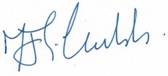
Mr J M Clubb
Chairman of the Nomination Committee
Date: 31 March 2026
Remuneration Committee Report
The remuneration committee report is prepared by the Remuneration Committee, and this report sets out the remuneration of Directors for the financial year ended 30 September 2025.
Composition and Role of the Remuneration Committee
The Remuneration Committee consists of the Non-Executive Directors, chaired by Philip Taylor, who took over from Michael Gray following his departure on 31 December 2024.
The Committee determines and agrees with the Board the framework and policy for Executive remuneration and the associated costs to the Group and is responsible for the implementation of that policy. The Committee determines the specific remuneration packages for each of Executive Director and no Director or Senior Executive is involved in any decisions as to their own remuneration. The Committee has access to information and advice provided by the Executive Chairman and the CFO and can access independent advice where it considers it appropriate. The Committee meets at least twice a year.
This report explains how the Group has applied its policy on remuneration paid to Executive Directors.
Framework and Policy on Executive Directors' Remuneration
The Group's remuneration policy is designed to provide competitive rewards for each Executive Directors, considering the performance of the Group and the individual Executives, together with comparisons to pay conditions throughout the markets in which the Group operates. It is the aim of the Committee to attract, retain and motivate high calibre individuals with a competitive remuneration package. It is common practice in the industry for total remuneration to be significantly influenced by bonuses.
The Committee takes the remuneration and employment conditions of its broader employee population into account when setting the remuneration policy for its Executive Directors. The Committee also considers its responsibilities to its shareholders and wider economic environment and market developments.
The remuneration packages are constructed to provide a balance between fixed and variable rewards. Therefore, remuneration packages for Executive Directors normally include basic salary, bonuses, benefits in kind and share based rewards. In agreeing the level of basic salaries and annual bonuses, the Committee takes into consideration the total remuneration that Executives could receive.
Basic Salary
Basic salaries are reviewed on an annual basis or following a significant change in responsibilities. The Committee seeks to establish a basic salary for each Executive determined by their individual responsibilities and performance, considering comparable salaries for similar positions in companies of a similar size in the same market.
Incentive Arrangements
Bonuses
These are designed to reflect the Group's performance, considering the performance of its peers, the
market in which the Group operates and the Executive's contribution to that performance.
Share based rewards
The Group does not have any options nor an Employee Share Ownership Trust (ESOT).
Other Employee Benefits
Depending on the terms of their contract, the Executive Directors are entitled to a range of benefits, including contributions to individual personal pension plans, private medical insurance, and life assurance.
Service Contracts and Notice Periods
The Executive Directors are employed on rolling contracts subject to six months' notice from either the
Executive or the Group, given at any time.
Service contracts do not provide explicitly for termination payments or damages, but the Group may make payments in lieu of notice. For this purpose, pay in lieu of notice would consist of basic salary and other relevant emoluments for the relevant notice period excluding any bonus.
External Appointments undertaken by Executive Directors
In the Committee's opinion, experience of other companies' practices and challenges is valuable for the personal development of the Group's Executive Directors and for the Company. It is therefore the Group's policy to allow Executive Directors to accept Non-Executive Directorships at other companies, provided the time commitment does not interfere with the Executive Directors' responsibilities within the Group. The individual Executive Director retains fees.
Non-Executive Directors
All Non-Executive Directors have a letter of appointment for an initial period of thirty-six months and thereafter on a rolling basis subject to three months' notice by either the Non-Executive Director or the Group, given at any time.
In the event of termination of their appointment, they are not entitled to any compensation.
Non-Executive Directors' fees are determined by the Committee after consultation with the Executive Chairman having regard to the need to attract high calibre individuals with the right experience, the time and responsibilities entailed, and comparative fees paid in the market in which the Group operates. They are not eligible for pensions.
Management Incentive Plan ("MIP")
On 12 May 2022, the Company set up the TEAM plc MIP to incentivise selected employees of the Company. In April 2025, a decision was taken to terminate the MIP and, as a result, the Directors no longer hold any interests under the scheme
Directors' Emoluments
The remuneration of each Director as listed on page 3, in the Company Information section, during the year ended 30 September 2025 is set out below. Information in the table has been audited.
|
|
|
|
|
|
|
Pension |
Pension |
|
|
|
|
|
|
|
Contribution |
Contribution |
|
|
|
|
|
Year ended |
Year ended |
year ended |
Year ended |
|
|
Salary |
Benefits |
Bonus |
30 Sept 2025 |
30 Sept 2024 |
30 Sept 2025 |
30 Sept 2024 |
|
|
£ |
£ |
£ |
£ |
£ |
£ |
£ |
|
Executive |
|
|
|
|
|
|
|
|
J M Clubb |
175,000 |
- |
- |
175,000 |
190,758 |
17,500 |
13,200 |
|
M Moore |
117,500 |
- |
- |
117,500 |
234,698 |
11,750 |
19,000 |
|
Non- Executive |
|
|
|
|
|
|
|
|
L P C Taylor |
36,000 |
- |
- |
36,000 |
29,000 |
- |
- |
|
M M Gray |
9,000 |
- |
- |
9,000 |
29,000 |
- |
- |
|
D J K Turnbull
|
21,000 |
- |
- |
21,000 |
29,000 |
- |
- |
|
T Hall |
4,167 |
- |
- |
4,167 |
- |
- |
- |
|
|
362,667 |
- |
- |
362,667 |
512,456 |
29,250 |
32,200 |
The highest paid Director for 2025 was Mr J M Clubb receiving emoluments of £175,000 (30 September 2024: Mr. M C Moore £234,698). No Bonuses were paid during the year.
Mr M Moore salary was increased from £190,000 to £210,000 in January 2025. He resigned on 30th April 2025. The settlement of £95,168 was paid to him in accordance with the terms of the settlement agreement dated April 2025, representing his contractual entitlements on termination, including notice-related payments. No Bonuses were paid to him during the year.
Mr M M Gray and Mr D J K Turnbull have resigned on 31st December 2024 and 24th April 2025 respectively. Mr T Hall was appointed on 1st May 2025.
The costs of the share awards will be reflected in the Consolidated Statement of Comprehensive Income as they vest.
The Non-executive directors' salary were increased from £29,000 per year to £36,000 per year effective 15th April 2024 and £42,000 starting 15th April 2025. Mr T Hall's fee has commenced from June 2025, and his salary has been set at £12,500 per year.
Directors' Interests in Management Incentive Plan shares
|
Director |
30 Sept 2025 |
30-Sep-2024 |
|
No. |
No. |
|
|
M C Moore |
- |
650 |
|
|
- |
650 |
In April 2025, a decision was taken to terminate the MIP and, as a result, the Directors no longer hold any interest under the scheme. The MIP shares held by M C Moore were repurchased by Team Midco upon employment termination for £3,770, settled by Team Midco as part of the settlement agreement.
Directors' Report for the year ended 30 September 2025
Introduction
The Directors present their report and the consolidated financial statements for TEAM plc (the
"Company") and its subsidiaries (the "Group") for the year ended 30 September 2025.
Results
The financial statements are set out on pages 38 to 64.
Dividend
The Directors do not propose to pay a dividend for the year ended 30 September 2025 (30 September 2024: £nil).
Capital Structure
Full details of the issued share capital, along with movements during the year, are set out in note 17 on page 59.
Incorporation
The Company was incorporated on 4 July 2019. The Company is a registered public company limited by share capital and was incorporated and registered in Jersey, Channel Islands. The Company registration number is 129405.
Directors' Shareholdings
The Directors who held office during the year and their interest in the shares of the Company were as follows:
|
|
|
30 Sept 2025 |
30 Sept 2024 |
|
|
Appointed |
Number of shares |
Number of shares |
|
J M Clubb |
4 July 2019 |
4,773,655 |
4,030,018 |
|
M C Moore (resigned 30/04/2025) |
1 March 2021 |
n/a |
23,392 |
|
M M Gray (resigned 31/12/2024) |
1 March 2021 |
n/a |
122,727 |
|
D J K Turnbull (resigned 24/04/2025) |
1 March 2021 |
n/a |
83,645 |
|
LP C Taylor |
1 March 2021 |
258,645 |
158,645 |
|
T Hall ( Joined 01/05/2025) |
9 April 2025
|
-
|
n/a |
Further details of Directors' service contracts, remuneration, share interests and interests in options over the Company's shares can be found in the Remuneration Committee Report on page 24.
Major Shareholdings
At the date of publication of this report, the Company had been notified of the following shareholdings of 3% or more of its issued share capital:
|
|
Ordinary shares |
% of issued share capital |
|
Kevin Allenby |
9,577,320 |
15.4 |
|
Mark Clubb |
4,787,939 |
7.7 |
|
Salus Alpha Financial Services AG |
4,234,210 |
6.8 |
|
John Drinkwater |
4,401,514 |
7.1 |
|
VT EPIC MA Growth Fund |
4,075,000 |
6.6 |
|
Schroders John Beverley Marlborough Funds |
4,069,284 3,289,750 3,206,626 |
6.5 5.3 5.2 |
|
|
|
|
Political Contributions
The Group and Company did not make any political donations or incur any political expenditure during the year (30 September 2024: nil).
Going concern
The Directors have prepared financial forecasts supported by sensitivity analyses across a range of reasonably foreseeable downside scenarios, considering variables such as revenue growth, asset levels, cost inflation, acquisition integration and the timing of anticipated transactions.
The assessment includes the proposed share-for-share acquisitions of WH Ireland Group and a further pipeline acquisition, which require no cash consideration and are expected to strengthen Group liquidity and enhance recurring revenue streams. It also incorporates the post year-end equity funding and additional loan note facilities secured.
Having considered the anticipated improvements in trading performance, the incremental liquidity expected from the proposed acquisitions, the funding obtained after the year end, and the continued cost-optimisation initiatives across the Group, the Directors have a reasonable expectation that the Group has sufficient resources to continue in operational existence for at least 12 months from the date of approval of the consolidated financial statements.
Likely future developments
The Directors are focused on bringing the Group to a cashflow positive position and to be able to pay a dividend to shareholders over the medium term. In the early years of the TEAM business plan, this was not expected, nor has it been the outcome. This was due to the startup costs associated with the business plan, the costs associated with running a plc entity with a listing on AIM, together with the losses made in the investment management division. The acquisitions made or arranged by the Group, along with a pipeline of hiring revenue generating individuals and earnings enhancing acquisitions, together with the expected delivery of revenue and cost synergies from the acquired subsidiaries, are expected to achieve this aim.
Events after the Reporting Period
WH Ireland Acquisition
On 27 November 2025 TEAM plc announced a recommended offer for 100% of WH Ireland Group plc ("WH Ireland" or "WHI") via a scheme of arrangement. Under terms of all-share offer WHI shareholders received 0.195 new TEAM plc shares for each WHI share, valuing WHI's entire issued share capital at approximately £12.7 million and equating to a look through value of approximately £13.3m
On 20 March 2026 the acquisition was approved by the High Court Justice and the scheme became effective on 24 March 2026. The acquisition of WH Ireland strengthens the Groups strategic position and establishes a significant presence in the UK. Initial accounting for the business combination has yet to be carried out, although preliminary assessments are underway. Identifiable net assets of approximately £4.7m were acquired.
EPIC Fund Services (Guernsey) Limited Acquisition
Subsequent to the year end, the Group acquired EPIC Fund Services (Guernsey) Limited. The group acquired 100% of the issued share capital for consideration of £950,000, satisfied entirely in new ordinary shares of TEAM plc. The acquisition reinforces the group's presence in Guernsey and creates a broader capability of services in the Channel Islands.
Annual General Meeting ("AGM")
The Company will hold its AGM on a date to be announced in April 2026. The resolutions to be proposed at the AGM include usual resolutions dealing with the ordinary business of the AGM. A description of all the resolutions will be set out within the Notice of AGM document being posted separately.
Statement of Directors' Responsibilities
The Directors acknowledge their responsibilities for preparing the Annual Report and the consolidated financial statements in accordance with applicable law and regulations.
Companies (Jersey) Law 1991 requires the Directors to prepare consolidated financial statements for each financial year. Under that law. the Directors have elected to prepare the financial statements in accordance with the requirements of International Financial Reporting Standards ('IFRS') as issued by the International Accounting Standards Board ('IASB'). Under Companies (Jersey) Law 1991, the Directors must not approve the financial statements unless they are satisfied that they give a true and fair view of the situation of the Company and Group and of the profit or loss of the Company and Group for that period. In preparing these financial statements, the Directors are required to:
· select suitable accounting policies and apply them consistently;
· make judgements and accounting estimates that are reasonable and prudent;
· state whether International Financial Reporting Standards have been followed, subject to any material departures disclosed and explained in the financial statements; and
· prepare the financial statements on the going concern basis unless it is inappropriate to presume that the Company and Group will continue in business.
The Directors are responsible for keeping adequate accounting records that are sufficient to show and explain the Company's transactions and disclose with reasonable accuracy at any time the financial position of the Company and enable them to ensure that the financial statements comply with the Companies (Jersey) Law 1991. They are also responsible for safeguarding the assets of the Company and Group and hence for taking reasonable steps for the prevention and detection of fraud and other irregularities.
Disclosure of information to the auditors
Each of the persons who are Directors at the time that this Directors' Report is approved has confirmed
that:
· as far as that Director is aware, there is no relevant audit information of which the Company's and the Group's auditor is unaware, and
· that Director has taken all the steps that ought to have been taken as a Director in order to be aware of any relevant information and to establish that the Company's and the Group's auditor is aware of that information.
This report was approved by the Board on 31 March 2026 and signed on its behalf by:
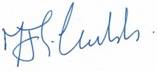
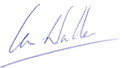
…………………………………………… ………………………………………………………….
Mr J M Clubb Mr I Walker
Executive Chairman CFO and COO
Directors' Biographies
|
|
Jonathan Mark Gordon Clubb EXECUTIVE CHAIRMAN Mark began his 27 year career in investment banking at Hoare Govett and has held various senior management roles at UBS Philips and Drew and BZW (latterly Credit Suisse First Boston). In 1997 Mark, together with six partners, founded London-based investment banking boutique, Altium Capital Partners. Following a management buyout of Altium Capital Partners in 2008, Mark returned to Jersey and has spent the last 12 years in investment management, including at private client stockbroker, Collins Stewart, later acquired by Canaccord Genuity Inc.
|
|
|
Louis Philip Chetwynd Taylor INDEPENDENT NON-EXECUTIVE DIRECTOR & SENIOR INDEPENDENT DIRECTOR
Philip has over 40 years' experience in the finance industry, beginning his career at PwC in London. Philip is currently a lay member of the States of Jersey Public Accounts Committee and as a Director of a property development company. Philip was the Senior Partner of PwC Channel Islands and a Global Leader of the PwC Quality Assurance Programme. Philip has previously served as Chairman of the States of Jersey Treasury Advisory Panel a Commissioner of the JFSC, as a Member of the Conduct and Case Management Committees of the UK Financial Reporting Council, as a Member of Jersey Financial Services Advisory Board and as Director of a number of listed and other financial services companies. |


|
|
Tim Hall INDEPENDENT NON-EXECUTIVE DIRECTOR
With over 40 years investment experience, Tim has worked with a number of investment boutiques and is currently chair of the Markets Division of EPIC Investment Partners.
Spending 26 years with Martin Currie Investment Management in Edinburgh, roles included portfolio management, establishing a global client service and sales team, as well running the investment floor with associated risk and trading desks. As a main board director, he also chaired the Pension Fund, and Charitable Foundation. He retired in 2010.
After a period of chairing Oriel Asset Management, the business was reversed into Garraway Capital Partners in 2013, which, in 2021, was subsumed by EPIC Investment Partners. Tim's roles include supporting the portfolio managers as well as guiding the division's marketing and sales efforts, and corporate aspirations.
He is involved in a number of charitable groups, including being a Trustee of the Royal Edinburgh Military Tattoo, and a past chair of the Lloyds TSB Foundation in Scotland.
Tim is also a non-executive director of Jersey based Team plc, and to reflect his breadth of experience, sits on the Audit and Risk, Nomination and Remuneration committees'
|

INDEPENDENT AUDITOR'S REPORT TO THE SHAREHOLDERS OF TEAM PLC
Opinion
We have audited the consolidated financial statements of Team plc and its subsidiaries (the "Group") for the year ended 30 September 2025 which comprise the consolidated statement of financial position, the consolidated statement of comprehensive income, the consolidated statement of changes in equity, the consolidated statement of cash flows and notes to the consolidated financial statements including significant accounting policies. The financial reporting framework that has been applied in their preparation is applicable law and International Financial Reporting Standards (IFRS) as adopted by the International Accounting Standards Board (IASB).
In our opinion, the consolidated financial statements:
· give a true and fair view of the state of the Group's affairs as at 30 September 2025 and of its loss for the year then ended;
· have been properly prepared in accordance with IFRS as adopted by the IASB; and
· have been prepared in accordance with the requirements of the Companies (Jersey) Law 1991.
Basis for opinion
We conducted our audit in accordance with International Standards on Auditing (UK) (ISAs (UK)) and applicable law. Our responsibilities under those standards are further described in the Auditor's responsibilities for the audit of the consolidated financial statements section of our report. We are independent of the Group in accordance with the ethical requirements that are relevant to our audit of the consolidated financial statements in Jersey, including the FRC's Ethical Standard as applied to listed entities, and we have fulfilled our ethical responsibilities in accordance with these requirements. We believe that the audit evidence we have obtained is sufficient and appropriate to provide a basis for our audit opinion.
An overview of the scope of our audit
Whilst planning our audit engagement, we determined materiality and assessed the risks of material misstatement in the consolidated financial statements including the consideration of where Directors made subjective judgements, for example, in respect of the assumptions that underlie significant accounting estimates and their assessment of future events that are inherently uncertain. We tailored the scope of our audit in order to perform sufficient work to enable us to express an opinion on the consolidated financial statements as a whole taking into account the Group, its accounting processes and controls and the industry in which it operates.
Key Audit Matters
Key audit matters are those matters that, in our professional judgement, were of most significance in our audit of the consolidated financial statements of the current period and include the most significant assessed risks of material misstatement (whether or not due to fraud) we identified, including those which had the greatest effect on the overall audit strategy; the allocation of resources in the audit; and directing the efforts of the engagement team. These matters were addressed in the context of our audit of the consolidated financial statements as a whole, and in forming our opinion thereon, and we do not provide a separate opinion on these matters.
We have determined the matters described below to be the key audit matters to be communicated in our report.
|
Key Audit Matter |
How the matter was addressed in the audit |
|
Going Concern
The Company's management has prepared the Group's consolidated financial statements on the assumption that the Company and Group is a going concern. The Group has been loss making since inception, has an accumulated deficit balance of £10.3 million and a net current liability position of £1.6 million as at the reporting date, there is a risk that management's use of the going concern assumption in preparing the financial statements is not appropriate.
|
Our main audit procedures in respect of going concern were as follows: § We reviewed the management's assessment on going concern; § We reviewed the reasonableness of supporting budget/cash flow forecast; § We reviewed post year-end trading, debt facilities and other relevant information.
|
INDEPENDENT AUDITOR'S REPORT TO THE SHAREHOLDERS OF TEAM PLC (CONTINUED)
|
Key Audit Matter |
How the matter was addressed in the audit |
|
|
Key Observations Based on the work we have performed, we have not identified any material uncertainties relating to events or conditions that, individually or collectively, may cast significant doubt on the Group's ability to continue as going concern for a period of at least twelve months from when the consolidated financial statements are authorised for issue. |
|
Risk of fraud in revenue recognition
Material misstatement due to fraudulent financial reporting relating to revenue recognition often results from an overstatement of revenues through, for example, premature revenue recognition or recording fictitious revenues. It may also result from an understatement of revenues through, for example, improperly shifting revenues to a later period.
The Group's main source of income is the fees and commissions earned from the provision of investment management and other related services.
We have not become aware of opportunities and pressure which could lead us to believe that potential misstatements may arise as a result of fraudulent financial reporting.
|
Our main audit procedures in respect of revenue recognition were as follows: § We obtained an understanding of the policies and procedures applied to revenue recognition, as well as compliance therewith, including an analysis of the effectiveness of the design and implementation of controls related to revenue recognition employed by the Group; § We performed sample-based tests of details over the accuracy and occurrence of sales during the year especially responsive to the risk of fraud in revenue occurrence; § We performed substantive analytical procedures to test reasonableness and completeness of recorded revenue; § We reviewed the disclosures related to revenue included in the notes to the consolidated financial statements.
Key Observations We did not identify any material issues arising from the procedures performed in this area. We concluded that the Group's accounting for revenue recognition, and the related disclosures, were in accordance with the requirements of IFRS. |
|
Risk of Impairment of Intangible Assets, including Goodwill
The acquisitions made by the Group (including those completed in prior periods) have generated a significant balance of intangible assets i.e, customer relationships and goodwill, being recognised on the consolidated statement of financial position.
As required by IFRS, Management performs an annual review of the valuation of intangible assets, including goodwill on a cash-generating unit ("CGU") basis including the determination of any impairment to be recognised for the year. A risk of material misstatement arises due to the significant judgments and estimations applied by the management in this process.
|
Our main audit procedures were as follows:
§ We obtained an understanding of the process and controls around the goodwill valuation and impairment review process; § We assessed the reasonableness of the inputs and assumptions applied by the management in preparing the relevant valuation workings; § We reviewed the mathematical accuracy of the calculations performed by management; and, § We perform an evaluation of the key assumptions used in the impairment assessment calculation to assess whether there are any indications of management bias
Key Observations We did not identify any material issues arising from the procedures performed in this area. We concluded that management's assessment of the impairment of intangible assets including goodwill was appropriate and in accordance with the requirements of IFRS. |
INDEPENDENT AUDITOR'S REPORT TO THE SHAREHOLDERS OF TEAM PLC (CONTINUED)
Our application of materiality
We define materiality as the magnitude of misstatements in the consolidated financial statements that makes it probable that the economic decisions of a reasonably knowledgeable user of the financial statements would be changed or influenced. We use materiality to determine the scope of our audit and the nature, timing and extent of our audit procedures and to evaluate the results of that work. Materiality was determined as follows:
Consolidated financial statements as a whole:
Materiality was calculated at £263,000 based on a calculation of 3.5% of preliminary net assets. This benchmark is considered the most appropriate because, based on our professional judgement, we considered that this is the primary measure used by the users of the consolidated financial statements in assessing the performance and value of the Group.
Performance materiality was set at 60% of materiality and was calculated at £170,950.
Communication of misstatements to the Board:
We agreed with the Directors that any misstatement above £13,150 identified during our audit will be reported to the Audit Committee, together with any misstatement below that threshold that, in our view, warranted reporting on qualitative grounds.
As noted above, the materiality levels are calculated based upon preliminary net assets. We have performed a reassessment of materiality based on the final net asset balance and have concluded that the materiality levels remain appropriate at the conclusion of the audit as these are more conservative.
Conclusions relating to going concern
In auditing the financial statements, we have concluded that the directors' use of the going concern basis of accounting in the preparation of the financial statements is appropriate.
Based on the work we have performed, we have not identified any material uncertainties relating to events or conditions that, individually or collectively, may cast significant doubt on the Group's ability to continue as going concern for a period of at least twelve months from when the consolidated financial statements are authorised for issue.
Our responsibilities and the responsibilities of the directors with respect to going concern are described in the relevant sections of this report.
Other information
The Directors are responsible for the other information. The other information comprises the information included in the annual report set out on page 2 to 32 other than the consolidated financial statements and our auditor's report thereon. Our opinion on the consolidated financial statements does not cover the other information and we do not express any form of assurance conclusion thereon.
In connection with our audit of the consolidated financial statements, our responsibility is to read the other information identified above when it becomes available and, in doing so, consider whether the other information is materially inconsistent with the consolidated financial statements, or our knowledge obtained in the audit or otherwise appears to be materially misstated. If we identify such material inconsistencies or apparent material misstatements, we are required to determine whether there is a material misstatement of the consolidated financial statements or a material misstatement of the other information. If, based on the work we have performed, we conclude that there is a material misstatement of this other information, we are required to report that fact.
We have nothing to report in this regard.
INDEPENDENT AUDITOR'S REPORT TO THE SHAREHOLDERS OF TEAM PLC (CONTINUED)
Matters on which we are required to report by exception
In light of the knowledge and understanding of the Group and its environment which we obtained during the course of the audit, we have not identified material misstatements in the Directors' report.
We have nothing to report in respect of the following matters where the Companies (Jersey) Law 1991 requires us to report to you if, in our opinion:
· Adequate accounting records have not been kept; or
· returns adequate for our audit have not been received from branches not visited by us; or
· the financial statements are not in agreement with the accounting records and returns; or
· we have not received all the information and explanations we require for our audit.
Responsibilities of directors for the consolidated financial statements
As explained more fully in the Statement of Directors' Responsibilities on page 30, the Directors are responsible for the preparation of the consolidated financial statements which give a true and fair view, and for such internal control as the Directors determine is necessary to enable the preparation of consolidated financial statements that are free from material misstatement, whether due to fraud or error.
In preparing the consolidated financial statements, the Directors are responsible for assessing the Group's ability to continue as a going concern, disclosing, as applicable, matters related to going concern and using the going concern basis of accounting unless the directors either intend to liquidate the Group or to cease operations, or have no realistic alternative but to do so.
Auditor's responsibilities for the audit of the consolidated financial statements
Our objectives are to obtain reasonable assurance about whether the consolidated financial statements as a whole are free from material misstatement, whether due to fraud or error, and to issue an auditor's report that includes our opinion. Reasonable assurance is a high level of assurance but is not a guarantee that an audit conducted in accordance with ISAs (UK) will always detect a material misstatement when it exists. Misstatements can arise from fraud or error and are considered material if, individually or in the aggregate, they could reasonably be expected to influence the economic decisions of users taken on the basis of these consolidated financial statements.
Explanation as to what extent the audit was considered capable of detecting irregularities, including fraud
Irregularities, including fraud, are instances of non-compliance with laws and regulations. We design procedures in line with our responsibilities, outlined above, to detect material misstatements in respect of irregularities, including fraud. The extent to which our procedures are capable of detecting irregularities, including fraud is detailed below.
The objectives of our audit, in respect to fraud, are; to identify and assess the risks of material misstatement of the financial statements due to fraud; to obtain sufficient appropriate audit evidence regarding the assessed risks of material misstatement due to fraud, through designing and implementing appropriate responses; and to respond appropriately to fraud or suspected fraud identified during the audit. However, the primary responsibility for the prevention and detection of fraud rests with both those charged with governance of the entity and management.
Our approach was as follows:
· We obtained an understanding of the legal and regulatory frameworks that are applicable to the Group and determined that the most significant are those that relate to the Companies (Jersey) Law 1991, IFRS and the AIM Rules for Companies. We also reviewed the laws and regulations applicable to the Group that have an indirect impact on the financial statements.
· We gained an understanding of how the Group is complying with Companies (Jersey) Law 1991, IFRS and the AIM Rules for Companies by making inquiries of management. We corroborated our inquiries through our review of minutes of Board of Directors meetings and the review of various correspondence examined in the context of our audit and noted that there was no contradictory evidence.
INDEPENDENT AUDITOR'S REPORT TO THE SHAREHOLDERS OF TEAM PLC (CONTINUED)
· We assessed the susceptibility of the Group's financial statements to material misstatement, including how fraud might occur, by meeting with management to understand where they considered there was susceptibility to fraud. We also considered performance targets and their propensity to influence management to manage earnings and revenue by overriding internal controls. We performed specific procedures to respond to the fraud risk of inappropriate revenue recognition. Our procedures also included testing a risk-based sample of journal entries that may have been posted with the intention of overriding internal controls to manipulate earnings. These procedures were designed to provide reasonable assurance that the financial statements were free from fraud or error.
· Based on this understanding, we designed specific appropriate audit procedures to identify instances of non-compliance with laws and regulations. This included making enquiries of management and those charged with governance and obtaining additional corroborative evidence as required.
There are inherent limitations in the audit procedures described above. We are less likely to become aware of instances of non-compliance with laws and regulations that are not closely related to events and transactions reflected in the consolidated financial statements. Also, the risk of not detecting a material misstatement due to fraud is higher than the risk of not detecting one resulting from error, as fraud may involve deliberate concealment by, for example, forgery or intentional misrepresentations, or through collusion.
A further description of our responsibilities for the audit of the financial statements is located on the Financial Reporting Council's website at https://www.frc.org.uk/auditorsresponsibilities. This description forms part of our auditor's report.
Use of our report
This report is made solely to the Group's shareholders as a body, in accordance with Article 113A of the Companies (Jersey) Law 1991. Our audit work has been undertaken so that we might state to the Group's shareholders those matters we are required to state to them in an auditor's report and for no other purpose. To the fullest extent permitted by law, we do not accept or assume responsibility to anyone other than the Group and the Group's shareholders as a body, for our audit work, for this report, or for the opinions we have formed.
Phillip Callow
For and on behalf of Moore Stephens Audit and Assurance (Jersey) Limited
1 Waverley Place
Union Street
St Helier
Jersey
Channel Islands
JE4 8SG
Dated: 31 March 2026
Consolidated Statement of Comprehensive Income for the Year Ended 30 September 2025
|
|
|
Year to |
Year to |
|
|
|
30 Sept 2025 |
30 Sept 2024 |
|
|
Note |
£'000 |
£'000 |
|
Revenues |
3 |
11,953 |
10,279 |
|
Cost of sales |
|
(5,389) |
(4,505) |
|
Operating expenses |
|
(9,220) |
(8,653) |
|
Operating loss |
|
(2,656) |
(2,879) |
|
Operating loss before acquisition costs |
|
(2,583) |
(2,815) |
|
Acquisition costs |
20 |
(73) |
(64) |
|
Operating loss after acquisition costs |
|
(2,656) |
(2,879) |
|
Fair value gains on deferred consideration |
15 |
- |
730 |
|
Impairment of goodwill |
9 |
- |
(600) |
|
Share award expense |
|
- |
1 |
|
Other income and charges |
7 |
(377) |
(173) |
|
Loss on ordinary activities before tax |
|
(3,033) |
(2,921) |
|
Taxation |
8 |
(197) |
14 |
|
Loss for the year and total comprehensive loss |
|
(3,230) |
(2,907) |
|
Loss per share from continuing and total operations (basic and diluted) |
20 |
£(0.059) |
£(0.086) |
Consolidated Statement of Financial Position as of 30 September 2025
|
Note |
30 Sep 2025 |
30 Sep 2024 |
|
|
£'000 |
£'000 |
||
|
Non-current assets |
|
|
|
|
Intangible assets |
9 |
10,988 |
11,933 |
|
Property, plant and equipment |
10 |
666 |
630 |
|
Deferred tax |
8 |
- |
168 |
|
Long term deposit |
12 |
86 |
78 |
|
|
11,740 |
12,809 |
|
|
Current assets |
|
|
|
|
Trade, other receivables, and prepayments |
14 |
936 |
997 |
|
Cash and cash equivalents |
13 |
1,359 |
1,736 |
|
|
2,295 |
2,733 |
|
|
Trade and other payables:amounts falling due within one year |
15 |
(3,881) |
(5,159) |
|
Net current liabilities |
(1,586) |
(2,426) |
|
|
Total assets less current liabilities |
10,154 |
10,383 |
|
|
Trade and other payables: amounts falling due after one Year 15 |
(1,406) |
(438) |
|
|
|
|
|
|
|
Net assets |
8,748 |
9,945 |
|
|
Equity |
|
|
|
|
Stated Capital |
17 |
19,018 |
16,985 |
|
Share award reserve |
|
4 |
4 |
|
Retained loss |
|
(10,274) |
(7,044) |
|
Total Equity |
8,748 |
9,945 |
|
The consolidated financial statements on pages 38 - 64 were approved and authorised for issue by the Board of Directors on the 31 March 2026 and were signed on its behalf by:
 |
|||
 |
|||
…………………………………………… ………………………………………………………….
Mr J M Clubb Mr I Walker
Executive Chair CFO and COO
Consolidated Statement of Changes in Equity for the Year Ended 30 September 2025
|
|
Stated capital |
Share award reserve |
Retained earnings |
Total |
|
£'000 |
£'000 |
£'000 |
£'000 |
|
|
At 1 October 2024 |
16,985 |
4 |
(7,044) |
9,945 |
|
New share capital |
2,033 |
- |
- |
2,033 |
|
Loss for the year |
- |
- |
(3,230) |
(3,230) |
|
At 30 September 2025 |
19,018 |
4 |
(10,274) |
8,748 |
|
|
Stated capital |
Share award reserve |
Retained earnings |
Total |
|
|
£'000 |
£'000 |
£'000 |
£'000 |
|
|
12,349 |
13 |
(4,137) |
8,225 |
|
New share capital |
4,636 |
- |
- |
4,636 |
|
Loss for the year |
- |
- |
(2,907) |
(2,907) |
|
Share award for the year |
- |
(9) |
- |
(9) |
|
At 30 September 2024 |
16,985 |
4 |
(7,044) |
9,945 |

Consolidated Statement of Cash Flows for the Year Ended 30 September 2025
|
Note |
Year to |
Year to |
|
|
30 Sept 2025 |
30 Sept 2024 |
||
|
£'000 |
£'000 |
||
|
Cash flows from operating activities |
|
|
|
|
Loss for the year before tax |
|
(3,033) |
(2,921) |
|
Adjustments to cash flows from non-cash items: |
|
|
|
|
Depreciation and amortisation |
6 |
1,221 |
1,163 |
|
Finance costs |
7 |
377 |
173 |
|
Impairment of goodwill |
9 |
- |
600 |
|
Gain on lease termination and assignment |
|
(13) |
- |
|
Fair value gains on deferred consideration |
15 |
- |
(730) |
|
Share award expense |
|
- |
(1) |
|
Trade and other receivables |
|
53 |
(110) |
|
Trade and other payables |
|
(156) |
(968) |
|
Net cash outflow from operating activities |
(1,551) |
(2,793) |
|
|
Cash flows from investing activities |
|
|
|
|
Payment of deferred consideration |
15 |
(1,231) |
- |
|
Acquisition of property, plant, and equipment |
|
(26) |
(10) |
|
Acquisition of intangible assets |
|
(50) |
- |
|
Net cash outflow from investing activities |
(1,307) |
(10) |
|
|
Cash flows from financing activities |
|
|
|
|
Lease liability paid |
|
(199) |
(151) |
|
Issue of share capital |
17 |
1,833 |
1,196 |
|
Net inflow of cash from borrowings |
15 |
847 |
1,310 |
|
Net cash flow from financing activities |
2,481 |
2,355 |
|
|
Net decrease in cash and cash equivalents |
(377) |
(448) |
|
|
Cash and cash equivalents at beginning of year |
|
1,736 |
1,938 |
|
Cash and cash equivalents from subsidiaries at acquisition |
- |
246 |
|
|
Cash and cash equivalents at end of year* 13 |
1,359 |
1,736 |
|
*Included in cash and cash equivalents at the year-end is £646,000 of fixed term deposits held in lien by the United Arab Emirates government as part of regulatory compliance.
The consolidated statement of cash flows of the Group for the year ended 30 September 2025 is set out above. Details of additions and disposals of which are given in note 10.
Notes to the Consolidated Financial Statements for the year ended 30 September 2025
1. General information
TEAM plc (the "Company" and "Group") is a Registered Public Company limited by share capital incorporated and registered in Jersey, Channel Islands on 4 July 2019. The registered Company number is 129405. The principal place of business is 2nd Floor, Conway house, 7 - 9 Conway Street, St. Helier, Jersey, JE2 3NT.
The principal activities of the Group are the provision of investment management, financial advisory services and insurance brokering services.
These financial statements are presented in Pound Sterling (£), the functional currency of the Group, rounded to the nearest thousand (£'000), which is the currency of the primary economic environment in which the Group operates.
2. Accounting policies
Summary of significant accounting policies and key accounting estimates
The principal accounting policies adopted in the preparation of these financial statements are set out below. These policies have been consistently applied to the period presented, unless otherwise stated.
Statement of compliance
These consolidated financial statements have been prepared in accordance with the requirements of International Financial Reporting Standards (IFRS) as issued by the International Accounting Standards Board (IASB) and the requirements of the Companies (Jersey) Law 1991. The Group's consolidated financial statements have been prepared under the historical cost convention, except for financial instruments, which are stated in accordance with IFRS 9 Financial Instruments: recognition and measurement.
The preparation of financial statements in compliance with IFRS requires the use of certain critical accounting estimates. It also requires the Directors to exercise judgement in applying the Group's accounting policies. The areas where significant judgements and estimates have been made in preparing the financial statements are disclosed in more detail under the critical accounting judgements policy.
Basis of consolidated financial statements
The Group's financial statements consolidate those of the parent company and all its subsidiaries as of 30 September 2025. Control is achieved where the Company is exposed, or has rights, to variable returns from its involvement with an investee company and can affect those returns through its power over the other entity; power generally arises from holding a majority of voting rights.
All transactions and balances between Group companies are eliminated on consolidation, including unrealised gains and losses on transactions between Group companies. Amounts reported in the financial statements of subsidiaries have been adjusted where necessary to ensure consistency with the accounting policies adopted by the Group.
Profit or loss and other comprehensive income of the subsidiaries acquired or disposed of during the year are recognised from the effective date of acquisition, or up to the effective date of disposal, as applicable.
The Group attributes total comprehensive income or loss of subsidiaries between the owners of the parent given all subsidiaries are 100% owned.
New standards and interpretations not yet adopted
There are several standards, amendments to standards, and interpretations issued by the IASB that are effective in future accounting periods which the Group has elected not to adopt early.
The following amendments are effective for the period beginning 1 January 2025 and will be applied by the Group from that date:
· Lack of Exchangeability - Amendments to IAS 21
Other standards and amendments that are not yet effective and have not been adopted early by the Group include:
· Amendments to the Classification and Measurement of Financial Instruments (Amendments to IFRS 9 and IFRS 7)
· IFRS 18 'Presentation and Disclosure in Financial Statements'
· IFRS 19 'Subsidiaries without Public Accountability: Disclosures'
The Group is currently assessing the full impact of IFRS 18. The Group will provide a more detailed assessment of the impact in future periods."
Going concern
The group incurred a consolidated net loss of £3,230,000 (2024: £2,907,000) during the year ended 30 September 2025 and, as of that date, its consolidated current liabilities exceeded its consolidated current assets by £1,586,000 (2024: £2,426,000). This indicates that the company may not be a going concern.
The Directors have prepared financial projections covering at least 12 months from the expected date of approval of the financial statements, together with sensitivity analyses reflecting reasonably plausible downside scenarios, including lower revenue growth, cost pressures and delays in the completion or integration of the proposed share-for-share acquisitions of WH Ireland Group plc ("WHI") and a further pipeline acquisition. Neither transaction requires cash consideration from TEAM plc. WHI is expected to contribute additional liquidity on completion, while the pipeline acquisition, if completed, is expected to be broadly cash neutral with incremental recurring revenue. Although the Group's cash position at year end was modest, this has been strengthened post-year end through equity raises and loan note subscriptions, and further cost reduction measures have been implemented.
While the Group remains dependent on delivery of forecast improvements and successful execution of its strategic plans, the projections and sensitivities indicate that the Group is expected to maintain adequate liquidity and regulatory capital headroom throughout the assessment period. The Board also retains access to additional funding options, should these be required. Accordingly, the Directors consider the going concern basis of accounting to be appropriate.
Critical accounting estimates and judgements
The Group makes certain estimates and assumptions in the preparation of financial statements. Estimates and judgements are continually evaluated based on historical experience and other factors, including expectations of future events that are believed to be reasonable that best reflects the conditions and circumstances that exist at the reporting date.
The principal estimates and judgements that could have an effect upon the Group's financial results are the useful economic lives of property, plant and equipment, the impairment of trade receivables, goodwill and intangible assets, deferred consideration payable and the provision for income and deferred taxes. Further details of these estimates and judgements are set out in the related notes to the consolidated financial statements for these items.
Revenue recognition
The Group has applied IFRS 15 - Revenue from Contracts with Customers. IFRS 15 establishes the principles that an entity applies when reporting information about the nature, amount, timing and uncertainty of revenue and cash flows from a contract with a customer. In applying IFRS 15, an entity recognises revenue to depict the transfer of promised services to the customer in an amount that reflects the consideration to which the entity expects to be entitled in exchange for those services.
The Group recognises revenue on the transfer of services in accordance with the contractual terms entered into with clients. Fees and commissions are received on a variety of different payment terms.
· Commission:Trading and foreign exchange commission income is recognised on a trade date basis.
· Management Fees: Fund and investment management, introductory and sponsor fees are recognised on an accrual basis over time.
· Treasury services: Treasury fees are recognised on an accrual basis over time.
· Financial advice services: These are recognised on an accrual basis over time.
Contracts are assessed to determine whether they contain a single combined performance obligation or multiple performance obligations. If applicable the total transaction price is allocated amongst the various performance obligations based on their relative stand-alone selling prices.
Revenue is recognised at the point in time when the Group satisfies performance obligations by transferring the promised services to its customers. The Group has no unsatisfied performance obligations and so does not recognise any contract liabilities for consideration.
If the Group satisfies a performance obligation before it receives the consideration, the Group recognises either a contract asset or a receivable in its consolidated statement of financial position, depending on whether something other than the passage of time is required before the consideration is due.
Segment reporting
IFRS 8 requires that an entity disclose financial and descriptive information about its reportable segments, which are operating segments or aggregations of operating segments. Operating segments are identified based on internal reports that are regularly reviewed by the Board (in its role as chief operating decision maker) to allocate resources and to assess performance. Using the Group's internal management reporting as a starting point the three reporting segments set out in note 3 have been identified.
Foreign currency transactions and balances
The individual financial statements of each group entity are presented in the currency of the primary economic environment in which the entity operates (its functional currency). For the purposes of the consolidated financial statements, the results and financial position are presented in £ Sterling.
For the purposes of presenting consolidated financial statements, the assets and liabilities of the group's foreign operations are translated from their functional currency to £ Sterling using the closing exchange rate. Income and expenses are translated using the average rate for the period, unless the exchange rate
fluctuates significantly during the period, in which case exchange rates at the dates of the transactions are used. Exchange differences are recognised in profit or loss in the period in which they arise.
Exchange differences arising on the settlement of monetary items, and on the retranslation of monetary items are included under operating expenses in the statement of comprehensive income.
Tax
The tax expense for the period represents the sum of the tax currently payable and the deferred tax.
Deferred tax is the expected tax to be payable or recoverable on differences between the carrying amounts of assets and liabilities in the financial statements and the corresponding tax bases used in the computation of taxable profit. Deferred tax liabilities are generally recognised for all taxable temporary differences and deferred tax assets are recognised to the extent that it is probable that taxable profits will be available against which deductible temporary differences can be utilised.
The carrying amount of deferred tax assets is reviewed at each reporting date and reduced to the extent that it is no longer probable that sufficient taxable profits will be available to allow all or part of the asset to be recovered. Deferred tax assets and liabilities are measured at the tax rates (10% in Jersey, 17% in Singapore, 3% in Labuan, between 7% and 27% in South Africa and 0% in UAE and BVI) that are expected to apply in the year when the asset is realised or the liability is settled, based on tax rates (and tax laws) that have been enacted or substantively enacted at the reporting date.
Deferred tax assets and liabilities are offset where there is a legally enforceable right to set off current tax assets against current tax liabilities and when they relate to income taxes levied by the same taxation authority and the Group intends to settle its current tax assets and liabilities on a net basis.
Where available, Group losses are transferred between companies who pay the same rate of tax to the same taxation authority.
Property, plant, and equipment
Property, plant, and equipment are stated in the Statement of Financial Position at cost, less any subsequent accumulated depreciation and subsequent accumulated impairment losses. Assets are recognised when it is probable that the future economic benefits associated with the asset will flow to the entity and the cost can be measured reliably. Cost includes expenditure that is directly attributable to the acquisition of items.
Fully depreciated assets are retained in the cost and the related accumulated depreciation until they are removed from service. In the case of disposals, assets and related depreciation are removed from the financial statements at the net amount. Proceeds from disposal are charged or credited to profit and loss.
Depreciation
Depreciation is charged so as to write off the cost or valuation of assets over their useful economic lives, using the straight-line method.
Asset class Depreciation rate
Computer hardware 5 years
Equipment & fixtures 4 years
Website Costs 5 years
Leasehold Improvements 5 years
Right of use assets Over the term of the lease
Business combinations
The acquisition of subsidiaries is accounted for using the purchase method when the Group undertakes business combinations. The Group has acquired a business when it obtains control over a collection of assets and the acquired assets and activities that include inputs, substantive processes and the ability to produce outputs.
All consideration transferred is recognised at fair value at the date of acquisition. This includes assets transferred, liabilities incurred by the owners and equity instruments issued by the Group. Contingent consideration is initially recognised at fair value. If the contingent consideration is classified as equity, it is not remeasured, and settlement is accounted for within equity. If the contingent consideration is classified as a financial liability, it is remeasured to fair value at each reporting date, with the movement in fair value being recognised in the statement of profit or loss.
At acquisition date, to the extent that the total consideration transferred, fair value of prior equity interests and NCI (non- controlling interests) are greater than the net assets acquired, goodwill is recognised. If the fair value of the net assets acquired is more than the total consideration transferred, then the difference is recognised in profit or loss as a gain on a bargain purchase.
Intangible assets
The value of the customer relationships has been calculated using the excess earnings approach discounted using the Group's estimated cost of capital. The average life of a customer relationship has been set based on the customer base and represents both the period over which the value of such relationships has been calculated and the amortisation period of the intangible asset arising. The Group amortises intangible assets over the following periods:
Customer relationships 5 -10 years
On each reporting date, the Group reviews the carrying amounts of its intangible assets to determine whether there is any indication that those assets have suffered an impairment loss. If any such indication exists, the recoverable amount of the asset is estimated to determine the extent of the impairment loss (if any).
If the recoverable amount of an asset (or cash-generating unit) is estimated to be less than its carrying amount, the carrying amount of the asset (cash-generating unit) is reduced to its recoverable amount. An impairment loss is recognised as an expense immediately.
Goodwill
Goodwill represents the future economic benefits arising from a business combination that are not individually identified and separately recognised. Goodwill is not amortised, but it is tested for impairment annually, or more frequently if events or changes in circumstances indicate that it might be impaired and is carried at cost less accumulated impairment losses.
Cash and cash equivalents
Cash and cash equivalents comprise cash on hand and call deposits, and other short-term highly liquid investments that are readily convertible to a known amount of cash and are subject to an insignificant risk of change in value. Such investments are those with original maturities of three months or less.
Trade receivables
Trade and other receivables are recognised initially at fair value. They are subsequently measured at amortised cost using the effective interest method, less provision for impairment.
A provision for the impairment of trade receivables is based on the lifetime expected credit loss and past and forward-looking information.
Payables
Payables are obligations to pay for goods or services that have been acquired in the ordinary course of business. Trade and other payables are measured at initial recognition at fair value and are subsequently measured at amortised cost using the effective interest rate method.
Leases
Under IFRS 16, the Group recognises right-of-use assets and liabilities for significant leases.
The Group has elected and applied the exemption not to recognise right-of-use assets and lease liabilities for short-term leases of 12 months or less or leases for which the underlying asset is of low value. The Group recognises the lease payments associated with these leases as an expense on a straight-line basis over the lease term.
At inception of a contract under IFRS 16, the Group assesses whether a contract is, or contains a lease. A contract contains a lease if the contract conveys the right to control the use of an identified asset for a period in exchange for consideration.
The Group recognises a right-of-use asset and lease liability at the lease commencement date.
The right-of-use asset is initially measured at cost, which comprises the initial amount of the lease liability adjusted for any lease payments made at or before the commencement date, plus any direct costs incurred and an estimate of costs to restore the underlying asset, less any incentives received.
The right-of-use asset is subsequently depreciated using the straight-line method from the commencement date to the end of the lease term. The lease liability is initially measured at the present value of the lease payments that are not paid, discounted using the interest rate implicit in the lease, or if that rate cannot be readily determined, the Group's incremental borrowing rate. The lease liability is subsequently measured at amortised cost using the effective interest rate method.
The Group presents right-of-use assets in property, plant and equipment and lease liabilities in loans and borrowings in the Statement of Financial Position.
Financial instruments
The Group has adopted IFRS 9 in respect of financial instruments.
Financial assets, including trade and other receivables, cash and bank balances and long term deposits, are initially recognised at transaction price, unless the arrangement constitutes a financing transaction, where the transaction is measured at the present value of the future receipts discounted at a market rate of interest. Such assets are subsequently carried at amortised cost using the effective interest method. At the end of each reporting period financial assets measured at amortised cost are assessed for lifetime expected credit losses based on past and forward-looking information. If an asset is impaired the impairment loss is the difference between the carrying amount and the present value of the estimated cash flows discounted at the asset's original effective interest rate. The impairment loss is recognised in the Statement of Comprehensive Income. If there is a decrease in the impairment loss arising from an event occurring after the impairment was recognised, the impairment is reversed. The reversal is such that the current carrying amount does not exceed what the carrying amount would have been had the impairment not previously been recognised. The impairment reversal is recognised in the Statement of Comprehensive Income.
Financial assets are derecognised when (a) the contractual rights to the cash flows from the asset expire or are settled, or (b) substantially all the risks and rewards of the ownership of the asset are transferred to another party or (c) despite having retained some significant risks and rewards of ownership, control of the asset has been transferred to another party who has the practical ability to unilaterally sell the asset to an unrelated third party without imposing additional restrictions.
Financial liabilities, including trade and other payables and loan notes are initially recognised at transaction price, unless the arrangement constitutes a financing transaction, where the debt instrument is measured at the present value of the future payments discounted at a market rate of interest.
Debt instruments are subsequently carried at amortised cost, using the effective interest rate method. Financial instruments are categorised as fair value through profit or loss if they are derivatives, held for trading or designated as such on initial recognition. Gains and losses on such financial liabilities are recognised in profit or loss.
Trade payables are obligations to pay for goods or services that have been acquired in the ordinary course of business from suppliers. Accounts payable are classified as current liabilities if payment is due within one year or less. If not, they are presented as non-current liabilities. Trade payables are recognised initially at transaction price and subsequently measured at amortised cost using the effective interest method. Financial liabilities are derecognised when the liability is extinguished, that is when the contractual obligation is discharged, cancelled, or expires.
Stated capital
Ordinary shares are classified as equity. Equity instruments are measured at the fair value of the cash or other resources received or receivable, net of the direct costs of issuing the equity instruments. If payment is deferred and the time value of money is material, the initial measurement is on a present value basis.
Share award reserve
The Grant date fair value of equity-settled share-based payments is recognised as an expense over the period when the associated service is rendered (the vesting period), with a corresponding increase in equity. Vesting conditions, other than market conditions, are used to determine the number of awards that are expected to vest, the estimate being adjusted at each period as necessary. If these conditions are not met, the cumulative expense recognised in relation to these awards will be nil.
Where awards are modified, the minimum expense recognised will always be the grant date fair value of the original award, provided the non-market vesting conditions of the original award were met. To the extent the modification results in any incremental expense determined at the date of modification, this will be recognised over the remaining vesting period of the modified award. When an award is cancelled the remaining amount of the grant date fair value that has not already been recognised, will be recognised immediately as an expense in the profit or loss.
Retained losses
Retained losses represent the cumulative earnings or losses of the Group, less any dividends declared.
3. Operating Segments
Following the acquisitions of the subsidiaries, the Group now identifies three principal operating segments: Investment Management, Advisory and International. Investment Management provides investment management services for individuals, trusts, sovereign agencies and corporations, Advisory provides personal financial advice, investment consulting, and treasury advisory services. Both segments are in Jersey, Channel Islands. International provides personal financial advice services and fund distribution in the Middle East, Asia & Africa.
No customer represents more than 10% of Group revenues (FY 2024: nil). The following table represents revenue and cost information for the Group's business segments:
|
Investment Management |
Advisory |
Inter- national |
Group and consolidation adjustments |
Group |
|
|
2025 Operating Segments |
£'000 |
£'000 |
£'000 |
£'000 |
£'000 |
|
Revenue |
1,453 |
2,354 |
8,146 |
- |
11,953 |
|
Cost of sales |
(355) |
(40) |
(4,994) |
- |
(5,389) |
|
Contribution |
1,098 |
2,314 |
3,152 |
- |
6,564 |
|
Operating expenses |
(1,525) |
(2,598) |
(2,708) |
(1,095) |
(7,926) |
|
Underlying loss/(profit) before tax |
(427) |
(284) |
444 |
(1,095) |
(1,362) |
|
Acquisition related costs |
- |
- |
- |
(73) |
(73) |
|
Amortisation of acquired client relationships |
- |
- |
- |
(995) |
(995) |
|
Interest payments |
- |
- |
- |
(377) |
(377) |
|
Net changes in the value of non-current asset |
- |
- |
- |
(226) |
(226) |
|
Loss/ (profit) before tax |
(427) |
(284) |
444 |
(2,766) |
(3,033) |
|
Tax |
(168) |
(29) |
- |
- |
(197) |
|
Loss/ (profit) for the year |
(595) |
(313) |
444 |
(2,766) |
(3,230) |
|
Investment Management |
Advisory |
Inter-national |
Group and consolidation adjustments |
Group |
|
|
2024 Operating Segments |
£'000 |
£'000 |
£'000 |
£'000 |
£'000 |
|
Revenue |
1,322 |
2,003 |
6,953 |
1 |
10,279 |
|
Cost of sales |
(364) |
(48) |
(4,093) |
- |
(4,505) |
|
Contribution |
958 |
1,955 |
2,860 |
1 |
5,774 |
|
Operating expenses |
(1,384) |
(2,090) |
(3,117) |
(835) |
(7,426) |
|
Underlying loss before tax |
(426) |
(135) |
(257) |
(834) |
(1,652) |
|
Acquisition related costs |
- |
- |
- |
(64) |
(64) |
|
Amortisation of acquired client relationships |
- |
- |
- |
(995) |
(995) |
|
Interest payments |
- |
- |
- |
(173) |
(173) |
|
Impairment of goodwill |
- |
- |
- |
(600) |
(600) |
|
Deferred consideration fair value adjustments |
- |
- |
- |
730 |
730 |
|
Share award expense |
- |
- |
- |
1 |
1 |
|
Net changes in the value of non-current asset |
- |
- |
- |
(168) |
(168) |
|
Loss before tax |
(426) |
(135) |
(257) |
(2,103) |
(2,921) |
|
Tax |
15 |
- |
(1) |
- |
14 |
|
Loss for the year |
(411) |
(135) |
(258) |
(2,103) |
(2,907) |
4. Staff costs
The aggregate payroll costs (including Directors' remuneration) were as follows:
|
|
Year to |
Year to |
|
30 Sep 2025 |
30 Sep 2024 |
|
|
£'000 |
£'000 |
|
|
Wages and salaries |
5,279 |
4,333 |
At 30 September 2025, the Group had 93 staff (30 September 2024: 71), with 32 in the UAE, 32 in Jersey, 3 in Guernsey, 10 in Malaysia, 07 in Singapore, 09 in South Africa and nil in the UK (30 September 2024: 24 in the UAE, 29 in Jersey, 8 in Malaysia, 7 in Singapore, 2 in South Africa and 1 in the UK). There were also 83 self-employed advisers (30 Sept 2024: 68).
5. Directors' remuneration
The Directors' remuneration for the year was as follows:
|
|
Year to |
Year to |
|
30 Sep 2025 |
30 Sep 2024 |
|
|
£'000 |
£'000 |
|
|
Executive |
|
|
|
J M Clubb |
175 |
190 |
|
M C Moore (resigned on 30th April 2025) |
118 |
235 |
|
Non-Executive |
- |
|
|
L P C Taylor |
36 |
29 |
|
M M Gray (resigned on 31st December 2024) |
9 |
29 |
|
D J K Turnbull (resigned on 24th April 2025) |
21 |
29 |
|
T Hall (appointed on 1st May 2025) |
4 |
- |
|
|
363 |
512 |
|
Equity settled share-based payments |
Total |
Total |
|
30 Sept 2025 |
30 Sept2024 |
|
|
£'000 |
£'000 |
|
|
J M Clubb |
1 |
1 |
|
M C Moore |
- |
3 |
|
|
1 |
4 |
Directors' Interests in Management Incentive Plan ("MIP") shares
|
|
Total |
Total |
|
30 Sept 2025 |
30 Sept2024 |
|
|
No. |
No. |
|
|
M C Moore |
- |
650 |
On 12th May 2022 the Company set up a revised MIP. Mr Clubb chose not to participate in the new plan, and Mr Moore was awarded 650 shares, with two other non-Directors of TEAM being awarded 100 shares each. One of those directors left the Group in April 2025, and their shares were acquired back and cancelled. In April 2025, a decision was taken to terminate the MIP and, as a result, the Directors no longer hold any interests under the scheme.
6. Operating loss
Is stated after charging:
|
|
Year to |
Year to |
|
30 Sep 2025 |
30 Sep 2024 |
|
|
£'000 |
£'000 |
|
|
Auditors' remuneration - audit fees |
150 |
179 |
|
Amortisation of intangibles |
995 |
995 |
|
Depreciation of property, plant, and equipment |
25 |
36 |
|
Depreciation of right of use asset |
201 |
132 |
|
Interest on right of use asset |
42 |
34 |
|
|
1,413 |
1,376 |
7. Interest payable and similar expenditure
|
|
Year to |
Year to |
|
30 Sep 2025 |
30 Sep 2024 |
|
|
£'000 |
£'000 |
|
|
Interest payable - Right of use asset |
42 |
34 |
|
Unwinding of discounted long term deposit |
(7) |
(8) |
|
Other interest payable |
342 |
147 |
|
|
377 |
173 |
8. Taxation
|
|
Year to |
Year to |
|
30 Sep 2025 |
30 Sep 2024 |
|
|
£'000 |
£'000 |
|
|
Income tax charge |
197 |
(14) |
Regulated financial services businesses in Jersey pay a flat corporation tax rate of 10%. The Treasury Services business is not regulated and has a nil tax rate. The Globaleye and NEBA entities are subject to tax rates of 17% (Singapore), 3% (Labuan), between 7 and 27% (South Africa), and 0% (UAE and BVI).
|
The differences are reconciled below: |
Year to |
Year to |
|
30 Sep 2025 |
30 Sep 2024 |
|
|
£'000 |
£'000 |
|
|
Profit before tax applicable to financial service companies in Jersey from date of acquisition to year end |
711 |
83 |
|
Tax for financial service companies at 10% |
71 |
8 |
|
Effect of permanent expense not deductible in determining taxable profit |
- |
2 |
|
Tax effect of Group losses utilised within the Group |
(42) |
(10) |
|
Tax increase from effect of unrelieved tax losses carried forward |
- |
(15) |
|
Jersey tax increase/(decrease) |
29 |
(15) |
Deferred tax assets and liabilities
|
|
Year to |
Year to |
|
|
30 Sep 2025 |
30 Sep 2024 |
|
|
£'000 |
£'000 |
|
Losses brought forward |
168 |
151 |
|
Losses for the year |
- |
42 |
|
Utilised within the Group |
- |
(42) |
|
Prior year losses used as part of group relief |
- |
16 |
|
unrelieved tax losses carried forward |
(168) |
- |
|
Losses carried forward |
- |
167 |
|
Capital allowances |
- |
1 |
|
Deferred tax asset |
- |
168 |
9. Intangible assets
The Group considers both qualitative and quantitative factors when determining whether goodwill or an intangible asset may be impaired. At each year end, the Group reviews all intangible assets and goodwill separately and individually to assess and identify any indicators of impairment. Using an excess earnings approach discounted based on approved budgets and the following assumptions:
· Weighted average cost of capital of 11.25% - based public and industry standards.
· Revenue forecast:
o Intangible - a customer attrition rate of 5% has been applied for identifiable customer relationships, except for JCAP Limited where a higher attrition rate of 10% has been used to reflect entity-specific factors
o Goodwill - a growth rate of 5% for total revenue
o Based on past performance and management's future expectations as part of the budgets, taking into account growth in the industry.
· Growth rate for staff and other costs in line with the revenue %'s above - as these costs are associated with the revenue of the business, they will adjust in line with the related projections for revenue.
· Forecast review period of 10 years - based on the usual contractual period with clients and to link together with the amortisation period of the intangibles.
No impairment of goodwill was recognised during the year (2024: £600,000). The Group will continue to monitor all assets at each year end and will impair assets where indicators are present.
|
|
Year to |
Year to |
|
30 Sep 2025 |
30 Sep 2024 |
|
|
£'000 |
£'000 |
|
|
Customer Relationships and Platform Development Costs |
4,446 |
5,391 |
|
Goodwill |
6,542 |
6,542 |
|
Total Intangible Assets |
10,988 |
11,933 |
|
Theta Enhanced Asset Management Limited |
JCAP Limited |
Omega Financial Services (Jersey) Limited |
Concentric Group Limited |
NEBA (BVI) Limited |
NEBA Financial Solutions PTE Limited |
NEBA Private Clients Limited |
Total customer relationships and Platform Development costs |
||
|
Customer Relationships and Platform Development costs |
£'000 |
£'000 |
£'000 |
£'000 |
£'000 |
£'000 |
£'000 |
£'000 |
|
|
Cost |
|
|
|
|
|
|
|
8,188 |
|
|
At 1 October 2024 |
1,059 |
1,759 |
3,279 |
2,091 |
- |
- |
- |
||
|
Additions |
- |
- |
- |
50 |
- |
- |
- |
50 |
|
|
At 30 September 2025 |
1,059 |
1,759 |
3,279 |
2,141 |
- |
- |
- |
8,238 |
|
|
Amortisation |
|
|
|
|
|
|
|
|
|
|
At 1 October 2024 |
494 |
1,144 |
710 |
449 |
- |
- |
- |
2,797 |
|
|
Charge for the year |
106 |
352 |
328 |
209 |
- |
- |
- |
995 |
|
|
At 30 September 2025 |
600 |
1,496 |
1,038 |
658 |
- |
- |
- |
3,792 |
|
|
Carrying Amount |
|
|
|
|
|
|
|
4,446 |
|
|
At 30 September 2025 |
459 |
263 |
2,241 |
1,483 |
- |
- |
- |
||
|
At 30 September 2024 |
565 |
615 |
2,569 |
1,642 |
- |
- |
- |
5,391 |
|
|
|
|||||||||
|
Theta Enhanced Asset Management Limited |
JCAP Limited |
Omega Financial Services (Jersey) Limited |
Concentric Group Limited |
NEBA (BVI) Limited |
NEBA Financial Solutions PTE Limited |
NEBA Private Clients Limited |
Total Goodwill |
||
|
Goodwill |
£'000 |
£'000 |
£'000 |
£'000 |
£'000 |
£'000 |
£'000 |
£'000 |
|
|
Cost |
|
|
|
|
|
|
|
|
|
|
At 1 October 2024 |
- |
591 |
536 |
168 |
4,117 |
1 |
1,129 |
6,542 |
|
|
At 30 September 2025 |
- |
591 |
536 |
168 |
4,117 |
1 |
1,129 |
6,542 |
|
10. Property, plant, and equipment
|
|
Right of |
Website |
Equipment |
Computer |
Leasehold |
|
|
|
use assets |
Costs |
& fixtures |
Hardware |
Improvements |
Total |
|
|
£'000 |
£'000 |
£'000 |
£'000 |
£'000 |
£'000 |
|
Cost |
|
|
|
|
|
|
|
At 1 October 2024 |
941 |
- |
67 |
80 |
2 |
1,090 |
|
Additions |
558 |
6 |
9 |
11 |
- |
584 |
|
Lease termination |
(322) |
- |
- |
- |
- |
(322) |
|
At 30 September 2025 |
1,177 |
6 |
76 |
91 |
2 |
1,352 |
|
Depreciation |
|
|
|
|
|
|
|
At 1 October 2024 |
359 |
- |
50 |
50 |
1 |
460 |
|
Disposals |
- |
- |
- |
- |
- |
- |
|
Charge for the year |
201 |
- |
12 |
13 |
- |
226 |
|
At 30 September 2025 |
560 |
- |
62 |
63 |
1 |
686 |
|
Carrying Amount |
|
|
|
|
|
666 |
|
At 30 September 2025 |
617 |
6 |
14 |
28 |
1 |
|
|
At 30 September 2024 |
582 |
- |
17 |
30 |
1 |
630 |
The right-of-use asset balance is made up of four properties across the Group. The four properties are:
- Ground Floor, 3 Mulcaster Street, St Helier, Jersey, JE2 3NJ. The lease term ended on 23rd March 2026.
- Third Floor, Conway House, St Helier, Jersey, JE2 3NT. The lease term ends on 31st October 2027. During the year, the existing lease was terminated on 3 July 2025, at which point the Group derecognised the related right-of-use asset and lease liability. A new lease agreement for the same premises commenced on 4 July 2025, with a revised termination date of 3 July 2031.
- Second Floor, Conway House, St Helier, Jersey, JE2 3NT. The lease term ends on 3rd July 2031.
- #11-02, 112 Robinson Road, Singapore 068902. The lease term ends on 31st August 2026.
Caledonia lease was terminated during the year following the move of Theta AM and TEAM plc to Conway House.
11. Subsidiary undertakings
|
|
|
|
Proportion held by Group |
Proportion held by Subsidiary |
Proportion held by Group |
Proportion held by Subsidiary |
|
Undertakings |
Country of incorporation |
Holding |
30-Sep-2025 |
30-Sep-2025 |
30-Sep-2024 |
30-Sep-2024 |
|
TEAM Midco Limited |
Jersey |
Ordinary |
100% |
0% |
100% |
0% |
|
JCAP Limited |
Jersey |
Ordinary |
100% |
100% |
100% |
100% |
|
Theta Enhanced Asset Management Limited |
Jersey |
Ordinary |
100% |
100% |
100% |
100% |
|
TEAM (UK) Management Services Limited |
U.K. |
Ordinary |
100% |
100% |
100% |
100% |
|
TEAM Nominees Limited (dissolved on 25/10/2024) |
Jersey |
Ordinary |
100% |
100% |
100% |
100% |
|
Omega Financial Services (Jersey) Limited |
Jersey |
Ordinary |
100% |
100% |
100% |
100% |
|
Concentric Group Limited |
Jersey |
Ordinary |
100% |
100% |
100% |
100% |
|
Concentric Financial Services Limited |
Jersey |
Ordinary |
100% |
100% |
100% |
100% |
|
Concentric Analytics Limited |
Jersey |
Ordinary |
100% |
100% |
100% |
100% |
|
NEBA (BVI) Limited (formerly Globaleye (BVI) Limited)
|
British Virgin Islands |
Ordinary |
100% |
100% |
100% |
100% |
|
Globaleye Insurance Brokerage (L.L.C) (1)
|
United Arab Emirates |
Ordinary |
100% |
100% |
100% |
100% |
|
NEBA Private Clients Financial Advisors LLC (formerly Globaleye Capital Advisory LLC) (2)
|
United Arab Emirates |
Ordinary |
100% |
100% |
100% |
100% |
|
NEBA Private Clients PTE LIMITED (formerly Globaleye PTE LIMITED) |
Singapore |
Ordinary |
100% |
100% |
100% |
100% |
|
Globaleye (Labuan) Limited (dissolved on 02/10/2025)
|
Malaysia |
Ordinary |
100% |
100% |
100% |
100% |
|
NEBA Private Clients (PTY) Limited (formerly Globaleye Wealth South Africa (PTY) Limited)
|
South Africa |
Ordinary |
100% |
100% |
100% |
100% |
|
NEBA Financial Solutions PTE Limited |
Singapore |
Ordinary |
100% |
100% |
100% |
100% |
|
NEBA Private Clients Limited |
Malaysia |
Ordinary |
100% |
100% |
100% |
100% |
|
Concentric Financial Services (Guernsey) Limited |
Guernsey |
Ordinary |
100% |
100% |
100% |
100% |
100% of the economic benefits from the share capital of NEBA were acquired in December 2023, in line with the strategy of the Group to become a leading wealth manager in global markets.
Since being acquired on 11 December 2023, NEBA Group has earned revenue of £3.8m (FY 2024: £2.9 million) and a profit of £245k (FY 2024: £294k) for the period ended 30 September 2025.
Previous year, Concentric Financial Services (Guernsey) Limited was set up in Guernsey with the Company owning 100% of the share capital.
100% of the economic benefits from the share capital of NEBA (BVI) Limited (formerly Globaleye (BVI) Limited) and its associated subsidiaries were acquired in December 2023. The ownership of the shares will be transferred to Team on receipt of consent from the various regulatory organisations granting licenses to Globaleye.
(1) As is required by local legislation, a majority of the shares (51%) in Globaleye Insurance Brokerage LLC are held by local individual, as nominee for the shareholders of NEBA (BVI) Limited (formerly Globaleye (BVI) Limited).
(2) For NEBA Private Clients Financial Advisors LLC (formerly Globaleye Capital Advisory LLC) a local individual holds 10% of the share capital, again as a nominee for the shareholders of NEBA (BVI) Limited (formerly Globaleye (BVI) Limited).
(3) For NEBA Private Clients (PTY) Limited (formerly Globaleye Wealth South Africa (PTY) Limited a local individual hold 1% of the share capital as a nominee for the shareholders of NEBA (BVI) Limited (formerly Globaleye (BVI) Limited).
During the year, NEBA BVI Limited transferred 730,000 shares in Team Midco Limited to another wholly owned subsidiary within the Team Plc group. This transfer was undertaken as part of an internal group reorganisation. As both entities are under the common control of the Team plc group, the transaction does not result in any change in the ultimate ownership or control of the underlying entity.
12. Long-term deposit
On 6 August 2020, a group company entered into a client agreement with Pershing (Channel Islands) Limited ("Pershing"), whereby Pershing is to provide the company with the following services:
§ clearing and settlement services in relation to permitted investments;
§ execution of transactions to permitted investments and foreign exchange transactions in connection with executed trades; and
§ custody and nominee services.
The total amount held by Pershing on a deposit account, on behalf of the Company during the year was £100,000 (30 September 2024: £100,000). The client agreement is binding for a period of 7 years from the 6 August 2020 and may be terminated by way of written notice of not less than 180 days following the end of the 7 years' period.
The Company has opted to classify the deposit under the amortised cost method. The present value of the deposit at the 30 September 2025 was £85,657 (30 September 2024: £78,174) based on a discount rate of 11.25% (30 September 2024: 11.25%).
13. Cash and cash equivalents
|
|
30 Sep 2025 |
30 Sep 2024 |
|
£'000 |
£'000 |
|
|
Cash |
713 |
1,074 |
|
Fixed deposits |
646 |
662 |
|
|
1,359 |
1,736 |
Included in cash and cash equivalents are fixed cash deposit accounts of £646,000 (2024: £662,000) which are required for regulated insurance companies in the United Arab Emirates if the company continues to remain functional. If the license were to end, the amounts would be returned on demand to the relevant company. In Jersey, the group has two regulated entities which follow the Jersey Financial Services Commission Code of Practice for Fund Services Business and Investment Business. There is a requirement for these companies to maintain a surplus of adjusted net liquid assets over the expenditure requirement in a ratio of 110%. The ANLA is reviewed quarterly by management. In Guernsey, the group has one regulated entity which is required to comply with Capital Adequacy Requirements as set out by the Guernsey Financial Services Commission. The Capital Adequacy position is reviewed quarterly by management.
14. Trade, other receivables and prepayments
|
|
30 Sep 2025 |
30 Sep 2024 |
|
£'000 |
£'000 |
|
|
Due within one year |
|
|
|
Trade receivables |
146 |
132 |
|
Accrued income |
468 |
317 |
|
Prepayments and other receivables |
322 |
548 |
|
|
936 |
997 |
In the view of the Directors, there is no impairment of receivables as at 30 September 2025 (30 September 2024: nil).
15. Trade and other payables
|
Note |
30 Sep 2025 |
30 Sep 2024 |
|
|
£'000 |
£'000 |
||
|
Due within one year |
|
|
|
|
Lease liability |
16 |
216 |
183 |
|
Payables |
|
623 |
465 |
|
Social security and other taxes |
|
70 |
8 |
|
Other Payables |
|
426 |
495 |
|
Deferred consideration - cash settled |
|
440 |
1,555 |
|
Deferred consideration - equity settled |
|
- |
359 |
|
Accruals |
|
746 |
359 |
|
Loan notes |
|
1,360 |
1,735 |
|
|
3,881 |
5,159 |
|
|
Note |
30 Sep 2025 |
30 Sep 2024 |
|
|
£'000 |
£'000 |
||
|
Due after one year |
|
|
|
|
Lease liability |
16 |
406 |
438 |
|
Loan Notes |
|
1,000 |
- |
|
|
1,406 |
438 |
|
The ending balance of deferred consideration includes amounts relating to the acquisition of NEBA entities, which remain outstanding as at 30th September 2025.
The deferred payment for the acquisition of the Globaleye Group was settled during the year on 27 October 2024.
The Group has amended the acquisition agreement such that all deferred consideration originally classified as equity-settled will now be settled in cash. The deferred payments for the acquisition of Omega Financial Service Limited will be fully settled by 31 March 2026.
|
Deferred Consideration |
30 Sep 2025 £'000 |
30 Sep 2024 £'000 |
|
Opening balance |
1,914 |
4,621 |
|
Additions in year |
- |
1,531 |
|
Adjustments in fair value during the year |
- |
(730) |
|
Interest on late payment of deferred cash considerations |
- |
22 |
|
Deferred consideration paid in year |
(1,474) |
(3,530) |
|
Closing balance |
440 |
1,914 |
The Company issued £250,000 (2024: £835,000) of unsecured loan notes and repaid £25,000 (including the associated interest) during the year. The loan notes are repayable on 31 December 2025, expecting to be rolled for a further 12 months and interest will roll up and be repaid on maturity. The interest rate payable on the loan notes is 12%. The Company can repay the loan notes prior to the repayment date at any time without penalty. The loan noteholders cannot request early repayment. The total balance of loan notes plus accrued interest at the year-end was £1,593,220 (2024: 1,365,174).
The Company also issued a convertible loan note for £750,000 during the year. The note has a term of 5 years due in December 2029 from the date of issuance date but may be redeemed early at the option of the Company after an initial period of at least 12 months. The loan notes are convertible into the Company's ordinary shares at any time during the period prior to the third anniversary of issue, at the election of the noteholder at 15 pence per share. Any loan notes not converted into Ordinary Shares must be repaid by the Company at par, together with any accrued interest.
In addition, on 10 December 2024 the Company entered into a loan note instrument pursuant to which it issued £1,000,000 of unsecured convertible loan B notes (the "B Notes"), of which £250,000 was issued to NFG Capital Limited on 8 January 2025. The B Notes are due December 2027.
16. Lease liabilities
The amount of interest on the lease liabilities recognised as an expense during the year was £41,970 (30 September 2024: £33,884). The group occupies four properties. Caledonia lease was terminated during the year following the move of Theta AM and TEAM plc to Conway House.
- Ground Floor, 3 Mulcaster Street, St Helier, Jersey, JE2 3NJ. The lease term ended on 23 March 2026.
- Third Floor, Conway House, St Helier, Jersey, JE2 3NT. The lease term ends on 31 October 2027. During the year, the existing lease was terminated on 3 July 2025, at which point the Group derecognised the related right-of-use asset and lease liability. A new lease agreement for the same premises commenced on 4 July 2025, with a revised termination date of 3 July 2031.
- Second Floor, Conway House, St Helier, Jersey, JE2 3NT. The lease term ends on 3 July 2031.
- #11-02, 112 Robinson Road, Singapore 068902. The lease term ends on 31 August 2026.
|
|
30 Sep 2025 |
30 Sep 2024 |
|
£'000 |
£'000 |
|
|
Maturity analysis |
|
|
|
Not later than one year |
216 |
183 |
|
Between one and five years |
345 |
398 |
|
Greater than 5 years |
61 |
40 |
|
|
622 |
621 |
17. Stated capital
|
|
30 Sep 2025 |
30 Sep 2024 |
|
No. |
No. |
|
|
Allotted, called, and fully paid shares |
61,540,022 |
39,679,514 |
|
Ordinary shares* |
*all shares hold equal voting rights of 1 vote each, the board can issue new shares up to the limit specified in the prior year's AGM.
|
|
30 Sep 2025 |
30 Sep 2024 |
|
£'000 |
£'000 |
|
|
Stated capital |
|
|
|
Opening balance |
16,985 |
12,349 |
|
New Capital subscribed |
2,033 |
4,636 |
|
|
19,018 |
16,985 |
18. Financial instruments
|
|
30 Sep 2025 |
30 Sept 2024 |
|
|
£'000 |
£'000 |
|
|
|
Categorisation of financial instruments |
|
|
|
|
Financial assets measured at amortised cost: Trade receivables |
146 |
132 |
|
|
Long-term deposit |
86 |
78 |
|
|
Fixed deposits |
646 |
662 |
|
|
Cash and cash equivalents |
713 |
1,074 |
|
|
|
1,591 |
1,946 |
|
|
Financial liabilities measured at amortised cost: Trade payables |
(623) |
(465) |
|
|
Other payables |
(426) |
(495) |
|
|
Loan notes |
(2,360) |
(1,735) |
|
|
Lease liability |
(622) |
(621) |
|
|
|
(4,031) |
(3,316) |
|
|
Financial liabilities measured at fair value: |
(440) |
(1,914) |
|
|
Deferred Consideration |
|
||
|
|
(440) |
(1,914) |
|
19. Capital management
The Group's objectives when managing capital are to safeguard their ability to continue as a going concern, so that they can continue to provide returns for shareholders and benefits for other stakeholders and maintain an optimal capital structure to reduce the cost of capital. In order to maintain or adjust the capital structure, the Group may adjust the amount of dividends paid to shareholders, return capital to shareholders, issue new shares or sell assets to reduce debt.
Certain activities of the Group are regulated by the JFSC which is the regulator for financial services businesses in Jersey and has responsibility for policy, monitoring, and discipline for the financial services industry. The JFSC requires the regulated entities' resources to be adequate, that is sufficient in terms of quantity, quality, and availability. There are also Group activities governed by regulators in the UAE, Singapore, South Africa, and Labuan, and these also have capital or other financial requirements on the regulated entity.
Credit risk management
The maximum exposure to credit risk at the end of the reporting period is the carrying amount of each class of financial assets mentioned above. Revenue is generated daily, and cash is received in arrears, typically within 30 days from the month or quarter end. The Group does not believe there is significant credit risk. In addition, the financial assets are neither past due nor impaired.
Foreign currency risk management
The Group is exposed to foreign exchange risk as it manages client assets in Euro, US Dollar, Swiss Franc, UAE Dirham, Singapore Dollar, Malaysian Ringgit and South African Rand. Change in the exchange rate will have an impact on the fees earned when translated into Sterling.
While the Neba Group companies are impacted by foreign exchange, the overall effect on the TEAM plc numbers is not significant as shown by the sensitivity analysis below:
|
Effect in £'000s of a % change in exchange rates |
+ 1% |
-1% |
|
Loss for the year |
3 |
3 |
|
Revenue |
82 |
79 |
|
Cash and cash equivalents |
10 |
10 |
|
Net assets |
1 |
1 |
Market risk management
The Group is mainly exposed to market risk in respect of variations in customers' asset values and therefore the management fees that the Group receives. There has been no material change to the Group's exposure to market risks or the way it manages and measures the risks.
Interest risk management
The Group has no borrowings exposed to variable interest rates and is therefore not exposed to interest rate risk in that respect.
Liquidity risk management
The Group manages liquidity risk by maintaining adequate reserves and by continuously monitoring the capital requirements of the Group. As of 30 September 2025, the deficit of financial assets over financial liabilities was £2,880,000 (30 September 2024: deficit of £3,284,000).
Remaining maturities of financial liabilities:
|
|
Less than |
Between |
Greater than |
|
|||
|
|
one year |
2-5 years |
5 years |
Total |
|||
|
|
£'000 |
£'000 |
£'000 |
£'000 |
|||
|
Trade payables |
623 |
- |
- |
623 |
|||
|
Other payables |
1,682 |
- |
- |
1,682 |
|||
|
Loan notes |
1,360 |
1,000 |
- |
2,360 |
|||
|
Lease liabilities |
216 |
345 |
61 |
622 |
|||
|
At 30 September 2025 |
3,881 |
1,345 |
61 |
5,287 |
|||
|
|
|
|
|
|
|||
|
Less than |
Between |
Greater than |
|
|||
|
|
one year |
2-5 years |
5 years |
Total |
|||
|
|
£'000 |
£'000 |
£'000 |
£'000 |
|||
|
Trade payables |
465 |
- |
- |
465 |
|||
|
Other payables |
2,776 |
- |
- |
2,776 |
|||
|
Loan notes |
1,735 |
- |
- |
1,735 |
|||
|
Lease liabilities |
183 |
398 |
40 |
621 |
|||
|
At 30 September 2024 |
5,159 |
398 |
40 |
5,597 |
|||
20. Earnings per share
Diluted earnings per share is equal to basic earnings per share for the year, as the effect of all potential ordinary shares is anti-dilutive. The Group has calculated the weighted-average number of outstanding ordinary shares for the period as follows:
|
Weighted Average Number of Shares 2025 |
Date |
Number of shares |
Time weighting |
Weighted average number of shares |
|
1 October 2024 - balance brought forward |
01-Oct-24 |
39,679,514 |
12/12 |
39,679,514 |
|
WRAP offer, trading and fundraising |
03-Dec-24 |
9,665,869 |
10/12 |
8,054,891 |
|
WRAP offer |
03-Dec-24 |
1,462,533 |
10/12 |
1,218,778 |
|
Adjustment |
|
(21,759) |
- |
(21,759) |
|
Fundraising and Equity issue |
03-Mar-25 |
7,953,865 |
7/12 |
4,639,755 |
|
Equity subscription |
21-Mar-25 |
2,800,000 |
6/12 |
1,400,000 |
|
|
|
61,540,022 |
12 months |
54,971,179 |
|
|
|
|
|
|
|
Weighted Average Number of Shares 2024 |
Date |
Number of shares |
Time weighting |
Weighted average number of shares |
|
1 October 2023 - balance brought forward |
01-Oct-23 |
21,976,145 |
12/12 |
21,976,145 |
|
Share issue |
27-Oct-24 |
8,029,069 |
11/12 |
7,359,980 |
|
WRAP retail offer |
no-Apr-24 |
6,231,500 |
5/12 |
2,856,104 |
|
Share issue |
17-Apr-24 |
3,281,250 |
5/12 |
1,503,906 |
|
Share award |
17-Apr-24 |
36,550 |
5/12 |
16,752 |
|
Equity issue |
27-Jun-24 |
125,000 |
3/12 |
31,250 |
|
|
|
39,679,514 |
12 months |
33,744,137 |
|
|
|
|
|
|
|
Loss per share |
30 Sep 2025 |
30 Sep 2024 |
|
£ |
£ |
|
|
Loss per share |
|
|
|
Loss for the financial period and total comprehensive loss |
(3,229,768) |
(2,907,126) |
|
Weighted average number of shares |
54,971,179 |
33,744,137 |
|
|
(0.059) |
(0.086) |
|
Adjusted Loss per share |
Year to |
Period to |
|
30 Sep 2025 |
30 Sep 2024 |
|
|
£'000 |
£'000 |
|
|
Loss after tax |
(3,230) |
(2,907) |
|
Interest |
377 |
173 |
|
Tax |
197 |
(14) |
|
Depreciation |
226 |
168 |
|
Amortisation of intangible assets |
995 |
995 |
|
EBITDA |
(1,435) |
(1,585) |
|
Acquisition related expenses* |
73 |
64 |
|
Share award expense |
- |
1 |
|
Impairment of goodwill |
- |
600 |
|
Fair value adjustments |
- |
(730) |
|
Adjusted EBITDA |
(1,362) |
(1,650) |
|
Weighted average number of shares |
54,971,179 |
33,744,137 |
|
|
(0.025) |
(0.049) |
*Acquisition related expenses relate to third party advisor costs incurred on the acquisition of NEBA Group and various work in progress on other potential transactions over the year.
21. Related party disclosure
Tim Hall, a Non‑Executive Director of TEAM plc, is also employed full‑time as Chairman of the Markets division at EPIC Investment Partners Limited ("EPIC"). EPIC is a major shareholder of TEAM plc and is therefore considered a related party.
Tim Hall did not take part in Board decisions where a conflict of interest might arise due to his role at EPIC. No transactions took place between TEAM plc and EPIC during the year, nor were any balances outstanding at the reporting date, other than those disclosed elsewhere in these financial statements.
Key management personnel are the same as the Directors. Remuneration of the Directors is disclosed in note 5 to the financial statements.
There are no further related party transactions to be disclosed during the year.
22. Ultimate controlling party
In the opinion of the Directors, there is no single ultimate controlling party.
23. Events after the statement of reporting date
WH Ireland Acquisition
On 27 November 2025, TEAM plc announced a recommended offer for 100% of WH Ireland Group plc ("WH Ireland" or "WHI") via a scheme of arrangement. Under the terms of all-share offer, WHI shareholders received 0.195 new TEAM plc shares for each WHI share, valuing WHI's entire issued share capital at approximately £12.7 million and equating to a look through value of approximately £13.3m.
On 20th March 2026 the acquisition was approved by the High Court of Justice and the scheme became effective on 24 March 2026. The acquisition of WH Ireland strengthens the Group's strategic position and establishes a significant presence in the UK. Initial accounting for the business combination has yet to be carried out, although preliminary assessments are underway. Identifiable net assets of approximately £4.7m were acquired.
EPIC Fund Services (Guernsey) Limited Acquisition
Subsequent to the year end, the Group acquired EPIC Fund Services (Guernsey) Limited. The Group acquired 100% of the issued share capital for consideration of £880,000, satisfied entirely in new ordinary shares of TEAM plc.
The acquisition reinforces the group's presence in Guernsey and creates a broader capability of services in the Channel Islands.
RNS may use your IP address to confirm compliance with the terms and conditions, to analyse how you engage with the information contained in this communication, and to share such analysis on an anonymised basis with others as part of our commercial services. For further information about how RNS and the London Stock Exchange use the personal data you provide us, please see our Privacy Policy.

Latest directors dealings
- 1 minute ago Galliford Try
- 4 minutes ago Rightmove
- 9 minutes ago Renalytix (Reg S)
- 16 minutes ago On The Beach Group
- 24 minutes ago Borders & Southern Petroleum