
Strategic Heavy Rare Earths Recovered at Kasiya
Summary by AI BETAClose X


NEWS RELEASE I 21 JANUARY 2026
STRATEGIC HEAVY RARE EARTHS RECOVERED AT KASIYA
· Sovereign recovers heavy rare earth monazite concentrate from Kasiya rutile tailings stream
· Preliminary analysis confirms Kasiya monazite to contain exceptionally elevated levels of heavy rare earth elements Dysprosium - Terbium (DyTb) and Yttrium, materially exceeding those of the five largest producers globally, which account for 70% of the world's rare earth production
· DyTb and Yttrium are of paramount importance to nations seeking to secure and protect rare earth supply chains
o DyTb: heavy magnet rare earths essential for high-temperature permanent magnets used in advanced technology, including defence systems and precision weapons
§ Q4 2025 prices in Europe: US$850,000/t for Dy and $3,600,000/t for Tb
o Yttrium: high-impact rare earth element critical for aerospace, thermal barrier coatings, radar and laser systems, alloy strengthening and semiconductor manufacturing
§ Q4 2025 price: $270,000/t; up 4,000% from Q1 2025, with the US importing 100% from China
· Monazite by-product has potential to add third revenue stream to Kasiya for near-zero incremental cost
o Basic monazite concentrate currently sells for over US$8,500/t delivered to China
· Kasiya's growing strategic importance emphasised by recent US State Department visit to its Malawi operations and China's recent restriction of heavy rare earth exports to Japan
Sovereign Metals Limited (ASX:SVM; AIM:SVML; OTCQX:SVMLF) (Sovereign or the Company) is pleased to announce a significant and strategic rare earth value addition to its Kasiya Rutile-Graphite Project (Kasiya or the Project) in Malawi.
The Company has successfully recovered a monazite product containing high-value heavy rare earth elements (REE) from the tailings stream generated during rutile processing at its upgraded Lilongwe laboratory facilities. The concentrate was recovered from material that would otherwise be discarded, i.e. the non-conductor tailings stream from electrostatic separation of a heavy mineral gravity concentrate of Kasiya ore. Producing a monazite concentrate would therefore require no additional complex processing. Chemical analysis of magnetic concentrates from processed resource drilling samples performed by Scientific Services South Africa confirmed the favourable rare earth oxide distributions produced from the monazite concentrate.
Preliminary analysis has confirmed the monazite concentrate contains exceptional heavy rare earth content averaging 2.9% (and up to 3.9%) combined DyTb and averaging 11.9% (and up to 17.3%) yttrium, and light rare earth content including 21.8% neodymium-praseodymium (NdPr).
This composition sets Kasiya apart from all major global rare earth producers. The five largest operations - which together account for over 70% of global production - are dominated by light rare earth elements. Strategically critical heavy rare earths urgently required by US, Japan and EU advanced technology, defence, and industrial supply chains are present only in trace amounts, or absent entirely, in these deposits.
Managing Director and CEO Frank Eagar commented: "This is an exceptional development that has the potential to fundamentally enhance Kasiya's strategic significance. With simple processing, our upgraded laboratory has recovered a valuable monazite concentrate product from the rutile tailings stream, with heavy rare earth content that the world's major producers simply cannot match.
These are precisely the elements that matter most to nations seeking to protect and grow their critical mineral supply chains. Dysprosium and terbium enable permanent magnets to function in advanced technologies, including robotics, fighter jets, guided missiles, and naval propulsion systems. Yttrium protects jet engines and hypersonic vehicles from extreme temperatures. China imposed export controls on all three in April 2025, and Western supply chains are now acutely exposed.
What makes this value addition particularly significant is that this product was recovered from our rutile processing tailings stream. We are not currently contemplating a complex, standalone rare earth operation. We have recovered critically strategic rare earths from what would otherwise be discarded - a by-product of the processing route we will use for rutile and graphite production.
Kasiya's rutile will feed aerospace-grade titanium production. Our graphite is essential for battery anodes and traditional industrial applications. And now Kasiya has the potential to also deliver critical heavy rare earths. We have an exciting workstream ahead of us as the potential of the heavy rare earth minerals is delineated. The recent visit by the US State Department to our Malawi operations, combined with our Collaboration Agreement with IFC, reflects the strategic importance that governments and institutions are beginning to attach to Kasiya."
PRELIMINARY ANALYSIS VS MAJOR GLOBAL PRODUCERS
Global rare earth production is concentrated in five major operations: three in China (Bayan Obo, Weishan, Maoniuping), one in Australia operated by Lynas Rare Earths Ltd (Mt Weld), and one in the United States operated by MP Materials Corp (Mountain Pass). Together, these mines supply over 70% of the world's rare earth production.
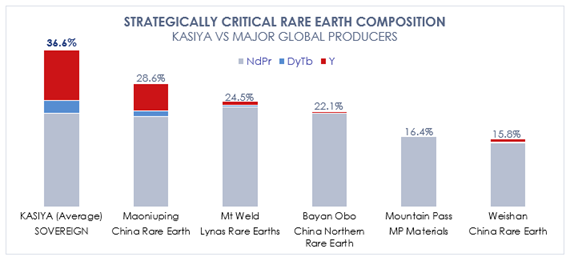
Figure 1: Strategic Rare Earth Composition - Kasiya vs Major Global Producers
(See Appendix 2 for breakdown and sources)
|
Table 1: Kasiya vs five largest REE producers |
||||
|
Project |
Location |
NdPr |
DyTb |
Yttrium |
|
|
|
|
|
|
|
Mt Weld |
Australia |
23.3% |
0.4% |
0.8% |
|
Mountain Pass |
USA |
16.4% |
0.0% |
0.0% |
|
Bayan Obo |
China |
21.7% |
0.0% |
0.4% |
|
Weishan |
China |
14.9% |
0.1% |
0.8% |
|
Maoniuping |
China |
21.0% |
1.3% |
6.3% |
|
Top Five Producer Average |
|
19.4% |
0.4% |
1.7% |
|
KASIYA |
Malawi |
21.8% |
2.9% |
11.9% |
Source: See Appendices 1 & 2
All five are dominated by light rare earths - principally lanthanum and cerium, which are abundant and low-value, and the magnet rare earths Neodymium and Praseodymium (NdPr). The strategically critical heavy rare earths - dysprosium, terbium, and yttrium - that underpin high-performance advanced technology, defence, industrial and renewable energy applications are present in much smaller amounts. Kasiya's heavy rare earth content is approximately 7x higher for both DyTb and yttrium than found in the five largest rare earth producing mines. Mountain Pass - America's only rare earth mine - contains no measurable DyTb or yttrium.
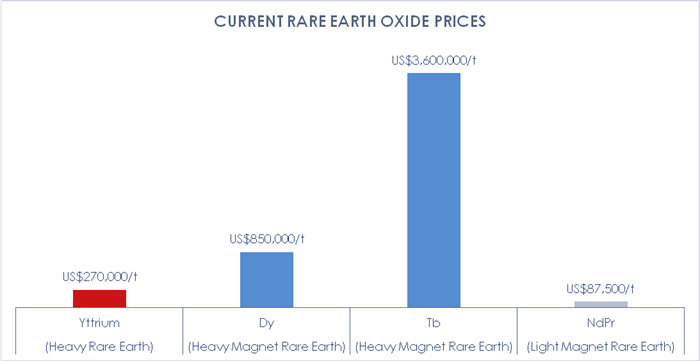
Figure 2: Current Prices of Rare Earth Oxides delivered to Europe
(Sources: Dy, Tb, NdPr: Energy Fuels Inc. January 2026 Company Presentation: "Building a Globally Significant Critical Mineral Company in the US"; Yttrium: Reuters news article "A new rare earth crisis is brewing as yttrium shortages spread" dated 17 November 2025)
PRELIMINARY ANALYSIS VS REE DEVELOPMENT PROJECTS
|
Table 2: Kasiya vs select REE development projects |
||||||
|
Project |
Company |
Location |
DyTb |
Yttrium |
NdPr |
Government Involved1 |
|
KASIYA |
Sovereign |
Malawi |
2.9% |
11.9% |
21.8% |
|
|
Tanbreez |
Critical Metals |
Greenland |
3.3% |
16.8% |
16.6% |
US |
|
Wimmera |
Iluka |
Australia |
2.0% |
14.0% |
20.0% |
Australia |
|
Phalaborwa |
Rainbow RE |
South Africa |
1.3% |
2.3% |
29.3% |
US |
|
Eneabba |
Iluka |
Australia |
1.0% |
6.0% |
22.0% |
Australia |
|
Balranald |
Iluka |
Australia |
1.0% |
5.0% |
22.0% |
Australia |
|
Songwe Hill |
Mkango |
Malawi |
0.9% |
2.4% |
32.8% |
US |
|
Longonjo |
Pensana |
Angola |
0.7% |
2.6% |
22.1% |
Angola |
|
Vara Mada |
Energy Fuels |
Madagascar |
0.7% |
1.6% |
23.8% |
n/a |
|
Nolans |
Arafura |
Australia |
0.4% |
1.4% |
26.4% |
Australia |
|
Kangankunde |
Lindian |
Malawi |
0.1% |
0.2% |
19.4% |
Australia |
1. Government involvement includes financial, political, or commercial assistance from any government-related entity; Lindian's partner, Iluka's refinery, is being supported by the Australian Government; Vara Mada is included for comparability as a significant titanium-feedstock and monazite project.
Source: See Appendices 1 & 2.
China's April 2025 export controls on dysprosium, terbium, and yttrium have created acute supply shortages for Western manufacturers. On 6 January 2026, China announced strengthened export controls on dual-use items to Japan, effective immediately. Despite 15 years of diversification efforts, Japan remains approximately 60% dependent on Chinese rare earth imports. For heavy rare earths, Japan's dependence on China approaches 100%. Meanwhile, the US is 100% reliant on imports for its yttrium requirements.
Preliminary analysis of Kasiya's monazite REE content demonstrates one of the highest combined heavy rare earth profiles while maintaining NdPr levels comparable to many REE development projects that have received government backing.
The US State Department visited Sovereign's operations in Malawi in late 2025 as part of a broader engagement with strategically significant critical minerals projects in Africa.
RARE EARTHS BY-PRODUCT FROM EXISTING PROCESS
Total rare earth oxide was analysed for in magnetic heavy mineral concentrates produced from aircore drilling samples during laboratory analysis for rutile. The magnetic concentrates were composited by depth interval (0-6m and 6-20m) to assess variation in mineralogy with depth associated with weathering units.
Separately, monazite concentrates were produced from bulk samples processed through the standard Kasiya flowsheet. Gravity concentrates were subjected to electrostatic separation, with the non-conductor stream then subjected to further gravity separation, followed by magnetic separation to produce a magnetic monazite concentrate. Duplicate analyses confirmed excellent repeatability. See Appendix 1 for details. Chemical analysis to determine the distribution of rare earth oxides was conducted by the Scientific Services South Africa laboratory.
No additional complex processing was required, so capital requirements will not include a parallel full rare-earth processing circuit, as required by primary REE miners. This represents potential by-product economics at near-zero incremental cost - rare earth recovery as an addition to existing rutile and graphite processing infrastructure.
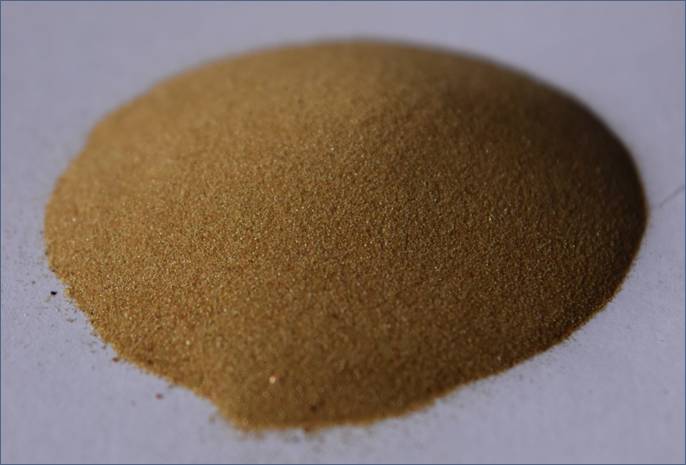
Figure 3: Sample of Kasiya's monazite concentrate containing high-value heavy rare earths
Refer to Appendix 1 below for disclosure of the laboratory metallurgical results from samples of Kasiya's monazite concentrate
NEXT STEPS
Sovereign will now undertake further work to characterise the monazite mineralisation at Kasiya, including:
· Detailed mineralogical characterisation of monazite occurrence and distribution within the Kasiya orebody;
· Assessment of heavy rare earth concentrate recovery rates through the proposed Kasiya processing flowsheet; and
· Evaluation of potential scale of rare earth production as a by-product and associated economics.
|
Enquiries |
|
|
|
Frank Eagar, Managing Director & CEO South Africa / Malawi +27 21 140 3190 Sapan Ghai, CCO London +44 207 478 3900 |
|
|
|
Nominated Adviser on AIM and Joint Broker |
|
|
|
SP Angel Corporate Finance LLP |
+44 20 3470 0470 |
|
|
Ewan Leggat Charlie Bouverat |
|
|
|
|
|
|
|
Joint Broker |
|
|
|
Stifel |
+44 20 7710 7600 |
|
|
Varun Talwar |
|
|
|
Ashton Clanfield |
|
|
Competent Persons Statement
The information in this report that relates to Metallurgical Test work is based on information compiled by Andries Willem Kruger, a Competent Person, who is a Member of the South African Council for Natural Scientific Professions, a Recognised Professional Organisation' (RPO) included in a list promulgated by ASX from time to time. Mr Kruger is employed by Sovereign Metals Limited and is a holder of ordinary shares and unlisted performance rights in Sovereign Metals Limited. Mr Kruger has sufficient experience, which is relevant to the style of mineralisation and type of deposit under consideration and to the activity which he is undertaking, to qualify as a Competent Person as defined in the 2012 Edition of the 'Australasian Code for Reporting of Exploration Results, Mineral Resources and Ore Reserves'. Mr Kruger consents to the inclusion in the report of the matters based on his information in the form and context in which it appears.
Forward Looking Statement
This release may include forward-looking statements, which may be identified by words such as "expects", "anticipates", "believes", "projects", "plans", and similar expressions. These forward-looking statements are based on Sovereign's expectations and beliefs concerning future events. Forward looking statements are necessarily subject to risks, uncertainties and other factors, many of which are outside the control of Sovereign, which could cause actual results to differ materially from such statements. There can be no assurance that forward-looking statements will prove to be correct. Sovereign makes no undertaking to subsequently update or revise the forward-looking statements made in this release, to reflect the circumstances or events after the date of that release.
The information contained within this announcement is deemed by Sovereign to constitute inside information as stipulated under the Regulation 2014/596/EU which is part of domestic law pursuant to the Market Abuse (Amendment) (EU Exit) Regulations (SI 2019/310) ("UK MAR"). By the publication of this announcement via a Regulatory Information Service, this inside information (as defined in UK MAR) is now considered to be in the public domain.
APPENDIX 1: Preliminary Analysis of REE Distribution in Kasiya Monazite
|
Sample Type |
From Magnetic Heavy Minerals Concentrate |
Monazite product from Non-conductor Stream |
||||||
|
Sample ID |
KYAC0479 |
KYAC0479 |
KYAC0486 |
KYAC0486 |
Weighted Average |
0-6m |
0-6m |
|
|
0-6m |
6-20m |
0-6m |
6-20m |
|||||
|
La2O3 |
% |
16.9 |
17.2 |
16.9 |
17.2 |
17.1 |
15.4 |
15.5 |
|
CeO2 |
% |
31.9 |
39 |
31.8 |
38.9 |
36.8 |
34.4 |
34.2 |
|
Pr6O11 |
% |
4.2 |
5.8 |
5.6 |
5.9 |
5.6 |
5.4 |
5.4 |
|
Nd2O3 |
% |
14.5 |
16.7 |
15.8 |
16.7 |
16.2 |
14.6 |
14.5 |
|
Sm2O3 |
% |
3 |
3.3 |
3.1 |
3.2 |
3.2 |
2.8 |
2.8 |
|
Eu2O3 |
% |
0 |
0.2 |
0 |
0.2 |
0.1 |
0.1 |
0.1 |
|
Gd2O3 |
% |
3.6 |
2.8 |
3.4 |
2.8 |
3.0 |
2.6 |
2.6 |
|
Tb4O7 |
% |
2.2 |
0.6 |
2.4 |
0.8 |
1.2 |
0.8 |
0.8 |
|
Dy2O3 |
% |
1.7 |
1.8 |
1.3 |
1.7 |
1.7 |
2.4 |
2.4 |
|
Ho2O3 |
% |
0.4 |
0.3 |
1.2 |
0.3 |
0.5 |
0.3 |
0.2 |
|
Er2O3 |
% |
2.1 |
1.1 |
2.1 |
1.1 |
1.4 |
1.5 |
1.5 |
|
Tm2O3 |
% |
0.3 |
0.1 |
0.3 |
0.1 |
0.2 |
0.2 |
0.2 |
|
Yb2O3 |
% |
1.8 |
0.9 |
1.4 |
0.8 |
1.1 |
1.8 |
1.8 |
|
Lu2O3 |
% |
0.2 |
0.1 |
0.2 |
0.1 |
0.1 |
0.3 |
0.3 |
|
Y2O3 |
% |
17.3 |
10.2 |
14.5 |
10.2 |
11.9 |
17.2 |
17.4 |
|
U3O8 |
ppm |
7,067 |
7,465 |
6,190 |
5,953 |
6,685 |
8,626 |
8,373 |
|
ThO2 |
ppm |
17,327 |
22,467 |
17,168 |
24,430 |
21,588 |
20,420 |
19,654 |
APPENDIX 2: Company Specific Sources
|
Project |
Company |
Status |
Source Data |
Link |
|
Balranald |
Iluka Resources Limited |
Development |
Company Presentation: "Macquarie Conference" (7-May-25) |
https://www.iluka.com/media/d5gjznmn/iluka-resources-macquarie-australia-conference-may-2025.pdf |
|
Bayan Obo |
China Northern Rare Earth (Group) High-Tech CO. Ltd |
Producing |
Rare Earth Exchanges (8-Feb-25) |
rareearthexchanges.com/project/bayan-obo/ |
|
Enneaba |
Iluka Resources Limited |
Development |
Company Presentation: "Macquarie Conference" (7-May-25) |
https://www.iluka.com/media/d5gjznmn/iluka-resources-macquarie-australia-conference-may-2025.pdf |
|
Kangankunde |
Lindian Resources Ltd. |
Development |
Company Announcement: "Kangankunde Project Stage 1 Outstanding Feasibility Study Results" (1-Jul-24) |
https://static1.squarespace.com/static/58a516a859cc689ad6303dc4/t /6681df545eee2944615f3358/1719787358011/Outstanding+Kangankunde+Stage+1+ Feasibility+Study+Results+2741301.pdf |
|
Longonjo |
Pensana Plc |
Development |
Company Announcement: "Longonjo Mineral Resource estimate upgraded" |
https://pensana.co.uk/wp-content/uploads/2020/09/longonjo-mineral-resource-estimate-upgraded-14-Sept-2020.pdf |
|
Maoniuping |
China Rare Earth Group |
Producing |
Rare Earth Exchanges (8-Feb-25) |
https://rareearthexchanges.com/project/maoniuping/ |
|
Mt Weld |
Lynas Rare Earths Ltd. |
Producing |
Vara Mada Feasibility Study NI43-101 & S-K 1300 Technical Summary (7-Jan-26) |
https://www.energyfuels.com/wp-content/uploads/2026/01/FS-Vara-Mada-Project-Report-NI43-101-FINAL-01.07.2026.pdf |
|
Mountain Pass |
MP Materials Corp. |
Producing |
SEC FILING: 10-K - Mineral Resource Estimate (28-Feb-25) |
https://d18rn0p25nwr6d.cloudfront.net/CIK-0001801368/37126578-26fe-49e0-b0d2-12c6053a5a1b.pdf |
|
Nolans |
Arafura Rare Earths Ltd |
Development |
Company Announcement: "Nolans DFS Delivers Robust Project Economics" (7-Feb-19) |
https://wcsecure.weblink.com.au/pdf/ARU/02073274.pdf |
|
Phalaborwa |
Rainbow Rare Earths Limited |
Development |
Company Presentation: "Decision to use SX as the optimal separation route for Phalaborwa" (25-Nov-25) |
https://www.rainbowrareearths.com/wp-content/uploads/2025/11/Corporate-Presentation-November-2025-FINAL.pdf |
|
Songwe Hill |
Mkango Resources Ltd |
Development |
SEDAR FILING"NI43-101 Technical Report on the Songwe Hill Rare Earth Element Project in Malawi" (18-Aug-22) |
https://www.sedarplus.ca/csa-party/records/document.html?id=ac89e479364d84c1649c942630b03245c0bf337b2e0f902e6c0267058f330cb6 |
|
Vara Mada |
Energy Fuels Inc. |
Development |
Vara Mada Feasibility Study NI43-101 & S-K 1300 Technical Summary (7-Jan-26) |
https://www.energyfuels.com/wp-content/uploads/2026/01/FS-Vara-Mada-Project-Report-NI43-101-FINAL-01.07.2026.pdf |
|
Weishan |
China Rare Earth Group |
Producing |
Rare Earth Exchanges (8-Feb-25) |
rareearthexchanges.com/project/weishan/ |
|
Wimmera |
Iluka Resources Limited |
Development |
Company Presentation: "Macquarie Conference" (7-May-25) |
https://www.iluka.com/media/d5gjznmn/iluka-resources-macquarie-australia-conference-may-2025.pdf |
APPENDIX 3: DRILL HOLE COLLAR DATA AND LOCATION MAP
|
Borehole ID |
Type |
Easting |
Northing |
Elevation |
Dip |
Depth |
|
KYAC0479 |
AC |
543498.61 |
8471501.63 |
1118.45 |
-90 |
20 |
|
KYAC0486 |
AC |
543900.23 |
8468100.96 |
1139.18 |
-90 |
20 |
|
KYPIT0176 |
PIT |
544300.24 |
8471701.36 |
1124.88 |
-90 |
6 |
|
KYPIT0177 |
PIT |
544701.06 |
8472099.02 |
1132.48 |
-90 |
6 |
|
KYPIT0178 |
PIT |
543298.68 |
8472101.77 |
1119.87 |
-90 |
6 |
|
KYPIT0179 |
PIT |
543498.33 |
8471502.31 |
1118.83 |
-90 |
6 |
APPENDIX 4: RAW ASSAY DATA
|
Hole ID |
|
KYAC0479 |
KYAC0479 |
KYAC0486 |
KYAC0486 |
|
From |
|
0 |
6 |
0 |
6 |
|
To |
|
6 |
20 |
6 |
20 |
|
Sample |
|
Mag conc |
Mag conc |
Mag conc |
Mag conc |
|
La |
ppm |
1248 |
11099 |
1239 |
13033 |
|
Ce |
ppm |
2251 |
24059 |
2218 |
28187 |
|
Pr |
ppm |
302 |
3633 |
397 |
4358 |
|
Nd |
ppm |
1077 |
10843 |
1158 |
12714 |
|
Dy |
ppm |
125 |
1163 |
98 |
1355 |
|
Sm |
ppm |
222 |
2155 |
227 |
2478 |
|
Er |
ppm |
159 |
697 |
159 |
844 |
|
Eu |
ppm |
N/D |
114 |
N/D |
124 |
|
Gd |
ppm |
267 |
1832 |
255 |
2124 |
|
Ho |
ppm |
27 |
213 |
89 |
268 |
|
Lu |
ppm |
17 |
77 |
13 |
91 |
|
Tb |
ppm |
162 |
406 |
174 |
576 |
|
Tm |
ppm |
20 |
71 |
20 |
87 |
|
Yb |
ppm |
139 |
572 |
109 |
638 |
|
Y |
ppm |
1178 |
6111 |
981 |
7128 |
|
U3O8 |
ppm |
123 |
1035 |
102 |
946 |
|
ThO2 |
ppm |
291 |
3006 |
273 |
3746 |
|
U |
ppm |
104.30801 |
877.7137042 |
86.49932 |
802.2388 |
|
Th |
ppm |
255.73425 |
2641.70841 |
239.9156 |
3292.029 |
|
Hole ID |
|
KYPIT0176 |
KYPIT0177 |
KYPIT0178 |
KYPIT0179 |
|
From |
|
0 |
0 |
||
|
To |
|
6 |
6 |
||
|
Sample |
|
NC Mag Conc 1 |
NC Mag Conc 2 |
||
|
La |
ppm |
12527 |
12431 |
||
|
Ce |
ppm |
26695 |
26099 |
||
|
Pr |
ppm |
4302 |
4219 |
||
|
Nd |
ppm |
11958 |
11691 |
||
|
Dy |
ppm |
2022 |
1998 |
||
|
Sm |
ppm |
2331 |
2277 |
||
|
Er |
ppm |
1264 |
1231 |
||
|
Eu |
ppm |
119 |
116 |
||
|
Gd |
ppm |
2182 |
2140 |
||
|
Ho |
ppm |
237 |
191 |
||
|
Lu |
ppm |
230 |
228 |
||
|
Tb |
ppm |
638 |
674 |
||
|
Tm |
ppm |
175 |
172 |
||
|
Yb |
ppm |
1520 |
1503 |
||
|
Y |
ppm |
12962 |
12890 |
||
|
U3O8 |
ppm |
1463 |
1377 |
||
|
ThO2 |
ppm |
3342 |
3119 |
||
|
U |
ppm |
1241 |
1168 |
||
|
Th |
ppm |
2937 |
2741 |
||
APPENDIX 5: JORC CODE, 2012 EDITION - TABLE 1
Section 1 - Sampling Techniques and Data
|
Criteria |
JORC Code explanation |
Commentary |
|
Sampling Techniques |
Nature and quality of sampling (e.g. cut channels, random chips, or specific specialised industry standard measurement tools appropriate to the minerals under investigation, such as down hole gamma sondes, or handheld XRF instruments, etc). These examples should not be taken as limiting the broad meaning of sampling. |
Air-Core (AC) samples are generally composited on 2m intervals. Each 1m of sample is dried and riffle-split to generate a total sample weight of 3kg for analysis. The primary sample (nominally 3kg) is split to provide two 1.5kg samples for both HM and graphite analyses. |
|
Include reference to measures taken to ensure sample representivity and the appropriate calibration of any measurement tools or systems used. |
Drilling and sampling activities are supervised by a suitably qualified company geologist who is present at all times. All drill samples are geologically logged by the geologist at the drill site/core yard. Each sample is sun dried and homogenised. Sub-samples are carefully riffle split to ensure representivity. The 1.5kg composite samples are then processed. An equivalent mass is taken from each sample to make up the composite. A calibration schedule is in place for laboratory scales, sieves and field XRF equipment. MSA Group Resource Geologists completed site visits and reviewed Standard Operating Procedures (SOPs) for the collection and processing of drill samples and found them to be fit for purpose. The primary composite sample is considered representative for this style of HM and graphite mineralisation. |
|
|
Aspects of the determination of mineralisation that are Material to the Public Report. In cases where 'industry standard' work has been done this would be relatively simple (e.g. 'reverse circulation drilling was used to obtain 1 m samples from which 3 kg was pulverised to produce a 30 g charge for fire assay'). In other cases more explanation may be required, such as where there is coarse gold that has inherent sampling problems. Unusual commodities or mineralisation types (e.g. submarine nodules) may warrant disclosure of detailed information. |
Logged mineralogy percentages and lithology/regolith information are used to assist in determining compositing intervals. Care is taken to ensure that only samples with similar geological characteristics are composited together. |
|
|
Drilling Techniques |
Drill type (e.g. core, reverse circulation, open‐hole hammer, rotary air blast, auger, Bangka, sonic, etc) and details (e.g. core diameter, triple or standard tube, depth of diamond tails, face‐sampling bit or other type, whether core is oriented and if so, by what method, etc). |
All sampling was carried out vertically to best intersect the horizontal weathering and grade layers. All material of interest is in the weathered zones located above the saprock boundary, so no collection of oriented core was possible or warranted.
|
|
Drill Sample Recovery |
Method of recording and assessing core and chip sample recoveries and results assessed. |
Samples are assessed visually for recoveries. The configuration of drilling and nature of materials encountered results in negligible sample loss or contamination. AC drilling recovery in the top few metres is moderate to good. Extra care is taken to ensure sample is recovered best as possible in these metres. Sample weight is recorded to determine recovery at the rig at the time of drilling by the geologist. Drilling is ceased when recoveries become poor or once Saprock or refusal has been reached. |
|
|
Measures taken to maximise sample recovery and ensure representative nature of the samples. |
The Company's trained geologists supervise drilling on a 1 team 1 geologist basis and are responsible for monitoring all aspects of the drilling and sampling process. AC samples are recovered in large plastic bags. The bags are clearly labelled and delivered back to sovereign's laydown yard at the end of shift for processing. |
|
|
Whether a relationship exists between sample recovery and grade and whether sample bias may have occurred due to preferential loss/gain of fine/coarse material. |
No relationship is believed to exist between grade and sample recovery. The high percentage of silt and absence of hydraulic inflow from groundwater at this deposit results in a sample size that is well within the expected size range.
|
|
Logging |
Whether core and chip samples have been geologically and geotechnically logged to a level of detail to support appropriate Mineral Resource estimation mining studies and metallurgical studies. |
AC 1m intervals are geologically logged using company codes. A small representative sample is collected for each 1m interval and placed in chip trays for future reference |
|
|
Whether logging is qualitative or quantitative in nature. Core (or costean, channel, etc.) photography. |
All logging includes lithological features and estimates of basic mineralogy. Logging is qualitative. |
|
|
The total length and percentage of the relevant intersection logged |
100% of samples are geologically logged. |
|
Sub- sampling techniques and sample preparation |
If core, whether cut or sawn and whether quarter, half or all core taken. |
Not applicable - no core drilling conducted. |
|
|
If non-core, whether riffled, tube sampled, rotary split, etc. and whether sampled wet or dry. |
AC hole samples are dried, riffle split and composited. Samples are collected and homogenised prior to splitting to ensure sample representivity. ~1.5kg composite samples are processed. Where drillhole lengths are composited into longer samples for processing, an equivalent mass is taken from each primary sample to make up the composite. The primary composite sample is considered representative for this style of mineralisation and is consistent with industry standard practice. |
|
|
For all sample types, the nature, quality and appropriateness of the sample preparation technique. |
Techniques for sample preparation are detailed on SOP documents MSA Geologists. Sample preparation is recorded on a standard flow sheet and detailed QA/QC is undertaken on all samples. Sample preparation techniques and QA/QC protocols are appropriate for mineral determination and support the resource classifications as stated. |
|
|
Quality control procedures adopted for all sub-sampling stages to maximise representivity of samples. |
The sampling equipment is cleaned after each sub-sample is taken. Field duplicate, laboratory replicate and standard sample statistical analysis is employed to manage sample precision and analysis accuracy. |
|
|
Measures taken to ensure that the sampling is representative of the in situ material collected, including for instance results for field duplicate/second-half sampling. |
Sample size analysis is completed to verify sampling accuracy. Field duplicates are collected for precision analysis of riffle splitting. SOPs consider sample representivity. Results indicate a sufficient level of precision for mineral resource classification. |
|
|
Whether sample sizes are appropriate to the grain size of the material being sampled. |
The sample size is considered appropriate for the material sampled. |
|
Quality of assay data and laboratory tests |
The nature, quality and appropriateness of the assaying and laboratory procedures used and whether the technique is considered partial or total. |
Monazite (Magnetic concentrate) All sample preparation is completed at Sovereign Metals Malawi onsite laboratory (SSL) located in Lilongwe. The sample preparation methods are considered quantitative to the point where a non-magnetic (NM) concentrate is generated. Since June 2023 SSL has included the magnetic separation process to create the NM concentrate, which is then sent to an external laboratory for TiO2 analysis. Prior to 2023 the Heavy Mineral Concentrate (HMC) was sent to AML Laboratory in Perth for separation. Final results generated are for recovered REE present in the magnetic fraction as monazite and xenotime. The current SSL Laboratory workflow is: • Dry sample in oven for 1 hour at 105℃ • Soak in water and lightly agitate • Wet screen at 5mm, 600µm and 45µm to remove oversize and slimes material • Dry +45µm -600mm (sand fraction) in oven for 1 hour at 105℃ • Pass +45µm -600mm (sand fraction) across wet table to generate a HMC. • Dry HMC in oven for 30 minutes at 105℃ • Magnetic separation of the HMC by Carpco magnet @ 16,800G (2.9Amps) into a magnetic (M) and non-magnetic (NM) fraction • Send M to external laboratory for ICP_OES for REE + Y and other elements by XRF analysis
Workflow code is presented below. LLW-LLW-SS • The M fractions are sent to Scientific Servies South Africa for quantitative XRF analysis. Samples are analysed for: TiO2, Nd2O3, CeO2, La2O3, BaO, HfO2, Nb2O5, ZrO2, Y2O3, Fe2O3, MnO, Cr2O3, V2O5, CaO, K2O, P2O5, SiO2, Al2O3, MgO, NaO2, Th and U. The M fractions are sent to Scientific Servies South Africa for quantitative ICP_OES analysis. Samples are analysed for REE and Y |
|
|
For geophysical tools, spectrometers, handheld XRF instruments, etc., the parameters used in determining the analysis including instrument make and model, reading times, calibrations factors applied and their derivation, etc. |
Acceptable levels of accuracy and precision have been established. No pXRF methods are used for quantitative determination. |
|
|
Nature of quality control procedures adopted (e.g. standards, blanks, duplicate, external laboratory checks) and whether acceptable levels of accuracy (i.e. lack of bias) and precision have been established. |
Sovereign uses internal and externally sourced wet screening reference material inserted into samples batches at a rate of 1 in 20. The externally sourced, certified standard reference material for HM and Slimes assessment is provided by Placer Consulting. Analysis of sample duplicates is undertaken by standard statistical methodologies (Scatter, Pair Difference and QQ Plots) to test for bias and to ensure that sample splitting is representative. Standards determine assay accuracy performance, monitored on control charts, where failure (beyond 3SD from the mean) may trigger re-assay of the affected batch. Examination of the QA/QC sample data indicates satisfactory performance of field sampling protocols and assay laboratories providing acceptable levels of precision and accuracy. Acceptable levels of accuracy and precision are displayed in statistical analyses to support the resource classifications as applied to the estimate. |
|
Verification of sampling & assaying |
The verification of significant intersections by either independent or alternative company personnel. |
Results are reviewed in cross-section using Datamine Studio RM and Micromine software and any spurious results are investigated. |
|
|
The use of twinned holes. |
Twinned holes are drilled across a geographically dispersed area to determine short-range geological and assay field variability for the resource estimation. Twins were primarily: HA and AC; PTDD and AC and more recently SA and AC. A total of 389 twin holes have been drilled of which 135 are twins of the same drilling type, the remainder being comparisons between different drilling methods. All twins are within 5m of each other.
Comparison between the drilling methods shows some bias in the sizing distributions particularly in the volume of +45 um recovered due to behaviour of coarse size fractions at the drill face. Key parameters are: sample diameter; downhole air pressure; cyclone efficiency; moisture content; and drill bit configuration. The variances observed fall within the grades tolerances expected for this type of deposit. |
|
|
Documentation of primary data, data entry procedures, data verification, data storage (physical and electronic) protocols. |
All data is collected electronically using coded templates and logging software. This data is then imported to a SQL Database and validated both automatically (on upload) and manually (by viewing sections). |
|
|
Discuss any adjustment to assay data. |
Assay data adjustments are made to convert laboratory collected weights to assay field percentages and to account for moisture.
|
|
Location of data points |
Accuracy and quality of surveys used to locate drill holes (collar and down-hole surveys), trenches, mine workings and other locations used in Mineral Resource estimation. |
A Trimble R2 Differential GPS is used to pick up the collars. Daily capture at a registered reference marker ensures equipment remains in calibration. No downhole surveying of any holes is completed. Given the vertical nature and shallow depths of the holes, drill hole deviation is not considered to significantly affect the downhole location of samples. |
|
|
Specification of the grid system used. |
WGS84 UTM Zone 36 South. |
|
|
Quality and adequacy of topographic control. |
The digital terrane model (DTM) was generated by wireframing a 20m-by-20m lidar drone survey point array, commissioned by Sovereign in March 2022. Major cultural features were removed from the survey points file prior to generating the topographical wireframe for resource model construction. The ultra-high resolution 3D drone aerial survey was executed utilising a RTK GPS equipped Zenith aircraft with accuracy of <10cm ground sampling distance (GSD). Post-processing includes the removal of cultural features that do not reflect material movements (cemeteries, pits, mounds, etc.)
|
|
Data spacing & distribution |
Data spacing for reporting of Exploration Results. |
Preliminary regional exploration is completed on a nominal 800m grid. The infill HA drilling is spaced nominally 400m along the 400m spaced drill- lines. Further infill is completed with PT and AC holes similarly spaced at an offset grid. In some areas recent PT, AC and SA drilling has been completed on a 200m offset grid. The resultant infill 141m and 283m equilateral spacing is deemed to adequately define the mineralisation.
The PT and SA holes are selectively placed throughout the deposit to ensure a broad geographical and lithological spread for the analysis. |
|
|
Whether the data spacing and distribution is sufficient to establish the degree of geological and grade continuity appropriate for the Mineral Resource and Ore Reserve estimation procedure(s) and classifications applied. |
The drill spacing and distribution is considered to be sufficient to establish a degree of geological and grade continuity.
Variogram analysis completed using Supervisor software informs the optimal drill and sample spacing. Based on these results and the experience of the Competent Person, the data spacing and distribution is considered adequate for the definition of mineralization. |
|
|
Whether sample compositing has been applied. |
All samples were assigned a Weathering domain code based on the geology logging and 3D weathering profile interpretation. Separate grade domains for both rutile and graphite were interpreted based on nominal mineralisation cut-offs.
Compositing to create a single composite representing the unique weathering and mineralisation domain down each hole was completed. |
|
Orientation of data in relation to geological structure |
Whether the orientation of sampling achieves unbiased sampling of possible structures and the extent to which this is known considering the deposit type |
Sample orientation is vertical and approximately perpendicular to the orientation of the mineralisation, which results in true thickness estimates, limited by the sampling interval as applied. Drilling and sampling are carried out on a regular grid. |
|
|
If the relationship between the drilling orientation and the orientation of key mineralised structures is considered to have introduced a sampling bias, this should be assessed and reported if material. |
There is no apparent bias arising from the orientation of the drill holes with respect to the orientation of the deposit. |
|
Sample security |
The measures taken to ensure sample security |
Samples are stored in secure storage from the time of drilling, through gathering, compositing and analysis. The samples are sealed as soon as site preparation is complete.
A reputable international transport company with shipment tracking enables a chain of custody to be maintained while the samples move from Malawi to South Africa and Australia. Samples are again securely stored once they arrive and are processed at respective laboratories.
At each point of the sample workflow the samples are inspected by a company representative to monitor sample condition. Each laboratory confirms the integrity of the samples upon receipt. |
|
Audits or reviews |
The results of any audits or reviews of sampling techniques and data |
No audits of the Monazite work have been completed. Independent consultant Chris Le Roux of Pro Nexus Consult has peer reviewed the results relating to Monazite.
|
Section 2 - Reporting of Exploration Results
|
Criteria |
Explanation |
Commentary |
|
Mineral tenement & land tenure status |
Type, reference name/number, location and ownership including agreements or material issues with third parties such as joint ventures, partnerships, overriding royalties, native title interests, historical sites, wilderness or national park and environment settings. |
The Company owns 100% of the following Exploration Licences (ELs) and Retention Licences (RLs) under the Mines and Minerals Act 2019 (Malawi), held in the Company's wholly-owned, Malawi-registered subsidiaries: EL0609, EL0582, EL0561, EL0657, EL0710 and RL0035-0046. A 5% royalty is payable to the government upon mining and a 2% of net profit royalty is payable to the original project vendor. No significant native vegetation or reserves exist in the area. The region is intensively cultivated for agricultural crops. |
|
The security of the tenure held at the time of reporting along with any known impediments to obtaining a licence to operate in the area. |
The tenements are in good standing and no known impediments to exploration or mining exist. |
|
|
Exploration done by other parties |
Acknowledgement and appraisal of exploration by other parties. |
Sovereign is a first-mover in the discovery and definition of residual rutile, monazite and graphite resources in Malawi. No other parties are, or have been, involved in exploration. |
|
Geology |
Deposit type, geological setting and style of mineralisation |
The deposit type is considered a residual placer formed by the intense weathering of rutile-rich basement paragneisses and variable enrichment by elluvial processes. Rutile and Monazite occurs in a mostly topographically flat area west of Malawi's capital, known as the Lilongwe Plain, where a deep tropical weathering profile is preserved. A typical profile from top to base is generally soil ("SOIL" 0-1m) ferruginous pedolith ("FERP", 1-4m), mottled zone ("MOTT", 4-7m), pallid saprolite ("PSAP", 7-9m), saprolite ("SAPL", 9-25m), saprock ("SAPR", 25-35m) and fresh rock ("FRESH" >35m).
|
|
Drill hole information |
A summary of all information material to the understanding of the exploration results including a tabulation of the following information for all Material drill holes: easting and northings of the drill hole collar; elevation or RL (Reduced Level-elevation above sea level in metres of the drill hole collar); dip and azimuth of the hole; down hole length and interception depth; and hole length |
All intercepts relating to the Kasiya Deposit have been included in public releases during each phase of exploration. Releases included all collar and composite data and these can be viewed on the Company website. There are no further drill hole results that are considered material to the understanding of the exploration results. Identification of the broad zone of mineralisation is made via multiple intersections of drill holes and to list them all would not give the reader any further clarification of the distribution of mineralisation throughout the deposit. |
|
If the exclusion of this information is justified on the basis that the information is not Material and this exclusion does not detract from the understanding of the report, the Competent Person should clearly explain why this is the case |
No relevant Monazite data has been excluded. |
|
|
Data aggregation methods |
In reporting Exploration Results, weighting averaging techniques, maximum and/or minimum grade truncations (e.g. cutting of high-grades) and cut-off grades are usually Material and should be stated. |
All results reported are of a length-weighted average of in-situ grades. No cutting has been applied |
|
Where aggregate intercepts incorporate short lengths of high-grade results and longer lengths of low-grade results, the procedure used for such aggregation should be stated and some typical examples of such aggregations should be shown in detail. |
No data aggregation was required. |
|
|
The assumptions used for any reporting of metal equivalent values should be clearly stated. |
N/A |
|
|
Relationship between mineralisation widths & intercept lengths |
These relationships are particularly important in the reporting of Exploration Results. |
The mineralisation has been released by weathering of the underlying, layered gneissic bedrock that broadly trends NE-SW at Kasiya North and N-S at Kasiya South and far North. It lies in a laterally extensive superficial blanket with high- grade zones reflecting the broad bedrock strike orientation of ~045° in the North of Kasiya and 360° in the South and far North of Kasiya. |
|
|
If the geometry of the mineralisation with respect to the drill hole angle is known, its nature should be reported. |
The mineralisation is laterally extensive where the entire weathering profile is preserved and not significantly eroded. Minor removal of the mineralised profile has occurred in alluvial channels. These areas are adequately defined by the drilling pattern and topographical control for the resource estimate. |
|
|
If it is not known and only the down hole lengths are reported, there should be a clear statement to this effect (e.g. 'down hole length, true width not known'. |
Downhole widths approximate true widths limited to the sample intervals applied. Mineralisation remains open at depth and in areas coincident with high-rutile grade lithologies in basement rocks.
|
|
Diagrams |
Appropriate maps and sections (with scales) and tabulations of intercepts should be included for any significant discovery being reported. These should include, but not be limited to a plan view of the drill collar locations and appropriate sectional views. |
Refer to Appendices 3 & 4. |
|
Balanced reporting |
Where comprehensive reporting of all Exploration Results is not practicable, representative reporting of both low and high-grades and/or widths should be practiced to avoid misleading reporting of exploration results. |
n/a |
|
Other substantive exploration data |
Other exploration data, if meaningful and material, should be reported including (but not limited to: geological observations; geophysical survey results; geochemical survey results; bulk samples - size and method of treatment; metallurgical test results; bulk density, groundwater, geotechnical and rock characteristics; potential deleterious or contaminating substances. |
Sample quality (representivity) is established by statistical analysis of comparable sample intervals.
|
|
Further work |
The nature and scale of planned further work (e.g. test for lateral extensions or depth extensions or large-scale step-out drilling). |
Planned work to include XRF, ICP and Qemscan analysis on magnetic fractions produced in Lilongwe from the 2025 Measure Resource AC drilling. Focus will be in REE ratios related to weathering zones as well as Th and U content as well as mineralogical characteristics of the REE hosting minerals. Further work will include bulk sample processing to isolate monazite/xenotime product using the electrostatic flow sheet developed for Kasiya and gravity and magmatic processing of non-conductor fraction. |
|
|
Diagrams clearly highlighting the areas of possible extensions, including the main geological interpretations and future drilling areas, provided this information is
|
Refer to and plan views disclosed in previous announcements. These are accessible on the Company's website as discussed above. |
RNS may use your IP address to confirm compliance with the terms and conditions, to analyse how you engage with the information contained in this communication, and to share such analysis on an anonymised basis with others as part of our commercial services. For further information about how RNS and the London Stock Exchange use the personal data you provide us, please see our Privacy Policy.

Latest directors dealings
- 4 minutes ago GSK
- 14 minutes ago BP
- 1 hour ago Croda International
- 1 hour ago Rosebank Industries Plc
- 1 hour ago Sanderson Design Group