
Paranaíta Gold Project, Brazil - Project Update
Summary by AI BETAClose X

Jangada Mines plc / EPIC: JAN.L / Market: AIM / Sector: Mining
11 June 2026
Jangada Mines plc
('Jangada' or 'the Company')
Paranaíta Gold Project, Brazil - Project Update
New geological model devised post drill results to support resource increase and discovery of additional mineralised trends
Jangada Mines plc (AIM: JAN), a Brazil-focused natural resources company, is pleased to provide an update on the Paranaíta Gold Project ("Paranaíta" or "the Project") within the Alta Floresta-Juruena Gold Province in Brazil, where Jangada's recent exploration results support the presence of a large-scale gold system with significant growth potential.
OVERVIEW
· Drilling confirmed a large-scale hydrothermal gold system with both structurally controlled high-grade vein-hosted and disseminated mineralisation styles, significantly enhancing its exploration potential.
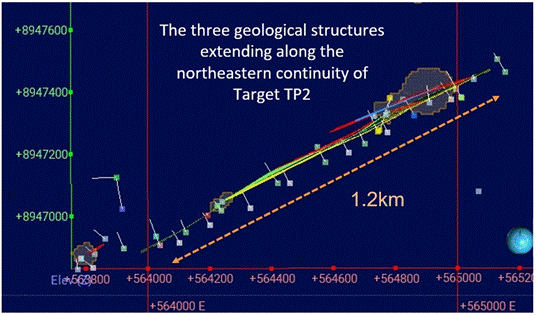
· Approximately 1,200 metres of mineralised structure along a NE-trending corridor identified at the TP2 target. Management anticipates an additional +50,000 oz of inferred resource at Paranaíta Project based on these results.
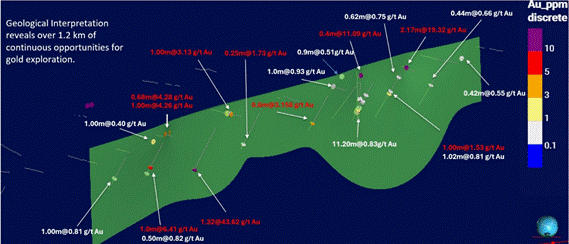
· Drilling which included high-grade gold intercepts, such as 1.32 m @ 43.61 g/t Au (DDJG25-051), as well as thicker intersections, such as 11.20 m @ 0.83 g/t Au (DDJG25-02) has led to a better understanding of the geology and refining of the exploration model
· Strong spatial correlation between geological mapping, drilling, artisanal workings, and geophysical anomalies, increasing confidence in targeting methodology and supporting the discovery potential of additional mineralised trends.
· More than 20 artisanal pits identified across Project area, many of which remain unmapped and unsampled, highlighting substantial untapped exploration upside.
· Airborne geophysics, ground geophysics, and diamond drilling planned to support target refinement and further resource growth opportunities.
Jangada Chief Executive, Paulo Misk, said: "We are delighted to have confirmation of 1.2 km of mineralised structure, from the first of our identified five high grade targets. Results suggest an additional potential inferred resource at Paranaíta Project of +50,000 oz can be generated from the TP2 target, adding to the existing 210,000 oz Au. With the extensive desktop study now complete, we have a better understanding and interpretation of the geology and structural trends that have derisked the exploration model. The strong correlation between geological mapping, drilling, artisanal workings, and geophysical anomalies is highly encouraging especially put into context of the 20 plus artisanal pits already identified.
"The recent analysis and results from the drilling programme reaffirm our positive interpretation of Paranaíta and we are fully-funded for its next level of exploration, which will include additional geophysics (including drone surveys) and IP work to further quantify the development potential of a low-capex, open-pit, gold production project. Following the completion of the geophysical survey, we intend to move to a more robust drilling campaign aiming to evaluate the additional resource at TP2 and expand and increase the level of confidence of the resource at TP1 and TP3.2.
"As announced earlier this week, work is already underway at the Molly Gold Project, which has a resource 130,000 oz Au. The work programmes at both projects are funded from existing cash resources and we look forward to providing further operational updates as we deliver on our strategy of building a multi asset high grade gold portfolio."
DETAILS
The Paranaíta Gold Project
Paranaíta is a highly prospective mineralised system in which two distinct styles of mineralisation have been identified:
i) structurally controlled high-grade vein-hosted; and
ii) disseminated associated with broader hydrothermal alteration zones.
The coexistence of these two styles, indicating the presence of a robust hydrothermal system, significantly enhances the exploration potential of the Project. Five high-priority targets have already been identified and are being evaluated along an 8 km mineralised corridor, which also has 15+ high-grade gold occurrences for further quantification.
TP2
The latest drilling campaign primarily targeted the TP2 structure, where nine holes were drilled. Results from this programme have advanced the geological understanding of the area, improving comprehension of grade distribution along a c. 1,200 m structure on a NE-trending corridor. Following further desktop studies conducted in tandem with Brazilian geological consultants GE21, management estimate an additional potential resource of +50,000 oz Au could be formally defined and added to the existing inferred resource base with a further drilling campaign in this structure.
The mineralisation intercepted in drilling demonstrated good correlation with surface expressions, structural controls, and geophysical anomalies, supporting the interpretation of a continuous mineralised corridor. A strong spatial correlation was observed between mineralised veins, geophysical anomalies, and artisanal miners' pits. The high level of alignment between these exploration vectors increases confidence in the targeting methodology, and indicates that the integration of geological mapping, geophysics, artisanal workings, and drilling data is proving highly effective in identifying mineralised zones.
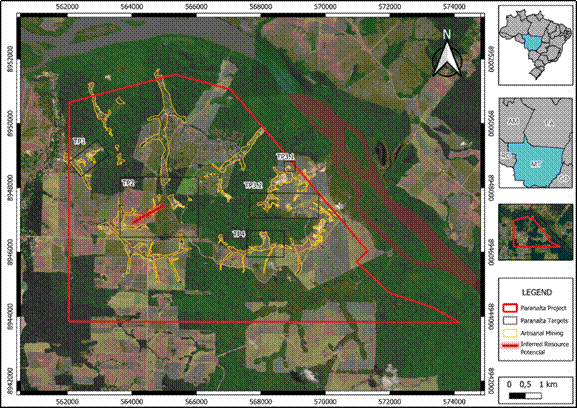
The extensive presence of artisanal mining activity throughout the area is indicative of the prospectivity of the Project, with more than 20 artisanal pits identified, many of which remain unmapped and unsampled (Figure 1 above).
These workings represent important empirical indicators of mineralised zones and demonstrate the strong surface expression of gold mineralisation across the property. The absence of systematic geological mapping, channel sampling, and structural interpretation within these workings indicates that a significant portion of the mineralised system remains poorly constrained and largely underexplored.
Overall, the exploration results obtained to date indicate that Paranaíta hosts a large-scale and evolving gold system with substantial upside potential. Considering the limited level of systematic exploration completed so far, combined with the numerous untested artisanal workings and strong geological-geophysical correlations, the Project remains highly prospective for the discovery of additional gold resources and potentially new mineralised trends.
TP2 Geological Model and NE Mineralisation Trend
The updated geological model highlights the continuity of the mineralised system along a northeastern (NE) trend, confirming the structural control of gold mineralisation within the TP2 target area. The integration of the new drilling database has significantly improved understanding of the geometry and continuity of the mineralised zones, allowing the identification of three principal geological structures extending along the NE direction (Figure 2 below).
 |
Each structure presents distinct characteristics regarding grade distribution and mineralization style, suggesting the presence of multiple mineralised domains within the target. The consistency of mineralised intercepts across the drilled sections reinforces the exploration potential of the NE-trending corridor and supports the ongoing expansion of the TP2 geological model (Figure 3 below).
 |
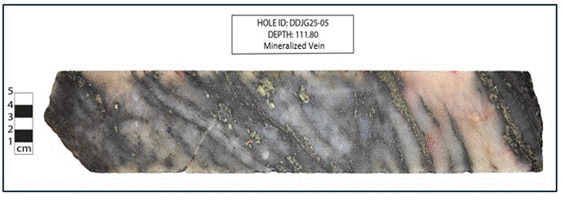
Among the most significant intercepts, drill hole DDJG25-05 returned 1.32 m @ 43.61 g/t Au (Figure 4 below), highlighting the presence of high-grade mineralisation within the structure.
Further encouraging results include 11.20 m @ 0.83 g/t Au (DDJG25-02), 0.41 m @ 6.41 g/t Au (DDJG25-06), and 0.25 m @ 5.76 g/t Au (DDJG25-08).
Exploration Targets
TP2
Geological mapping conducted at the TP2 target indicates that the mineralisation remains open toward both the northeast (NE) and southwest (SW), demonstrating significant expansion potential along strike. Structural interpretations and surface geological observations suggest the continuity of the mineralised system beyond the currently explored areas, reinforcing the prospectivity of the target and supporting the advancement of additional drilling and systematic exploration programmes.
TP3.2 and TP3.1
Recent geological reconnaissance carried out at the P3.2 and TP3.1 targets identified new occurrences of both high-grade vein-hosted and disseminated mineralisation associated with artisanal mining pits, further confirming the strong mineral potential of these targets.
The TP3.2, an outcrop of Paranaita Granite was identified, where the main mineralisation control structures recognised across the Project area can be clearly observed (Figure 5 below)
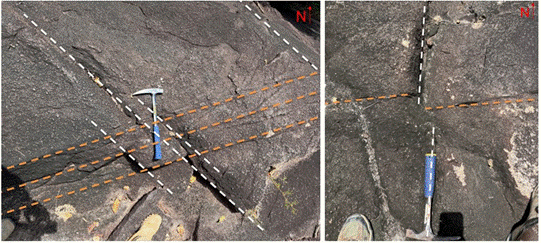 |
The structural framework identified in this outcrop provides important insights into the controls of hydrothermal fluid circulation and ore deposition within the project.
At TP3.1, a mineralised zone characterised by abundant sulphides and visible gold was identified (Figure 6 below).
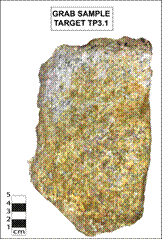 |
The geological characteristics observed indicate the presence of an active hydrothermal system with strong potential for high-grade mineralised zones. The occurrence of sulphide-rich intervals associated with gold mineralisation substantially increases the exploration significance of the target and supports further detailed geological mapping, trenching, and drilling.
TP1
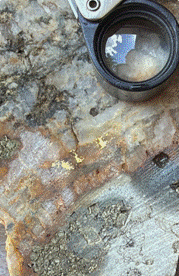
The TP1 target is characterised by a geophysical anomaly that remains untested and represents a priority exploration opportunity within the Project area. Grab samples collected returned high gold grades with visible gold observed (Figure 7 below), confirming the presence of significant potential.
 |
The target was previously subjected to artisanal mining activities, which further supports the interpretation of near-surface mineralised structures. However, the area still requires detailed geological mapping, structural interpretation, and systematic sampling programmes. The integration of geological and geophysical data may contribute to the delineation of additional mineral resources and potentially generate substantial resource growth within the target area.
TP4
The TP4 target presents a significant geophysical anomaly that remains to be tested through systematic exploration activities. Historical artisanal mining activity identified within the area suggests the presence of mineralised structures associated with the anomaly.
Despite its prospectivity, the target remains at an early exploration stage and requires detailed investigations aimed at defining the geometry, continuity, and mineralisation controls of the system. The integration of geophysical interpretation, surface mapping, and future drilling programmes may enhance the understanding and mineral potential.
Next Phase of Exploration at Paranaita
The next phase of exploration at the Paranaíta Target has been designed to advance the geological understanding of the Project and further define the controls, continuity, and potential extent of the known gold mineralisation. The programme integrates airborne geophysics, ground geophysics, and diamond drilling to support target refinement and resource growth opportunities.
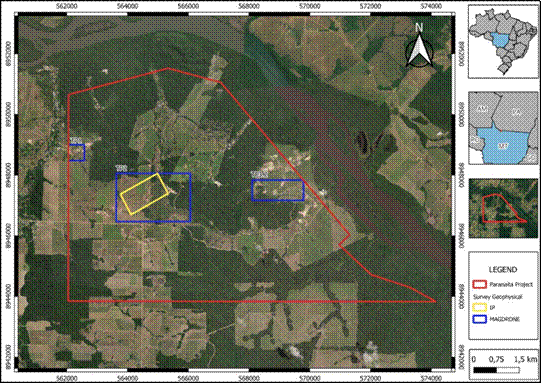
A c.135 line-kilometres high-resolution MagDrone survey will be conducted over the project area, with flight lines spaced at 50 metres. The survey will cover the TP1, TP2, and TP3.2 targets and is expected to significantly improve the interpretation of the structural framework controlling mineralisation. The magnetic data will be used to identify major geological structures, lithological contacts, and potential extensions of known mineralized trends, providing valuable guidance for future exploration activities.
To further enhance target definition, a ground Induced Polarization (IP) survey comprising approximately 22.4 line-kilometres is planned over the TP2 target. The survey will be conducted with a 50-metre line spacing, representing a substantial increase in data density compared to the previous IP programme. This higher-resolution dataset is expected to improve the delineation of chargeability anomalies, sulphide-rich zones, and structural features associated with gold mineralization, thereby refining drill targeting within the mineralized corridor. The limits of both geophysical programs can be seen below in Figure 8.
 |
A follow-up diamond drilling programme will be planned post geophysics studies at TP2 and TP3.2 to test priority mineralized zones, improve the geological model, and for resource expansion along strike and at depth.
The integration of the proposed geophysical and drilling programmes is expected to significantly enhance the understanding of the Paranaíta system and support the identification of additional mineralised zones within the Project area.
QUALIFIED PERSON
The resource information in this announcement has been reviewed by Mr. Emerson Ricardo Re who is a senior professional geologist with 25 years of experience in the mining industry, which is relevant to the style of mineralisation and type of deposit under consideration and to the activity which he has undertaken to qualify as a Competent Person as defined in the 2012 edition of the JORC Code. Mr. Re also meets the requirements of a competent person under the AIM Note for Mining, Oil and Gas Companies. Mr. Re has no economic, financial or pecuniary interest in the Company, and he consents to the inclusion in this document of the matters based on his technical information in the form and context in which it appears.
INSIDE INFORMATION
This announcement contains inside information for the purposes of Article 7 of EU Regulation 596/2014. Upon publication of this announcement, this inside information is now considered to be in the public domain.
**ENDS**
For further information, please visit www.jangadamines.com, follow us on social media, LinkedIn and X: @Jangada Mines Plc, or contact:
|
Hugo de Salis |
Jangada Mines plc |
info@jangadamines.com |
|
Ritchie Balmer James Spinney Harry Hiley |
Strand Hanson Limited Nominated & Financial Adviser |
Tel: +44 (0)20 7409 3494 |
|
Jonathan Evans |
Tavira Financial Ltd Broker |
Tel: +44 (0)20 7100 5100 |
About Jangada Mines Plc
Jangada Mines Plc (AIM: JAN) is a natural resource development company with assets in Brazil. It is led by a team with deep industry, financial and in-country experience, and has a dual growth strategy to advance its portfolio projects including the high-grade Molly Gold Project, the Paranaíta Gold Project, and the 100%-owned Pitombeiras vanadium titanomagnetite Project; and utilise its proven in-country and geological expertise to identify/acquire additional projects that it can rapidly advance to build value for shareholders.
The information contained within this announcement is deemed by the Company to constitute inside information as stipulated under the Market Abuse Regulation (EU) No. 596/2014 as it forms part of United Kingdom domestic law by virtue of the European Union (Withdrawal) Act 2018, as amended by virtue of the Market Abuse (Amendment) (EU Exit) Regulations 2019.
RNS may use your IP address to confirm compliance with the terms and conditions, to analyse how you engage with the information contained in this communication, and to share such analysis on an anonymised basis with others as part of our commercial services. For further information about how RNS and the London Stock Exchange use the personal data you provide us, please see our Privacy Policy.

Latest directors dealings
- 13 hours ago Mcbride
- 13 hours ago Next
- 14 hours ago Craneware
- 14 hours ago Solid State
- 14 hours ago Coca-Cola Europacific Partners (DI)