|
Key Initial Findings
· Visible gold observed in quartz vein samples from the Gorge Mine Prospect and 401 Prospect, providing a highly encouraging indication of near-surface gold mineralisation associated with historic workings.
· Coarse gold observed in quartz vein samples from areas of known historic activity, supporting GEO's view that the Gorge Project has significant exploration potential and warrants systematic follow-up sampling and laboratory analysis.
· Copper-rich gossan identified at the Central Zone Prospect, adding further support to the broader multi-commodity potential of the Gorge Project, including silver and lead from historic observation.
· 35 rock chip samples collected to date, including samples from historic workings, quartz veins and altered metasediments across the main target areas.
· 246 orientation soil samples collected across known mineralised zones at the Gorge Mine Prospect and 401 Prospect areas, with samples submitted for laboratory analysis to guide the design of a broader soil geochemistry programme.
· Geological observations are consistent with settings that can host orogenic gold systems, with mapping identifying metasedimentary rocks that have undergone significant strain, deformation and folding.
· Field mapping confirms favourable geological conditions for gold mineralisation, including alteration, deformation, folding, faulting and structural complexity across the target areas.
· Historic hard-rock workings, shafts, costeans and mullock heaps mapped across the project, confirming the extent of previous mining activity and helping refine priority areas for follow-up work.
· Access tracks, water sources and historic drill collar locations confirmed, supporting planning for future field programmes and potential drilling activities, subject to permitting and heritage approvals.
GEO Exploration Limited (AIM: GEO) is pleased to report significant progress has been made at the Gorge Project in Western Australia, based on the initial findings from its field reconnaissance programme.
The programme has confirmed several encouraging field indicators across the three prospects: Gorge Mine Prospect, 401 Prospect and Central Zone Prospect. These include visible gold in quartz vein samples, extensive historic hard-rock workings, copper-rich gossan material and geological features considered favourable for gold mineralisation.
The work programme on site included geological mapping, validation of historical exploration results, confirmation of historic workings and drill locations, rock chip and grab sampling, and completion of an orientation soil geochemical survey over areas of known gold mineralisation.
Geological Reconnaissance
During the site visit geological reconnaissance was completed across the three prospects. Hard rock workings consisting of vertical shafts and costeans, were identified and mapped. In total, 35 rock chip samples were collected and included validating historical samples that have returned up to 134 g/t gold.
The project area is well exposed, with only limited alluvial cover observed in drainage areas. This provides favourable conditions for soil geochemistry to be used as an effective targeting tool across the Gorge Project.
Field mapping also confirmed further favourable geological features across the project, including alteration, folding, faulting, quartz veining and structural complexity. Structural measurements collected during the programme will be integrated with the Company's recently completed airborne geophysical surveys to help identify potential controls on mineralisation and refine priority targets for follow-up work.
During the field programme, GEO's team observed quartz vein samples containing visible gold from areas associated with the Gorge Mine Prospect, 401 Prospect and Central Zone Prospect. In several samples, coarse gold was observed within the quartz vein samples from areas of known historic activity. The quartz vein samples came from metal detecting mullock heaps adjacent to vertical shafts.
Samples were provided by independent prospectors on site and were not collected under GEO's standard sampling procedures. Accordingly, they could not be treated in the laboratory for assay results. However, the Company considers the observations to be significant to the Company as they indicate the outstanding potential prospectivity of the Gorge Project.
The Company considers the observations to be very positive, particularly as the visible gold is associated with quartz vein samples from areas of known historic workings. GEO intends to undertake controlled follow-up sampling of selected mullock heaps adjacent to historic hard-rock shafts, with samples to be submitted for laboratory analysis to confirm the grade and tenor of the previously mined material.
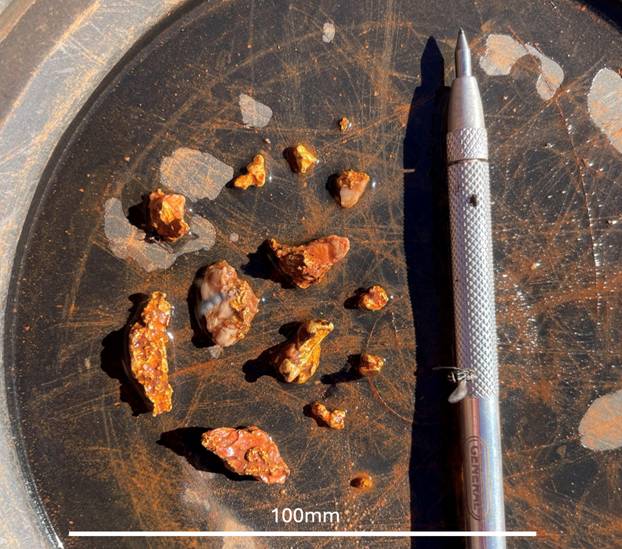
Figure 1 - Shows gold-bearing material recovered by metal detecting around the Gorge Mine Prospect and 401 Prospect areas during a single day of prospecting on 30 May 2026. Coarse free gold is observed in association with angular quartz vein material, supporting the interpretation that the material may be close to its bedrock source.
Findings at the Gorge Mine Prospect
The Gorge Mine Prospect is considered the highest priority target area for follow-up work.
During the field programme, five open vertical shafts were identified across the eastern and western parts of the Gorge Mine area. The shafts are typically approximately 2 metres by 2 metres and remain open to estimated depths of at least 20 to 30 metres. No modern exploration or drill testing has been recorded at the Gorge Mine target area.
Historic records at the Gorge Mine refer to bedrock mineralisation at Gorge West extending for more than 1km in strike length, with extracted ore reportedly returning 14 oz/t Au, equivalent to more than 450 g/t Au. Historic records also refer to 12 tonnes of ore being extracted and processed from the Gorge Mine area, yielding lead, silver and gold from a 1.8-metre-wide quartz vein containing galena and cerussite.
During the reconnaissance programme, GEO observed altered quartz vein samples around the historic shafts and mullock heaps, with grab and rock chip samples collected. The field work also identified multiple quartz vein orientations around the shafts, which is important as it may help GEO better understand how gold mineralisation is controlled at Gorge.
Visible gold was also observed in the quartz vein samples which were understood to have been collected from historic mullock heaps adjacent to vertical shafts from both the eastern and western shafts in the Gorge Mine Prospect area. The Company considers the observations to be highly significant and intends to undertake controlled follow-up sampling for laboratory analysis.
The observations at Gorge Mine are considered very notable given the presence of historic underground workings, multiple quartz vein orientations, sulphide and iron-oxide alteration, and exceptional visible gold observations.
The recent field observations, in addition to historic records, reinforce the Company's view that Gorge Mine Prospect is a high-priority target for systematic follow-up work.
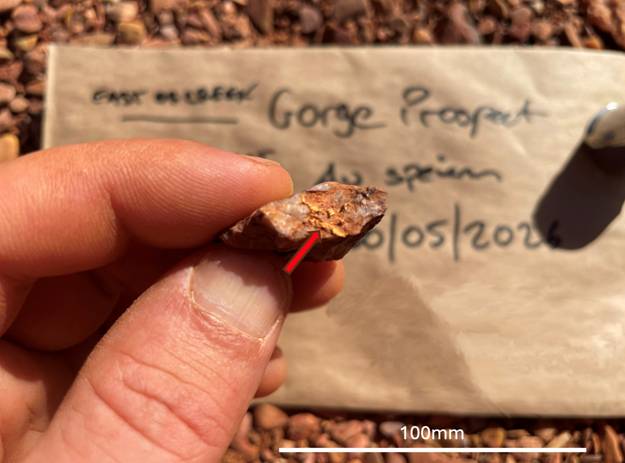
Figure 2 - Visible gold in a quartz vein sample understood to have been sourced from mullock heaps associated with the eastern shaft at the Gorge Mine. Coarse free gold is observed along fractures and veinlets within the quartz vein samples.
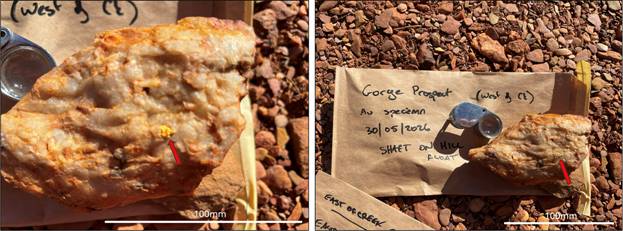
Figure 3 - Visible gold in a quartz vein sample understood to have been sourced from mullock heaps associated with the northern-most western shaft at the Gorge Mine Prospect. Coarse free gold is observed as a bleb within the quartz vein sample.
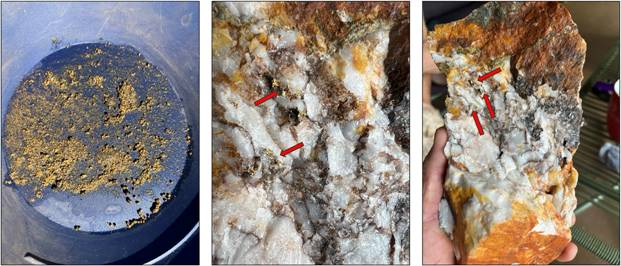
Figure 4 - Historic photographs of quartz vein samples understood to have been sourced from the northern-most western
shaft at the Gorge Mine. Pan image shows gold recovered.
Photos illustrated in Figure 4 show abundant coarse free gold associated with fractures and as veinlets within a quart vein showing significant sulfide and iron oxide alteration. A preferred lineation is also evident. This is considered a very positive indication of a high grade significant orogenic gold system at the Gorge Mine Prospect.
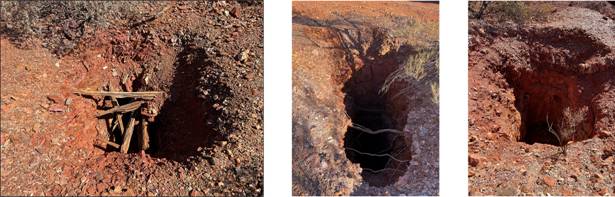
Figure 5 - Historic Eastern, Central and Northern shafts observed at the Gorge Mine Prospect.
Findings at the 401 Prospect
At the 401 Prospect, GEO's field team confirmed the locations of historical diamond and RAB drill holes. Historical drilling at the 401 Prospect includes reported peak assays of up to 35 g/t Au from drillhole RABP005. These historical results will be reviewed alongside GEO's new field observations and sampling results.
This validation is important as it will allow historic results to be more accurately reviewed and incorporated into the Company's geological model.
Historic records for the 401 Prospect also refer to bedrock mineralisation extending for approximately 200 metres, with extracted ore reportedly returning 160 oz/t Au, equivalent to more than 5,000 g/t Au.
Geological mapping at the 401 Prospect identified significant quartz veining, including east-west trending veins up to 5 metres in true thickness. Importantly, altered rock was also observed around the veining, including pyrite alteration in the surrounding wall rock. Samples were collected from both the quartz vein and the altered host rock so that GEO can better assess the scale, grade and controls of mineralisation in this area.
Visible gold was observed in quartz vein samples understood to have been collected from the 401 Prospect area proximal to a historical costean by the independent prospectors. GEO intends to undertake controlled follow-up sampling to confirm the nature and tenor of mineralisation in this area.
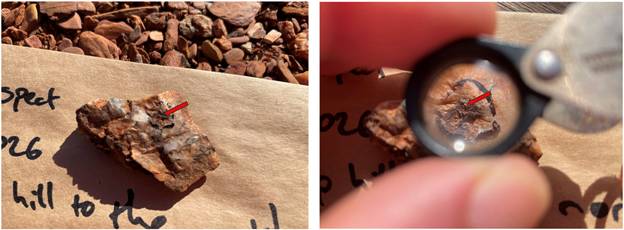
Figure 6 - Visible gold in altered quartz vein sample understood to have been sourced from a costean at the 401 Prospect. Small free gold is observed as a bleb within the altered quartz vein sample.
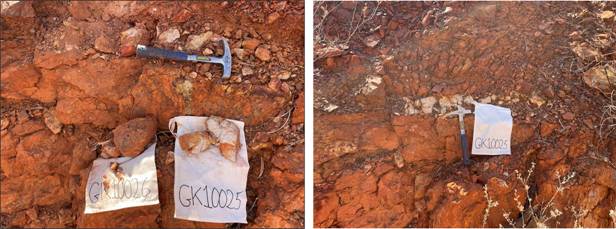
Figure 7 - Rock chip samples collected showing low angle quartz vein with pyrite alteration in wall rock.
Findings at the Central Zone Prospect
At the Central Zone Prospect, mapping identified a copper-rich gossan that had been historically worked.
The gossan occurs at a stratigraphic contact between metasiltstone and metasandstone units and includes visible copper mineralisation, including malachite and lesser azurite. Grab and rock chip samples of the copper-rich gossanous material and nearby quartz veins were collected.
Reconnaissance work in the western part of the Central Zone also identified multiple zones of sericite alteration and quartz veining that had not previously been recognised. These area's will be reviewed as part of the Company's ongoing target refinement work.
The identification of the copper-rich gossan at the Central Zone Prospect is significant as it adds a broader mineralisation style to the project beyond GEO's primary gold focus. The presence of malachite and lesser azurite at surface, together with historic records referring to lead, silver and gold production at the Gorge Mine, supports the Company's view that Gorge Project has broader multi-commodity potential.
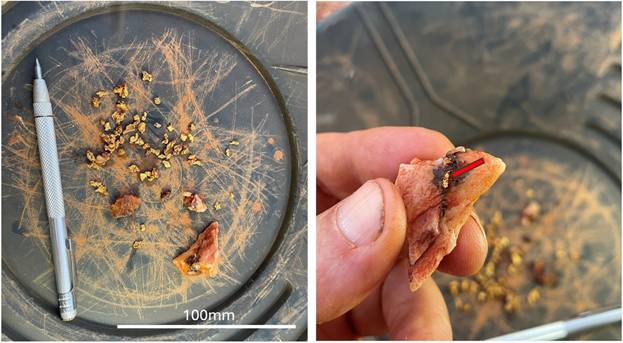
Figure 8 - Gold-bearing material recovered by metal detecting around the Central Zone target area during a single day of prospecting on 28 May 2026. Coarse free gold is observed in association with quartz veining and sulphide alteration along fractures. The angular nature of the quartz vein sample suggests limited transport from the bedrock source.
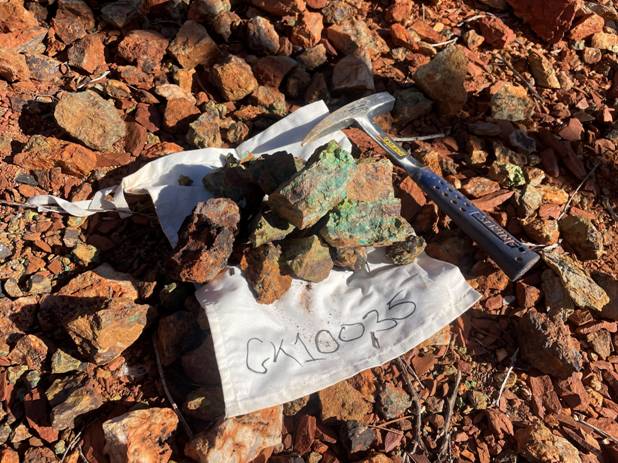
Figure 9 - Copper-rich gossanous rock chip samples from the Central Zone Prospect.
Soil Geochemistry Survey
An orientation soil geochemical survey was completed across the Gorge Mine and 401 Prospect target areas.
A total of 246 samples were collected from 80 sites across three profiles at 50 metre spacing over areas of known mineralisation. The samples have been submitted to Intertek Laboratories in Perth for multi-element analysis.
The purpose of the orientation survey is to confirm the most effective sampling and analytical methods for a broader soil geochemistry programme planned across the approximately 5km strike extent of known historic workings and newly identified target areas. In addition, 70 more rock chips samples and geological mapping will be completed as part of the broader soil geochemistry programme. Once all rock chip and grab samples have been collected, they will be sent for laboratory analysis in order to ensure a robust and representative dataset is obtained.
The results of this work will assist GEO in refining its exploration model and prioritising areas for follow-up sampling, mapping and future drill testing.
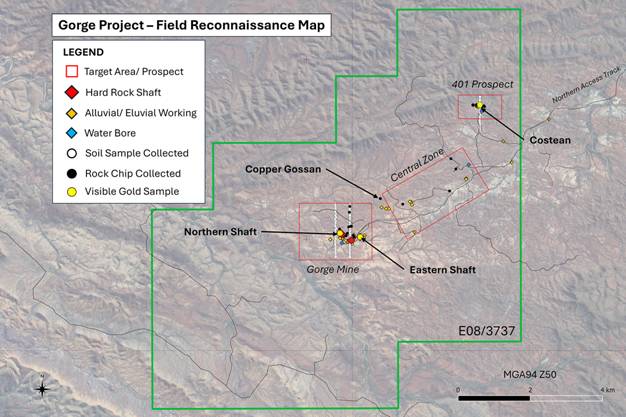
Figure 10 - Field Reconnaissance Map.
Logistical Reconnaissance
The northern access track was successfully traversed, mapped and areas that require improvement were identified. Three water bores were identified across the project area at the 401 Prospect, Central Zone and Gorge Mine target areas. All water bores were tested and contain fresh water within 20 meters of surface. These will be essential for field camps and future drilling programs.
Forward Work Programme
Complete the litho-structural interpretation of airborne geophysical surveys recently acquired. The interpretation work has commenced, and results are envisaged to guide area selection and drill targeting in addition to determining structural controls on mineralisation.
Complete soil geochemical programme over the approximate 5km strike extent of historical workings, in addition to the exciting new magnetic and radiometric targets recently identified. The proposed survey will consist of approximately 1150 samples collected on a 200x50m spaced grid. In addition, geological mapping and 70 rock chips samples will be collected. Staffing and sourcing of required field supplied has been completed.
Following completion of these activities an integrated geoscientific driven approach to drill targeting will be completed. Government permitting, heritage surveys and access track preparation will then be completed prior to drill testing of the highest ranked targets.
Tom Harris, Exploration Manager of GEO Exploration Limited, commented:
"I consider the initial findings from the field reconnaissance completed at Gorge to be outstanding. I look forward to receiving laboratory assays from the orientation soil geochemistry survey in addition to interpretation of the recently completed airborne geophysical surveys. I believe that the results to date are building momentum at the highly prospective Gorge Project."
Omar Ahmad, Chief Executive Officer of GEO Exploration Limited, commented
"These initial field findings are highly positive and further strengthen our view that Gorge represents a significant gold exploration opportunity for GEO.
What is particularly encouraging is that these are not isolated observations. Across the Gorge Mine Prospect, 401 Prospect and Central Zone Prospect, we are seeing a combination of visible gold, historic hard-rock workings, high-grade historical references, copper-rich gossan material and favourable geological structures. Together, these features provide a strong platform for the next stage of systematic exploration.
With laboratory assays from the orientation soil geochemistry survey pending, and interpretation of the recently completed airborne geophysical datasets underway, we expect the technical picture to sharpen further over the coming weeks.
The priority now is to convert these early field observations and historical data points into well-defined targets. Momentum is building across the project, and based on the results to date, we believe Gorge has the potential to become a transformational asset for GEO."
Gorge Project Overview
The Gorge Project (Exploration Licence E08/3737), located approximately 110km west of Paraburdoo in Western Australia, covers an area of 81 square kilometres within the Proterozoic aged Capricorn Orogen. GEO recently acquired the licence, through its 100% owned subsidiary Gorge Gold Pty Ltd. The Gorge project is considered highly prospective for large scale gold systems of Orogenic-type, Carlin-type and IRGS-type.
Limited historical exploration at Gorge has identified widespread gold mineralisation across the licence area. Gold occurrences have been recorded over approximately 5km of strike, supported by drainage, soil and rock chip sampling, historic workings, and alluvial and eluvial gold mining.
Historical results include:
· Rock chip samples returning gold values up to 134g/t Au
· Soil samples returning gold values up to 233g/t Au
· Drainage sampling returning elevated gold values up to 192 ppb Au
· Recovery of multiple gold nuggets from near surface, ranging from <2g to in excess of 100g
These results along with the proximity of the nugget recoveries suggests the potential presence of a primary bedrock gold source within the licence area.
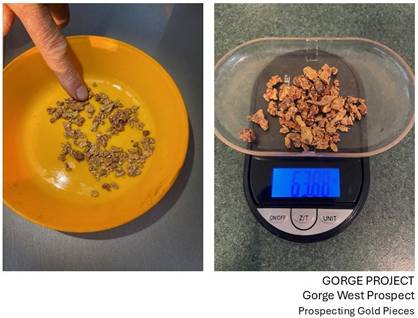
Figure 11 - Gorge West Prospect. Historic examples of Gold Nuggets Collected from Near Surface.
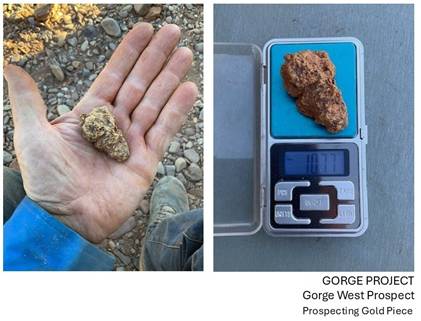
Figure 12 - Gorge West Prospect. Historic Gold Nugget Collected from Near Surface.
|




