
Drilling Extends Shear Zone Mineralisation
Summary by AI BETAClose X

Cora Gold Limited / EPIC: CORA.L / Market: AIM / Sector: Mining
5 November 2026
Cora Gold Limited ('Cora' or 'the Company')
Sanankoro 2026 MRE Update Drilling:
Greenfield Drilling Extends Sanankoro Shear Zone Mineralisation
Cora Gold Limited, the West African focused gold company, is pleased to announce the latest assay results from the ongoing 2026 drill programme being conducted at its flagship Sanankoro Gold Project ('Sanankoro' or the 'Project') in southern Mali. The latest assay results have been received from the Dakounkoura South target, a greenfield target located along the northern end of the Sanankoro structure, 1km directly north of the Zone B North deposit. This drilling tested an area, which has had very limited previous drilling, and successfully identified 500 metres of strike of a new and promising zone of oxide mineralisation within a 2km radius of the planned process plant.
The 2026 drill programme aims to unlock the broader long-term potential of Sanankoro by testing both extensions to existing deposits and a number of highly prospective near-mine greenfield targets in order to expand the current JORC compliant mineral resource estimate ('MRE') of 1,044 koz at 1.04 g/t gold (‘Au’) and extend the Reserve mine life beyond the 10.2 years outlined in the 2025 definitive feasibility study ('DFS').
Dakounkoura South Drilling Highlights
● Best intercepts from Dakounkoura South include (all intercepts are outside existing MRE models):
o 28m @ 0.27 g/t Au from 51m in hole SC0750
o 35m @ 0.40 g/t Au from 5m in hole SC0751
o 11m @ 0.55 g/t Au from 66m in hole SC0752
o 16m @ 0.85 g/t Au from 20m in hole SC0753
● All four holes intersected zones of mineralisation and proved the continuity and fertility of the Sanankoro structure (hangingwall structure of the Sanankoro Main Shear Zone ‘SMSZ’) at Dakounkoura South area.
● Results build on a previously reported hole from this target (SC0282) which intersected 25m @ 0.94 g/t Au (see announcement dated 24 September 2024).
● The combined strike length of Dakounkoura and Dakounkoura South is approximately 1.2km, and to a depth of 120 metres.
● Total drill defined strike extent of the Sanankoro structure is now greater than 8km and remains open in all directions.
● Drilling confirmed that two or more zones of mineralisation exist in this area of the Sanankoro structure, further adding to its exploration potential, with additional drill testing required to prove up a maiden mineral resource.
● Reverse circulation ('RC') drill programme, which was expanded due to positive results, has now been completed for a total of 14,081 metres.
● Diamond drilling (‘DD’) programme ongoing for both Resource growth and metallurgical test work, with total metres expected to be greater than 1,500 metres.
● Assays remain pending from Zone A, Zone C, TRA07, Kary (Zone B South/West) and the remaining drill holes at Zone B.
Bert Monro, Chief Executive Officer of Cora, commented, “Without much previous drilling, greenfield exploration programmes are always high risk and often it takes many attempts to find the source of the gold mineralisation. We know four holes don’t make a deposit but with these four holes at Dakounkoura South we have reduced our uncertainty, intersected multiple mineralised zones and elevated this emerging oxide target in our exploration pipeline as we continue to build and demonstrate the outstanding potential existing along the Sanankoro structure. These reconnaissance drill results give us optimism and confidence that Dakounkoura and Dakounkoura South, plus the neighbouring sister target Dakounkoro, which lies 700m to the west, will play a big part in our future greenfield exploration plans as we look to steadily grow and define additional open pit oxide resources at Sanankoro to feed the future process plant beyond the current mine life.”
Sanankoro Gold Project Map
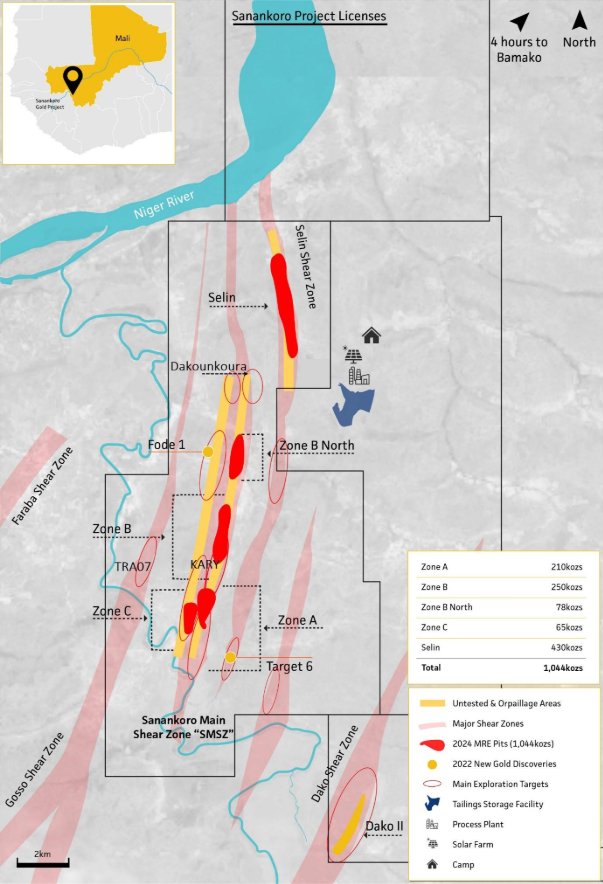
Figure 1: Map showing the locations of the deposits, and future mineral resource growth zones at the Sanankoro Gold Project
Dakounkoura South Drill Programme Overview
Exploration at Sanankoro has primarily focused on delineating mineral resources at the five main deposits. Alongside this, field work carried out since late 2022 has proven up over 20 greenfield targets to create an organic pipeline of exploration targets to grow the MRE base for the future operation. Three of these greenfield targets, being Dakounkoura South, TRA07 and Kary (Zone B South/West), have been selected for testing as part of this 2026 drill programme.
With approximately 5% (<1,000m) of the total 2026 MRE growth drill programme metres dedicated to greenfield drilling, four reconnaissance holes (totalling 392m in depth), spaced 100-200m apart, have been drilled at Dakounkoura South. The drilling was designed to test the location, possible extension, continuity and grade of the interpreted northern extensions of the Sanankoro structure (hangingwall of the SMSZ) over a strike length of 500m, being the southern extension of the main Dakounkoura target area. Dakounkoura South was identified as a high-priority target as previous drilling (hole SC0282) intersected 25m @ 0.94 g/t Au, ending in mineralisation and never followed up (see announcement dated 24 September 2024). There is relatively little other drilling information for the target, except a limited number of historic, shallow and widely spaced rotary air blast (‘RAB’) holes drilled by Gold Fields Limited.
Figure 2 below shows the location of the four drill collars and their proximity to the Dakounkoura orpaillage area, which shows three separate zones having been mined. The Dakounkoura and Dakounkoura South combined strike length is now confirmed at approximately 1.2km long, to a maximum depth of 120m (vertical) based on current drilling and containing two parallel zones of mineralisation with a possible third parallel zone existing but as yet not intersected in drilling. The total drill defined strike extent of the Sanankoro structure, which does not include the Selin deposit, from the southern end of drilling at Zone A to the northern end of Dakounkoura is now greater than 8km and remains open in all directions.
In 2022 the independent consultancy CSA Global (now Environmental Resources Management Ltd (‘ERM’)) modelled and reported an Exploration Target for Dakounkoura and its neighbouring sister target Dakounkoro (located 700m due west of Dakounkoura along the Bokoro structure footwall to the SMSZ), reporting a tonnage range of 5.9-8Mt and grade range of 0.60-1.20 g/t Au (see announcement dated 7 November 2022). Due to the style of mineralisation present at both targets, the broad extents of anomalous and lower grade rock samples, and artisanal mining excavations, the Dakounkoura and Dakounkoro targets are interpreted to have the potential to host large tonnages and low grade (<1 g/t Au).
Further drill testing is required to prove up a maiden Inferred mineral resource at Dakounkoura and Dakounkoura South. Reconnaissance drilling is also required at the Dakounkoro target, 700m due west of Dakounkoura.
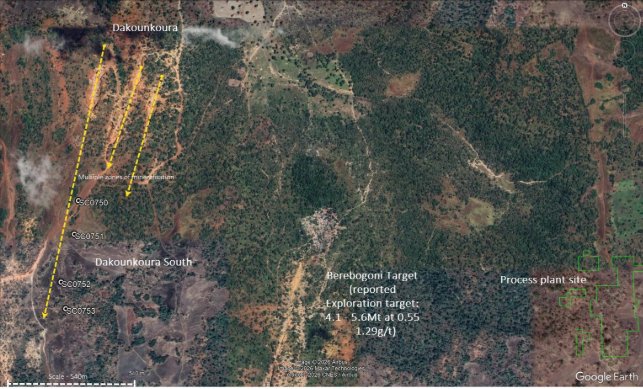
Figure 2. Satellite image (2025 Google Earth) Dakounkoura South area showing location of the 4 recently completed green fields holes. Process plant = green polygons on far right of graphic. Berebogoni target is in between the process plant and Dakounkoura South
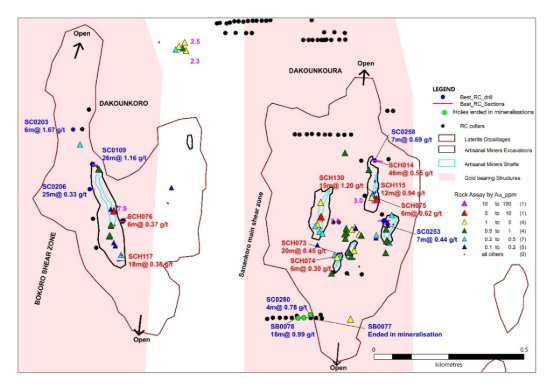
Figure 3. Map of Dakounkoura & Dakounkoro targets, excerpt from announcement dated 24 September 2024 showing drilling, channel sampling intervals and grab sample results, four recently completed reconnaissance drill holes are not shown on this map.
Dakounkoura South Drilling Results Summary
Below, in Table 1, is the full summary of the drill intervals for Dakounkoura South, where the reporting criteria cut-off is ≥0.1 g/t Au, minimum 3m interval and ≥6m waste included (where all drill holes dip at -60 degrees and drill hole azimuth = 270 degrees).
|
Hole_ID |
From |
Intercept |
Gram X Metre |
|
SC0750 |
51 |
28.00m @ 0.27 ppm |
7.6 |
|
SC0751 |
5 |
35.00m @ 0.40 ppm |
14 |
|
SC0752 |
11 |
9.00m @ 0.11 ppm |
1 |
|
SC0752 |
27 |
3.00m @ 0.10 ppm |
0.3 |
|
SC0752 |
38 |
15.00m @ 0.11 ppm |
1.6 |
|
SC0752 |
66 |
11.00m @ 0.55 ppm |
6.1 |
|
SC0753 |
20 |
16.00m @ 0.85 ppm |
13.6 |
|
SC0753 |
118 |
11.00m @ 0.33 ppm |
3.6 |
Table 1. Summary of the drill intervals from 2026 Dakounkoura South reconnaissance drilling
Select drill sections from Dakounkoura South drill programme
Figure 4, below, shows the two parallel gold zones intersected by hole SC0753 and the continuation of the zone previously intersected by hole SC0282 at Dakounkoura South. Mineralisation is associated with quartz veining in metasediments. The rock was weathered to oxide to a depth of 85m down the hole.
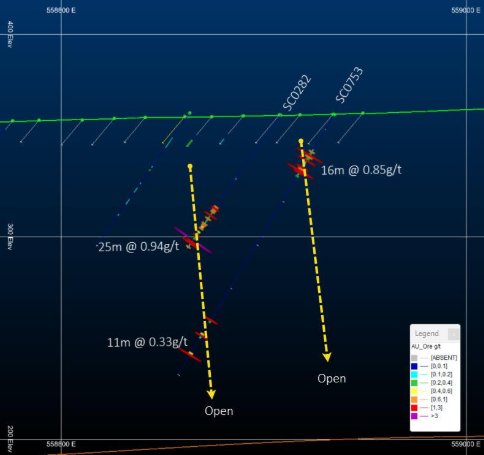
Figure 4: Dakounkoura South drill holes SC0753 and SC0282
Figure 5, below, shows the broad intercept of gold mineralisation starting at 5m from the surface in drill hole SC0751. The intersected mineralised zone is open down dip with further step out drilling required to confirm down continuity and extents of the mineralisation.
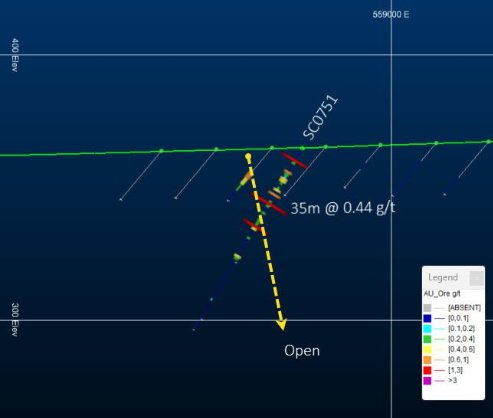
Figure 5: Dakounkoura South drill holes SC0751
The photo below (Figure 6) shows the drill chip logging. The intersected zone of mineralisation was from 5m to 40m, with quartz veining visible throughout the interval.
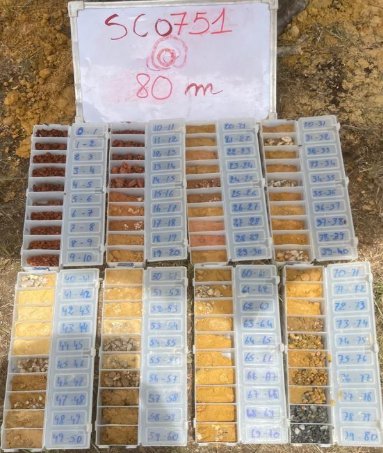
Figure 6: Dakounkoura South drill hole SC0751 drill logging
Drilling has been completed at the other two greenfield targets of TRA07 and Kary (Zone B South/West). These will be reported once the assays are received.
Competent Person's statement
The technical information in this release that relates to Exploration Results was reviewed and approved by Mr Murray Paterson, in his capacity as a Competent Person, as required under the AIM Rules for Companies. Murray Paterson is the Head of Geology for the Company and is a member of good standing with the Australasian Institute of Mining and Metallurgy (‘MAusIMM’). Mr Paterson has sufficient experience that is relevant to the style of mineralisation and type of deposit under consideration, and to the activity which he is undertaking, to qualify as a Competent Person as defined in the 2012 Edition of the ‘Australasian Code for Reporting of Exploration Results, Mineral Resources and Ore Reserves’. Mr Paterson consents to the inclusion in this release of the Exploration Results in the form and context in which it appears.
Market Abuse Regulation ('MAR') Disclosure
Certain information contained in this announcement would have been deemed inside information for the purposes of Article 7 of Regulation (EU) No 596/2014, which is part of UK law by virtue of the European Union (Withdrawal) Act 2018, until the release of this announcement.
**ENDS**
For further information, please visit http://www.coragold.com or contact:
|
Bert Monro |
Cora Gold Limited |
|
|
Derrick Lee |
Cavendish Capital Markets Limited |
+44 (0)20 7220 0500 |
|
Matt Hasson Andrew Chubb |
Hannam & Partners (Broker) |
+44 (0) 20 7907 8500 |
|
Susie Geliher |
St Brides Partners |
Notes
Cora is a West African gold developer with de-risked project areas within two known gold belts in Mali and Senegal. Led by a team with a proven track-record in making multi-million-ounce gold discoveries that have been developed into operating mines, Cora's primary focus is on developing the Sanankoro Gold Project in the Yanfolila Gold Belt in south Mali into an open pit oxide mine.
Cora has a Probable Reserve of 531 koz at 1.13 g/t Au (US$2,200/oz Au pit shell design). The 2025 Definitive Feasibility Study showed that the Project has strong economic fundamentals, including 98% IRR post tax, US$365 million NPV8 post tax and all-in sustaining costs of US$1,623/oz based on a gold price of US$3,500/oz.
In April 2026, the Company secured a binding US$120 million gold stream which, together with existing equity, fully funds the development of Sanankoro through to production. The agreement also provides flexibility and was amended in August 2026 to allow up to 50% of the stream to be replaced with traditional senior debt by the later of (i) 30 October 2027 and (ii) 6 months after the date on which the mining rights permit is granted by the government of Mali, enabling optimisation of the financing structure. With funding in place, the Company is advancing the finalisation of the permitting process with the Government of Mali to enable a swift transition into mine construction.
The Company continues to pursue additional value-enhancing opportunities across its broader portfolio, including the identification of large-scale gold mineralisation potential at the Madina Foulbé exploration permit, located within the Mako Gold Belt of the Kédougou-Kéniéba Inlier in eastern Senegal.
RNS may use your IP address to confirm compliance with the terms and conditions, to analyse how you engage with the information contained in this communication, and to share such analysis on an anonymised basis with others as part of our commercial services. For further information about how RNS and the London Stock Exchange use the personal data you provide us, please see our Privacy Policy.

Latest directors dealings
- 1 hour ago ASA International Group
- 2 hours ago Central Asia Metals
- 2 hours ago Orosur Mining Inc
- 2 hours ago Emv Capital
- 2 hours ago Power Probe PLC