
Whistlejacket update
Summary by AI BETAClose X

15 June 2026
Bradda Head Lithium Ltd
("Bradda", "BHL" or the "Company")
Bradda Head Samples up to 3.03% Li2O and Expands Lithium Potential at Bradda's Whistlejacket Spodumene Lithium Project in Arizona USA
Bradda Head Lithium Ltd (AIM: BHLL), the North America-focused lithium development group, is pleased to announce that, following the recent approval of the Exploration and Drilling Permit (see announcement dated 26 May 2026), new surface sampling assay results at the Whistlejacket Lithium Project demonstrates strong lithium prospectivity across multiple target areas.
Additionally, Bradda Head Lithium and Rio Tinto subsidiary Kennecott Exploration Company ("KEX"), have also completed their first technical meeting and formally established the Technical Committee for the Whistlejacket project in Arizona. The meeting included a review of the current exploration programs, technical priorities, and upcoming drill targets identified across the project area.
Highlights:
· High values of 3.03 % Li2O, eighteen (18) samples exceeding 0.59 % Li2O out of 60 samples.
· Mostly coarse grained spodumene exhibits minimum surface alteration, an encouraging indication lithium mineralization that could be consistent with depth
· More field surface sampling planned
· Results from these additional samples will guide and refine drill hole targeting in this and future drilling campaigns
· Bradda Head and Rio Tinto subsidiary KEX have formally established a Technical Committee to oversee and direct exploration efforts on the Whistlejacket lithium project in Arizona.
· Strong ESG focus through engagement of local contractors, regional stakeholders, and responsible land stewardship practices.
Ian Stalker, Executive Chair, commented:
"We are highly encouraged by the new assay results from the first stage of our surface sampling programme completed at Whistlejacket. The programme has refined and improved our exploration targeting and further reinforces the project's strong lithium potential.
The next set of results will further add to the knowledge base and hopefully add further new targets.
We have also achieved several important milestones supporting the advancement of our Arizona lithium exploration portfolio, including the formal establishment of a Technical Committee with Rio Tinto subsidiary KEX for the Whistlejacket Lithium Project. These developments position the Company to advance drilling across its spodumene-focused Arizona projects during 2026.
In parallel, Bradda Head continues to strengthen local stakeholder engagement, expand operational staffing, and advance ESG-focused initiatives as it builds a strategically important U.S. lithium portfolio aligned with the growing domestic critical minerals and battery supply chain sectors."
Surface samples
The first batch of surface sample results has now been received from the project. The samples were collected from strategically selected pegmatites located within the northeastern portion of the claim block (Figure 1). A total of 62 samples were submitted to SGS for analytical testing (2 control samples and 60 rock samples), with 18 samples returning grades exceeding 0.59 % Li2O, including 12 samples grading above 1.00 % Li2O and values reaching up to 3.03 % LiO2. The results confirm widespread lithium mineralization associated with spodumene-bearing pegmatites exposed at surface. All 60 samples contain low iron, less than 1.0% and most below 0.5%, in addition to scattered anomalies in Ta, Cs, Nb, and Rb, although a clear picture of associations from these critical minerals has yet to be established.
Results have also identified two highly prospective target areas (Figure 2), including a continuous pegmatite outcrop where seven consecutive samples returned elevated lithium values alongside well-developed spodumene crystals visible at surface. The target area was previously tested during RTX's second exploration drilling campaign; however, the main mineralized zone may not have been fully evaluated, as the nearest drill hole trace is located approximately 160 m below surface. Recent structural measurements collected in the area also suggest that the pegmatite outcrop may dip in the opposite direction to the historical drill hole orientation, further enhancing the potential for additional mineralization and highlighting a compelling drill-ready target for the upcoming exploration campaign.
The Company will continue the sampling campaign planned, consisting of approximately 290 chip samples to be collected as part of the continued expansion of exploration activities across the project. The program is designed to refine and improve both previously identified and newly generated drilling targets. In parallel, a channel sampling campaign is also being planned to further evaluate and define lithium mineralization across priority target areas, with execution expected following completion of the upcoming drill campaign.
Technical Committee
The Technical Committee, comprising two representatives from each party, has been formed to oversee and guide exploration activities across the project area. The Committee will review exploration concepts, technical results, budgets, expenditures, and tenure matters, while facilitating the exchange of technical expertise between the parties. The Committee will act in an advisory capacity, with Bradda Head retaining sole operational decision-making authority under the Agreement. Upcoming meeting dates and quarterly reporting milestones have now been established, while the first-year exploration budget has been reviewed and approved, subject to minor refinements.
As part of its ESG framework, Bradda continues to work closely with local communities to maximize regional economic participation through the engagement of local contractors and service providers. The project also benefits from existing access infrastructure, with several established roads requiring only minimal upgrades, while maintaining positive and ongoing communication with the current surface grazing lessee. In parallel, the Company has designed its exploration programs with a strong emphasis on responsible land stewardship, including minimizing surface disturbance and implementing water conservation measures during drilling operations.
Additionally, Bradda has engaged proactively with the local community of Bagdad, Arizona, including coordination with regional operator Freeport-McMoRan on matters relating to safety, emergency response, and fire prevention. As exploration activities advance, the Company intends to host local elected officials and community representatives for site visits aimed at increasing awareness of the strategic importance of domestically sourced critical minerals and the potential long-term economic benefits the projects could bring to the region.
QAQC
Rock chip samples were collected in the field under the supervision of Hugo Zuniga (Senior Project Manager). Sample location sites were labelled, rock chip samples were bagged, tied off, then transported to the core shed under lock and key. Samples were delivered by the Company to SGS Preparation Lab in Tempe Arizona; after preparation were shipped to SGS Laboratories in Burnaby, B.C., Canada where SGS prepped then analyzed all samples using sodium peroxide fusion combined ICP-AES and ICP-MS, method GE_ICM90A50. Certified standards were inserted into the rock chip sample stream and reviewed by the Hugo Zuniga. The Company Qualified Person (QP), Mr Joey Wilkins, consents to the inclusion of the technical information in this release and context in which it appears.
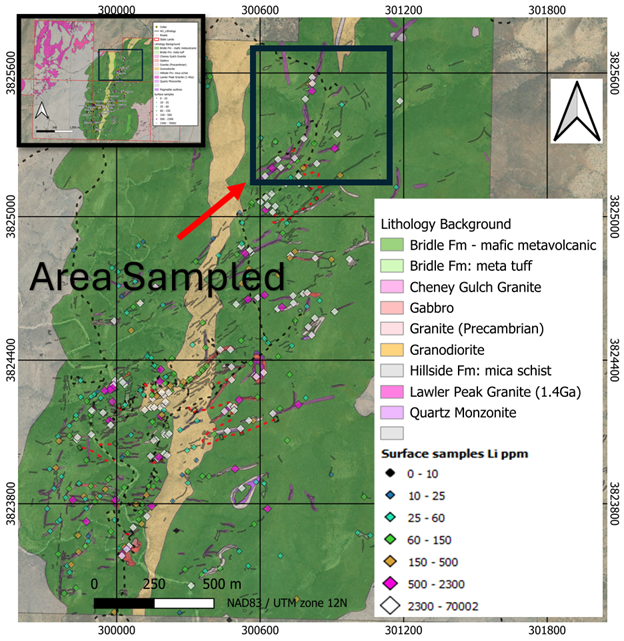
Figure 1.- Location of samples assays
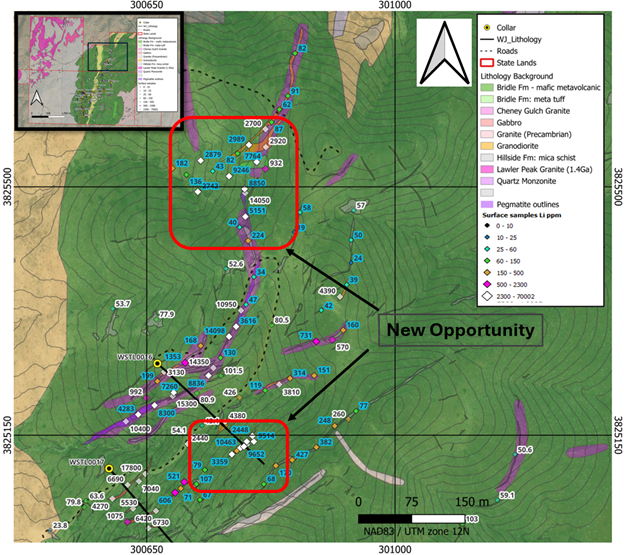
Figure 2.- New samples (cyan buffer), RTX samples (white buffer).
Qualified Person (Bradda Head)
Joey Wilkins, B.Sc., P.Geo., is an external consultant and the Qualified Person who reviewed and approved the technical disclosures in this news release. Mr Wilkins is a graduate of the University of Arizona with a B.Sc. in Geology with more than 40 years of experience in mineral exploration and is a qualified person under the AIM Rules and a Qualified Person as defined under NI-43-101. Mr Wilkins consents to the inclusion of the technical information in this release and context in which it appears.
THIS ANNOUNCEMENT CONTAINS INSIDE INFORMATION FOR THE PURPOSES OF THE MARKET ABUSE REGULATION (EU No. 596/2014) AS IT FORMS PART OF UK DOMESTIC LAW BY VIRTUE OF THE EUROPEAN UNION (WITHDRAWAL) ACT 2018. UPON THE PUBLICATION OF THIS ANNOUNCEMENT VIA A REGULATORY INFORMATION SERVICE, THIS INSIDE INFORMATION IS NOW CONSIDERED TO BE IN THE PUBLIC DOMAIN AND SUCH PERSONS SHALL THEREFORE CEASE TO BE IN POSSESSION OF INSIDE INFORMATION.
For further information please visit the Company's website: www.braddaheadltd.com.
ENDS
Contact:
|
Bradda Head Lithium Limited |
Beaumont Cornish
|
Shard Capital |
Tavistock
|
|
Company |
Nomad |
Broker |
Investor Relations |
|
Ian Stalker, Executive Chair Denham Eke, Finance Director |
James Biddle / Roland Cornish |
Damon Heath / Isabella Pierre |
Nick Elwes / Josephine Clerkin |
|
+44 1624 639 396 |
+44 20 7628 3396 |
+44 207 186 9927 |
+ 44 20 7920 3150 braddahead@tavistock.co.uk |
About Bradda Head Lithium Ltd.
Bradda Head Lithium Ltd. is a North America-focused lithium development group. The Company currently has interests in a variety of projects, the most advanced of which are in Central and Western Arizona: The Basin Project (Basin East Project and Basin West Project) and the San Domingo Project.
The Basin East Project has a Measured Mineral Resource of 20 Mt at an average grade of 929 ppm Li for a total of 99 kt LCE and an Indicated Mineral Resource of 122 Mt at an average grade of 860 ppm Li and an Inferred Mineral Resource of 499 Mt at an average grade of 810 ppm Li for a total of 2.81 Mt LCE (https://www.accesswire.com/883697/bradda-head-lithium-ltd-announces-updated-mineral-resource-expansion-basin-project). A plan of operation was approved by BLM in 2025 for the Basin West area. Now company is working on an Environmental Assessment (EA) permit.
The San Domingo Project comprises 248 claims covering approximately 1850 acres, located primarily on BLM land, along with two Arizona State Land Department claims. To date, 108 drill holes totaling 13,089 m of core drilling have been completed across three drilling campaigns. The project area hosts more than 1,000 mapped pegmatites, of which 18 have been identified as priority targets, with six tested by drilling. The area currently holds two active Notices of Intent (NOI) permits, and updated drilling plans are in place that can be implemented once all required permits for the pegmatite targets are secured. The objective of the next exploration phase is to further delineate the most prospective areas and advance them toward potential Mineral Resource Estimation (MRE) and NI 43-101 compliant reporting.
The Whistlejacket Project comprises nine Arizona State Land Department Mineral Exploration Permits (MEPs), covering a total of 2,010.7 hectares. The project is subject to a definitive Option to Joint Venture agreement with Kennecott Exploration Company (KEX) and targets spodumene-bearing pegmatites. KEX previous exploration includes 19 drilled diamond drill holes totaling 4,188 meters, with all holes intersecting lithium mineralization. Notable results include 51.0 meters at 1.11% Li₂O in hole WSTL0009 and 19.47 meters at 1.66% Li₂O in hole WSTL0008. In addition, the project has benefited from extensive surface mapping, sampling, airborne geophysics, and the acquisition of high-resolution aerial imagery, significantly enhancing the geological understanding and overall value of the asset.
The Group intends to continue to develop its three phase one projects in Arizona, whilst endeavoring to unlock value at its other prospective pegmatite and brine assets in Arizona, Nevada, and Pennsylvania.
Glossary
|
Term |
Definition |
|
Lithium (Li) |
Critical mineral used primarily in rechargeable batteries and energy storage technologies. |
|
Li₂O (Lithium Oxide) |
Standard reporting unit used in hard-rock lithium exploration to express lithium concentration in pegmatites and spodumene mineralization. |
|
Spodumene |
Lithium-bearing pyroxene mineral commonly found in pegmatites and considered a primary source of hard-rock lithium production. |
|
Pegmatite |
Extremely coarse-grained igneous rock that can host lithium minerals such as spodumene, lepidolite, and petalite. |
|
Surface Sampling |
Exploration method involving collection of rock or chip samples from exposed outcrops to evaluate mineralization. |
|
Chip Sampling |
Sampling technique where small fragments are collected systematically across exposed rock surfaces. |
|
Channel Sampling |
Continuous sampling method across a measured channel cut into rock exposure to better represent mineralization width and grade. |
|
Assay |
Laboratory analysis performed to determine the concentration of minerals or elements within a sample. |
|
SGS Laboratories |
International laboratory service provider responsible for preparation and geochemical analysis of the samples. |
|
Sodium Peroxide Fusion |
Analytical digestion technique commonly used for complete dissolution of lithium-bearing minerals before geochemical analysis. |
|
ICP-AES |
Inductively Coupled Plasma - Atomic Emission Spectroscopy; laboratory analytical technique used to determine elemental concentrations. |
|
ICP-MS |
Inductively Coupled Plasma - Mass Spectrometry; highly sensitive analytical method for trace element analysis. |
|
QAQC (Quality Assurance / Quality Control) |
Procedures implemented to ensure sampling, preparation, and analytical results are accurate and reliable. |
|
Certified Standards |
Reference materials with known concentrations inserted into sample batches to verify laboratory accuracy. |
|
Technical Committee |
Advisory committee formed to oversee and review exploration activities, budgets, and technical results. |
|
Drill Target |
Area identified as prospective for drilling based on geological, structural, and geochemical information. |
|
Mineralization |
Concentration of economically significant minerals within rock formations. |
|
Structural Measurements |
Geological observations of rock orientation, dip, strike, and deformation used to interpret subsurface geometry. |
|
Outcrop |
Rock exposure visible at the Earth's surface. |
|
Lithium Prospectivity |
Geological potential for discovering economically viable lithium mineralization. |
|
Iron Content (Fe) |
Important impurity parameter in lithium deposits; low iron is generally favorable for spodumene concentrate quality. |
|
Ta, Cs, Nb, Rb |
Chemical symbols for tantalum, cesium, niobium, and rubidium; critical or associated elements commonly enriched in lithium pegmatites. |
|
ESG (Environmental, Social, and Governance) |
Corporate framework focused on sustainable environmental practices, community engagement, and responsible governance. |
|
Grazing Lessee |
Individual or entity holding livestock grazing rights on project land. |
|
Surface Disturbance |
Physical alteration of land caused by exploration or mining activities. |
|
Water Conservation Measures |
Operational practices designed to reduce and manage water consumption during drilling and exploration. |
|
Qualified Person (QP) |
Professional geoscientist responsible for reviewing and approving technical disclosure under mining regulatory standards. |
|
Exploration Permit |
Government authorization allowing exploration activities such as drilling and sampling. |
|
Analytical Testing |
Laboratory examination of geological samples to determine elemental composition and grade. |
|
Drill Campaign |
Organized phase of exploration drilling designed to test geological targets. |
|
Lithium Grade |
Concentration of lithium within a rock sample, commonly expressed as % Li₂O or ppm Li. |
|
Critical Minerals |
Minerals considered essential for economic security and energy transition technologies. |
|
Battery Supply Chain |
Industrial network involving extraction, processing, manufacturing, and distribution of battery materials and components. |
RNS may use your IP address to confirm compliance with the terms and conditions, to analyse how you engage with the information contained in this communication, and to share such analysis on an anonymised basis with others as part of our commercial services. For further information about how RNS and the London Stock Exchange use the personal data you provide us, please see our Privacy Policy.

Latest directors dealings
- 2 days ago Legal & General Group
- 2 days ago Trustpilot Group
- 2 days ago Rio Tinto
- 2 days ago Trustpilot Group
- 2 days ago Ruffer Investment Company Ltd Red PTG Pref Shares