
Whistlejacket: Review of Previous Results
Summary by AI BETAClose X

Bradda Head Lithium Ltd
("Bradda", "BHL" or the "Company")
Whistlejacket Lithium: Technical Review of Previous Exploration Results
Bradda Head Lithium Ltd (AIM: BHLL), the North America-focused lithium development group, is pleased to provide details on exploration activities undertaken by Kennecott Exploration Company ("KEX") at the Whistlejacket Lithium Project in Arizona (the 'Whistlejacket Property') between 2022 and 2023. This summary is provided following the announcement of a definitive Option to Joint Venture agreement (the "Agreement") with KEX (See PR 01/27/2026 and 17/02/2026). At that time, the Company published a CPR on the Whistlejacket Property which is available on the Company's website; the information in this announcement includes the information contained in the CPR along with a more detailed summary & explanation of drill holes assays results, discussion about the exploration potential, future exploration plans along with a summary of the Company's existing San Domingo project.
The Agreement provides BHL the right to earn-in and acquire 51% of the Whistlejacket Property by spending a minimum of US $5.5 million in Phase 1, with the option to earn-in and acquire an additional 9% by spending a further US $12 million in Phase 2.
Exploration activities previously undertaken by KEX, including two phases of diamond core drilling for a total of 4,188 meters, confirmed the presence of high-quality lithium-cesium-tantalum ("LCT") pegmatites across approximately 4,486 acres of the Whistlejacket Project area in northwestern Arizona.
Drill hole intercepts and project highlights are:
· 51 meters at 1.11% Li₂O in hole WSTL0009, followed by 10.74 meters at 0.97% Li₂O;
· 19.47 meters at 1.66% Li₂O in hole WSTL0008, followed by 13.56 meters at 1.31% Li₂O;
· Additional high-grade intercepts were also recorded such as 5.51 meters at 2.04% Li₂O in WSTL0001, 2.55 meters at 1.74% Li₂O in WSTL0005, 4.00m at 1.39% Li₂O in WSTL0006, 4.00m at 1.01% Li₂O in WSTL0013, 3.93 meters at 1.06% Li₂O in WSTL0017, and 8.59m at 0.91% Li₂O in WSTL0018 (See table 1 below for details);
· 103 surface samples returned lithium grades ranging from 0.50% to 4.91% Li₂O;
· 100% Arizona State Lands, exploration and drilling permits are quickly being acquired for surface sampling, drill site building, and new roads, if needed;
· Excellent infrastructure access with existing roads, located approximately 1.8 km from a paved highway and 1.5km to the town of Bagdad, Arizona;
· Strike length of 2.2km of lithium mineralized pegmatite swarm exposed on the surface;
· More than 37% of mapped pegmatites contain visible spodumene mineralization
Two and potentially three sub-horizontal pegmatite bodies with geometry and orientation comparable to the sub-horizontal pegmatites reported at Piedmont (USA) and Sigma (Brazil).
Ian Stalker, Executive Chair, commented:
"The drilling, surface sampling, and mineralogical work completed to date confirm Whistlejacket as a coherent, multi-phase LCT pegmatite system dominated by spodumene mineralization. The combination of broad mineralized intervals, a large number of higher-grade intercepts, low iron content, and encouraging Dense Media Separation (DMS) characteristics highlight the project's potential for both bulk-tonnage development and the production of a clean spodumene concentrate. The Project fits exceptionally well into our portfolio, as it is strategically located only 80km from our San Domingo pegmatite project and 11km from our Basin lithium-in-clay project, entertaining possible synergies between both as we grow these projects collectively.
We have a diversified, U.S.-focused lithium portfolio, uniquely spanning hard-rock pegmatites, sedimentary clays in Arizona; and brine assets in Nevada, Texas and Pennsylvania, all of which are Tier-1 jurisdictions. Our flagship San Domingo project shows strong grades, shallow mineralization, and positive metallurgy, while the Basin Clay Project already hosts a large 43-101 compliant resource with significant expansion upside. The portfolio is strategically positioned to benefit from U.S. government support for critical minerals, fast-tracked permitting, and rapidly growing EV and energy-storage demand. Backed by a committed, equity-aligned management team and strong infrastructure access, Bradda Head is well placed to advance toward long-term value creation."
Previous Exploration at Whistlejacket Project
KEX conducted extensive rock chip sampling across the broader land package followed by airborne magnetics/radiometrics, obtained land satellite coverage, and completed two phases of diamond core drilling for a total of 4,188 meters. The drilling targeted several different pegmatite bodies, encountering notable intervals such as 51.0 meters of 1.11% Li20 in drill hole WSTL0009. All drill holes encountered lithium-bearing pegmatites with a minimum intercept of 1.05 meters at 0.51% Li20, indicating the presence of a broadly distributed LCT pegmatite system.
BHL reviewed all drill hole and surface data prior to making an offer to enter into negotiations for acquisition. Bradda Head has not yet examined the drill core currently stored in a KEX warehouse in Salt Lake City, UT. The core will be examined during technical site visits later this year.
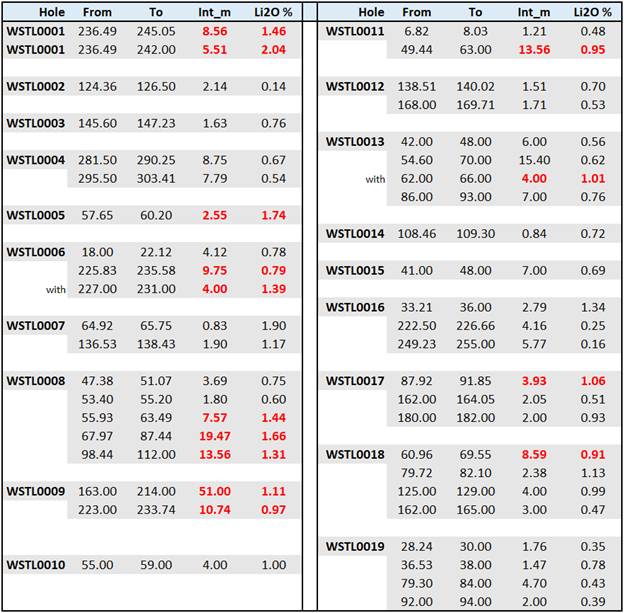
Table 1.- Drill hole assay summary
Geologically at Whistlejacket, the pegmatites intrude and cross-cut mafic to intermediate metavolcanic rocks of the 1.74Ga (billion year old) Bridle Formation which are predominantly oriented along a southwest-northeast (SW-NE) strike, with subordinate east-west (E-W) and north-south (N-S) orientations. Pegmatite dips range from sub-horizontal to sub-vertical, with the sub-vertical pegmatites hosting the best mineralized intervals identified to date. Mineralization occurs in swarms and clusters, seven of which have been tested to date by drilling and/or surface sampling.
A total of 408 surface rock samples were collected during systematic geological mapping, with 203 samples identifying spodumene as the dominant lithium-bearing mineral. These spodumene-bearing pegmatites are distributed across a prospective area measuring approximately 2.6 km in length by 2.2 km in width, with significant portions of the project area remaining to be evaluated through future exploration. Hyperspectral imaging was utilized to assist in target identification and returned encouraging results.
KEX implemented a comprehensive quality assurance and quality control ("QA/QC") program, including the insertion of certified reference materials, blanks, and field and laboratory duplicates.
Review of the core photos reveal KEX collected ultraviolet light photographs. Higher-grade, coarse-grained spodumene typically fluoresces red-orange under UV light, while lower-grade, finer-grained, quartz-rich spodumene exhibits yellow-green fluorescence (Figure 3).
An independent mineralogical study conducted by RTX (RTX Mineralogy and Early Metallurgy Team, Bundoora) was implemented on core samples and early-stage geometallurgical assessment indicates that lithium mineralization at Whistlejacket is dominantly hosted in spodumene within LCT-style pegmatites, with low iron content and favorable liberation characteristics. Results from six drill holes demonstrate high lithium deportment to spodumene and encouraging potential for DMS (Dense Media Separation), supporting the project's potential to produce a clean spodumene concentrate and informing future metallurgical testwork.
Next steps
Future exploration is expected to focus on additional surface mapping, chip and channel sampling to identify and refine pegmatite targets. This will be supported by detailed structural analysis and follow-up drilling to generate sufficient data to support the preparation of a maiden Mineral Resource estimate. Additional mineralogical and metallurgical testwork is also recommended to further evaluate the potential for DMS processing of the spodumene mineralization.
In accordance with the terms of the Option to Joint Venture agreement, the Company has proposed an initial-year exploration budget designed to advance and expand the mineralized prospects identified to date, supporting systematic project de-risking and continued progression of the Whistlejacket Project.
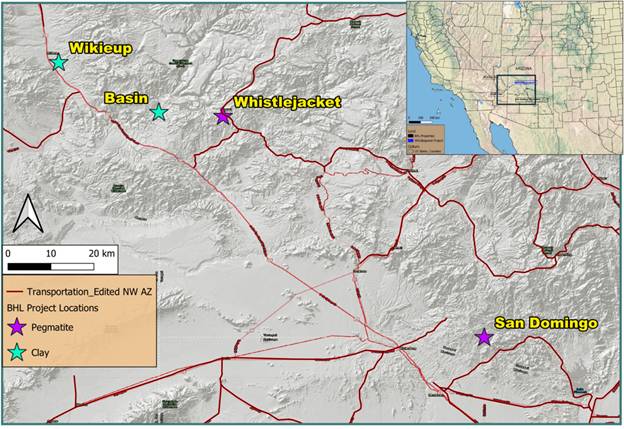
Figure 1 - Location Map
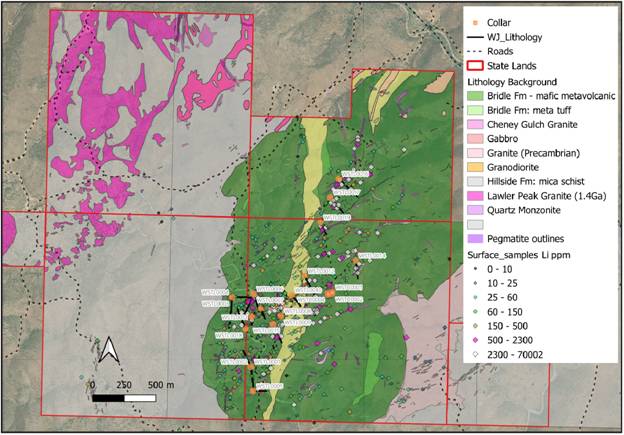
Figure 2 - Geology - Drillhole Location - Sample Location - Targets
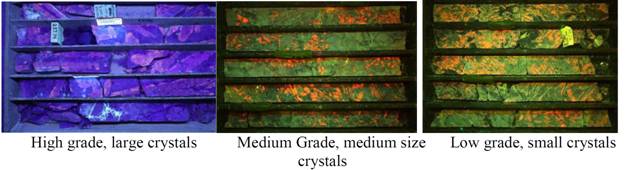
Figure 3 - UV Fluorescence of Spodumene Pegmatites
Qualified Person (Bradda Head)
Joey Wilkins, B.Sc., P.Geo., is an external consultant and the Qualified Person who reviewed and approved the technical disclosures in this news release. Mr Wilkins is a graduate of the University of Arizona with a B.Sc. in Geology with more than 39 years of experience in mineral exploration and is a qualified person under the AIM Rules and a Qualified Person as defined under NI-43-101. Mr Wilkins consents to the inclusion of the technical information in this release and context in which it appears.
THIS ANNOUNCEMENT CONTAINS INSIDE INFORMATION FOR THE PURPOSES OF THE MARKET ABUSE REGULATION (EU No. 596/2014) AS IT FORMS PART OF UK DOMESTIC LAW BY VIRTUE OF THE EUROPEAN UNION (WITHDRAWAL) ACT 2018. UPON THE PUBLICATION OF THIS ANNOUNCEMENT VIA A REGULATORY INFORMATION SERVICE, THIS INSIDE INFORMATION IS NOW CONSIDERED TO BE IN THE PUBLIC DOMAIN AND SUCH PERSONS SHALL THEREFORE CEASE TO BE IN POSSESSION OF INSIDE INFORMATION.
For further information please visit the Company's website: www.braddaheadltd.com.
ENDS
Contact:
|
Bradda Head Lithium Limited |
Beaumont Cornish
|
Shard Capital |
Tavistock
|
|
Company |
Nomad |
Broker |
Investor Relations |
|
Ian Stalker, Executive Chair Denham Eke, Finance Director |
James Biddle / Roland Cornish |
Damon Heath / Isabella Pierre |
Nick Elwes / Josephine Clerkin |
|
+44 1624 639 396 |
+44 20 7628 3396 |
+44 207 186 9927 |
+ 44 20 7920 3150 braddahead@tavistock.co.uk |
About Bradda Head Lithium Ltd.
Bradda Head Lithium Ltd. is a North America-focused lithium development group. The Company currently has interests in a variety of projects, the most advanced of which are in Central and Western Arizona: The Basin Project (Basin East Project and Basin West Project) and the San Domingo Project.
The Basin East Project has a Measured Mineral Resource of 20 Mt at an average grade of 929 ppm Li for a total of 99 kt LCE and an Indicated Mineral Resource of 122 Mt at an average grade of 860 ppm Li and an Inferred Mineral Resource of 499 Mt at an average grade of 810 ppm Li for a total of 2.81 Mt LCE (https://www.accesswire.com/883697/bradda-head-lithium-ltd-announces-updated-mineral-resource-expansion-basin-project). A plan of operation was approved by BLM in 2025 for the Basin West area. Now company is working in a Environmental Assessment (EA) permit.
The San Domingo Project comprises 248 claims covering approximately 1850 acres, located primarily on BLM land, along with two Arizona State Land Department claims. To date, 108 drill holes totaling 13,089 m of core drilling have been completed across three drilling campaigns. The project area hosts more than 1,000 mapped pegmatites, of which 18 have been identified as priority targets, with six tested by drilling. The area currently holds two active Notices of Intent (NOI) permits, and updated drilling plans are in place that can be implemented once all required permits for the pegmatite targets are secured. The objective of the next exploration phase is to further delineate the most prospective areas and advance them toward potential Mineral Resource Estimation (MRE) and NI 43-101 compliant reporting.
The Group intends to continue to develop its three phase one projects in Arizona, whilst endeavoring to unlock value at its other prospective pegmatite and brine assets in Arizona, Nevada, and Pennsylvania
Technical Glossary
|
Term |
Technical Definition |
|
Assay |
A laboratory analytical procedure used to determine the concentration of a specific element or mineral within a rock, soil, or drill sample. Assay results are typically reported in weight percent (%) or parts per million (ppm). |
|
Certified Reference Material (CRM) |
A standard sample with known concentrations of specific elements used as part of QA/QC procedures to monitor laboratory accuracy and analytical performance. |
|
Chip Sampling |
A sampling technique in which small fragments of rock are systematically collected along an outcrop or exposure to obtain a representative sample for geochemical analysis. |
|
Competent Person's Report (CPR) |
A technical report prepared by a qualified professional (Competent Person) summarizing geological, exploration, and resource information in accordance with JORC or equivalent reporting standards. |
|
Dense Media Separation (DMS) |
A mineral processing technique that separates minerals based on density differences using a dense suspension medium, commonly applied in spodumene processing to pre-concentrate lithium-bearing minerals. |
|
Diamond Core Drilling |
A drilling method that uses a diamond-impregnated drill bit to recover cylindrical rock core samples, enabling direct observation of geology, structure, and mineralization. |
|
Drill Hole Intercept |
A reported interval of mineralization encountered within a drill hole, expressed as length and grade (e.g., meters at % Li₂O). Intercepts represent downhole lengths and may not represent true thickness. |
|
Earn-In Agreement |
A contractual arrangement in which a company acquires an ownership interest in a mineral property by funding exploration or development expenditures over a defined period. |
|
Geological Mapping |
The systematic documentation and interpretation of rock types, structures, and mineralization exposed at surface or underground to support exploration targeting. |
|
Geometallurgy |
The integration of geological and metallurgical information to understand how mineralogical characteristics influence processing performance and metal recovery. |
|
Hyperspectral Imaging |
A remote sensing technique that records spectral reflectance data across multiple wavelengths to identify minerals and alteration patterns associated with mineralization. |
|
Lithium Oxide (Li₂O) |
The conventional unit used to report lithium grades in hard-rock lithium deposits, representing the lithium concentration expressed as lithium oxide equivalent. |
|
LCT Pegmatite |
A class of granitic pegmatites enriched in lithium, cesium, and tantalum, commonly hosting lithium minerals such as spodumene, petalite, and lepidolite. |
|
Maiden Mineral Resource Estimate |
The first formal estimate of the quantity and grade of a mineral deposit prepared in accordance with recognized reporting codes such as JORC or NI 43-101. |
|
Metallurgical Testwork |
Laboratory or pilot-scale testing conducted to evaluate ore processing characteristics and determine potential recovery methods for valuable minerals. |
|
Mineral Resource |
A concentration or occurrence of material of economic interest in the Earth's crust with reasonable prospects for eventual economic extraction, classified as Inferred, Indicated, or Measured under JORC/NI 43-101. |
|
Mineralogical Study |
Analytical work that determines the mineral composition, texture, and distribution of minerals within a rock sample, often used to understand metal deportment and processing behavior. |
|
Option to Joint Venture Agreement |
A commercial agreement whereby a company may earn an ownership interest in a mineral property through staged exploration expenditures, with the potential to establish a joint venture. |
|
Pegmatite |
An extremely coarse-grained igneous rock, typically granitic in composition, which may host economically significant concentrations of rare metals including lithium, cesium, and tantalum. |
|
Pegmatite Swarm |
A geological assemblage consisting of multiple pegmatite bodies occurring within a defined structural or lithological corridor. |
|
QA/QC (Quality Assurance / Quality Control) |
Standard procedures implemented during exploration sampling and analytical programs to ensure the accuracy, precision, and reliability of data, typically involving standards, blanks, and duplicates. |
|
Rock Chip Sample |
A sample collected from exposed bedrock during surface exploration, typically used for geochemical analysis to evaluate mineralization potential. |
|
Spodumene |
A lithium-bearing pyroxene mineral (LiAlSi₂O₆) commonly found in LCT pegmatites and the primary source of lithium in hard-rock lithium deposits. |
|
Strike Length |
The horizontal extent of a geological feature or mineralized zone measured along its orientation on the Earth's surface. |
|
True Thickness |
The actual thickness of a geological unit or mineralized body measured perpendicular to its orientation, which may differ from the downhole intercept reported in drill results. |
|
Ultraviolet Fluorescence |
A mineralogical property whereby certain minerals emit visible light under ultraviolet radiation, commonly used to visually identify spodumene in drill core. |
RNS may use your IP address to confirm compliance with the terms and conditions, to analyse how you engage with the information contained in this communication, and to share such analysis on an anonymised basis with others as part of our commercial services. For further information about how RNS and the London Stock Exchange use the personal data you provide us, please see our Privacy Policy.

Latest directors dealings
- 2 days ago Legal & General Group
- 2 days ago Trustpilot Group
- 2 days ago Rio Tinto
- 2 days ago Trustpilot Group
- 2 days ago Ruffer Investment Company Ltd Red PTG Pref Shares